

A cozy winter home does not need a decoration on every surface. In a small room, comfort often comes from better light, useful textiles and materials you enjoy living with. The space still needs somewhere for a mug, a book and the ordinary things you use every day.
These cozy winter decor ideas focus on changes you can make without replacing furniture or filling the room. Start with what feels uncomfortable now: harsh light, a bare-looking corner, nowhere for blankets to go or a table that is always crowded.
Choose two or three changes that solve those problems. A small set of useful adjustments is easier to maintain than a house full of seasonal displays, especially when you want the room to work after the holidays too.
1. Layered Lamps for a Reading Corner
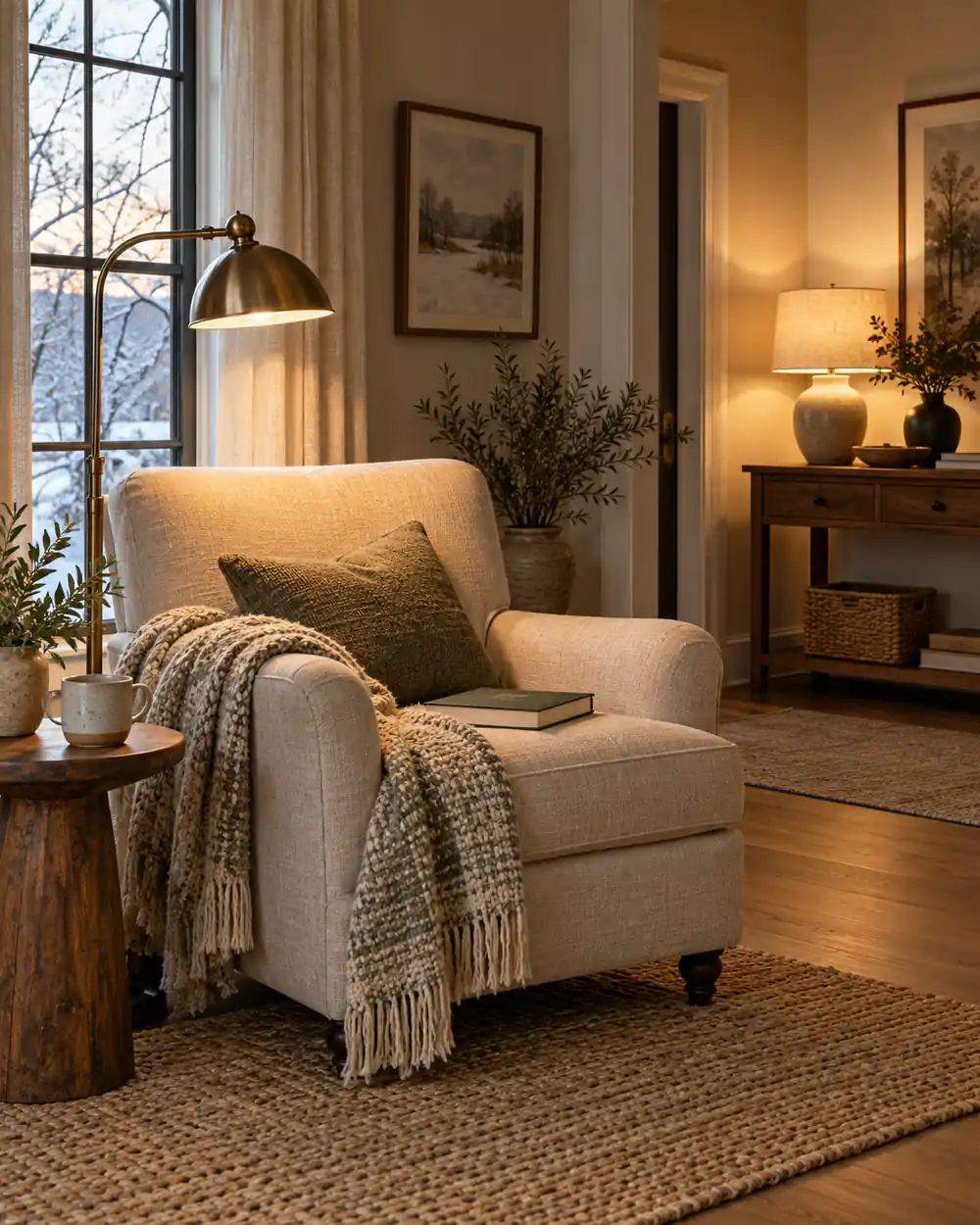
Place a reading lamp near your chair and use a separate ambient lamp elsewhere. Two light sources can make the room less dependent on one bright ceiling fixture. Position the reading light for the task rather than directly into your eyes.
Try moving an existing lamp before buying another. Follow the fixture’s bulb specifications and keep cords out of walking routes. A cozy atmosphere should still let you read, see steps and move around comfortably. Judge the arrangement after dark as well as in daylight.
2. One Substantial Throw Instead of Several Small Blankets
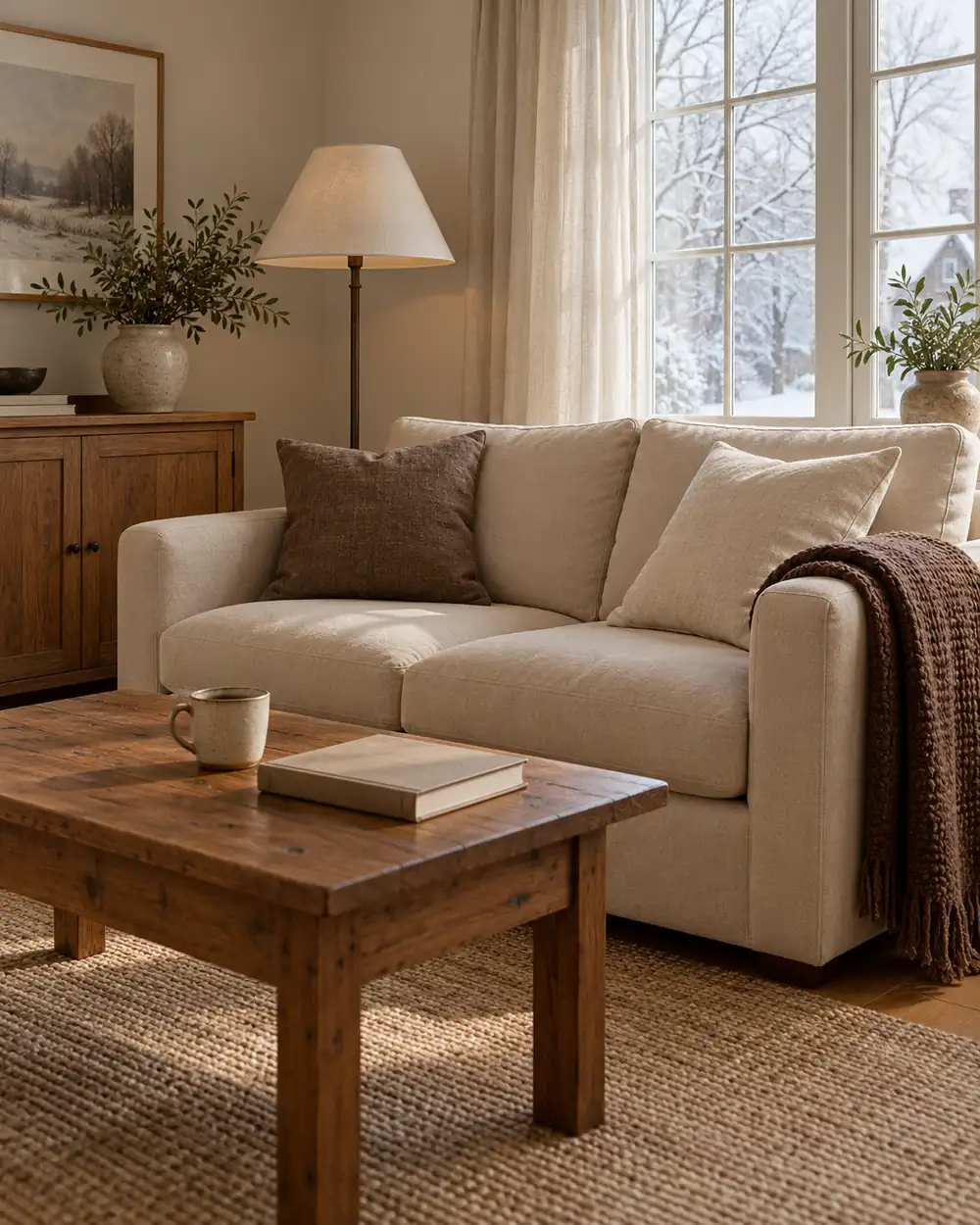
Choose one throw large enough for the way you use the sofa. A generous blanket can be more useful than several decorative ones that slip onto the floor. Fold it over an arm or keep it in a nearby basket.
Pick a texture you like against your skin and check the care label. A difficult-to-wash throw may not suit a busy family room. Let this one textile provide the winter texture, keeping the rest of the seating simple and leaving room for people to sit.
3. Textured Pillow Covers in a Limited Palette

Swap existing pillow covers for a few textures within a connected palette. Cream and brown, navy and muted blue, or soft rust with warm neutrals are useful starting points. Reuse the inserts instead of adding another layer of pillows.
Check dimensions and fastenings before ordering. A rough decorative front may not feel comfortable to lean against. Leave enough clear seating for the people who use the room. If every pillow has to move before anyone sits, fewer covers in better positions may be the more comfortable choice.
4. A Winter Entry Tray With Practical Storage
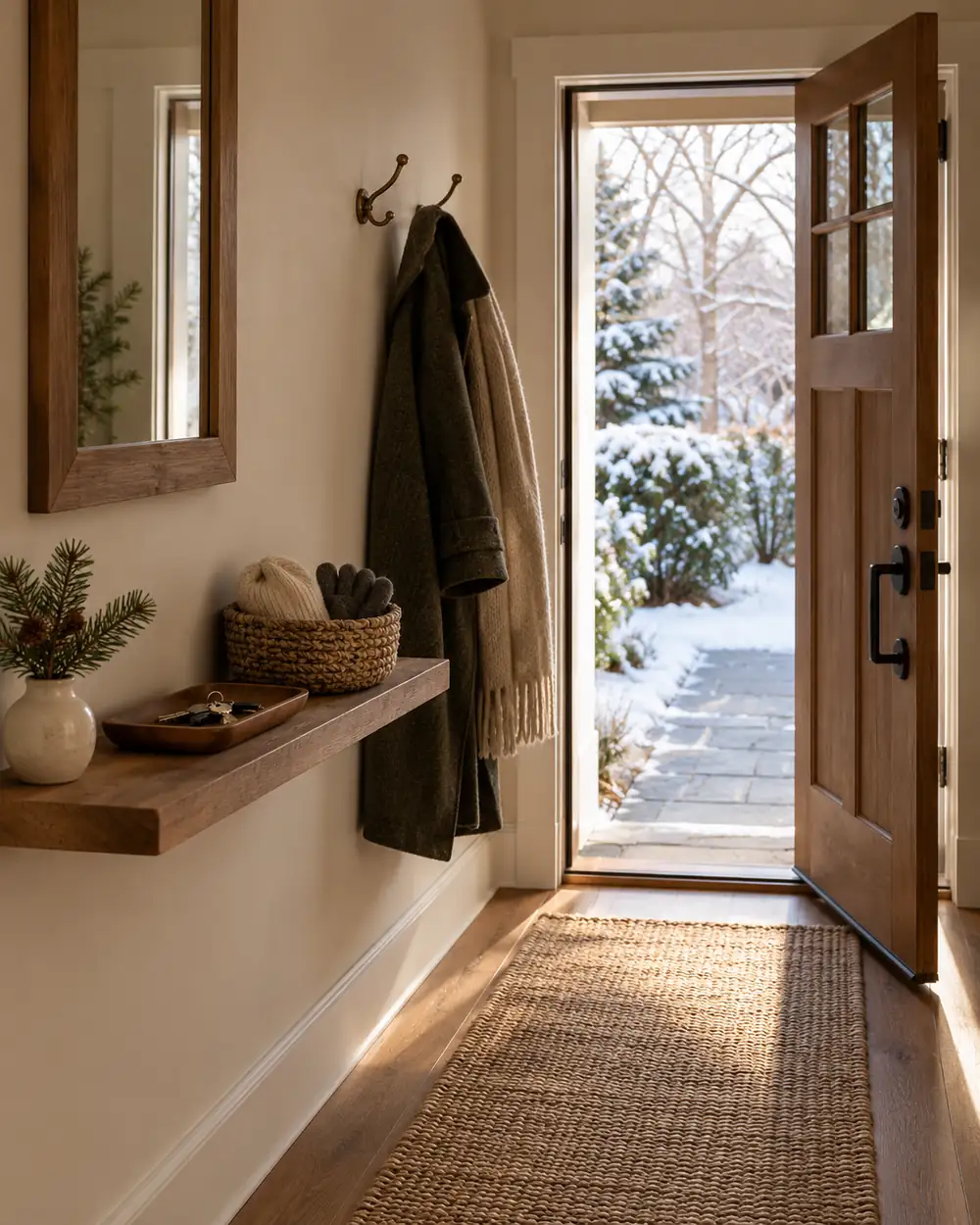
Use a small tray for keys and essentials, with a contained place for gloves or a hat. One functional arrangement can settle the entry without needing an additional seasonal display. Add a single small decorative detail only if space remains.
Choose a tray that fits and leaves doors free to open. Damp clothes need somewhere appropriate to dry rather than a closed decorative basket. In a narrow entry, use existing hooks or a shelf instead of putting new furniture into the route between the door and the room.
5. Warm Brass Accents on an Existing Shelf

One or two brass-toned objects can add warmth to a shelf you already use. Try a frame, bowl or lamp detail beside books and ceramics. A little reflected light can be enough; you do not need a matching set.
Remove an object before adding one so the shelf keeps breathing room. Metals need not match exactly, but compare the actual finishes in your room’s light. If buying something, choose a piece you would enjoy beyond winter so it can stay useful when seasonal decorations are packed away.
6. A Small Rug Beside a Favorite Chair

A small rug can soften the area beside a chair, particularly where the floor feels bare. Choose a size that relates to the furniture rather than a tiny mat floating alone. Try the placement with the chair in its usual position.
Make sure the rug lies flat and use a suitable non-slip solution for the floor and rug type. Keep loose edges out of busy routes. Check care requirements: a pale, delicate rug may be difficult beside an entrance or in a room shared with pets.
7. Curtains That Soften a Bare Window
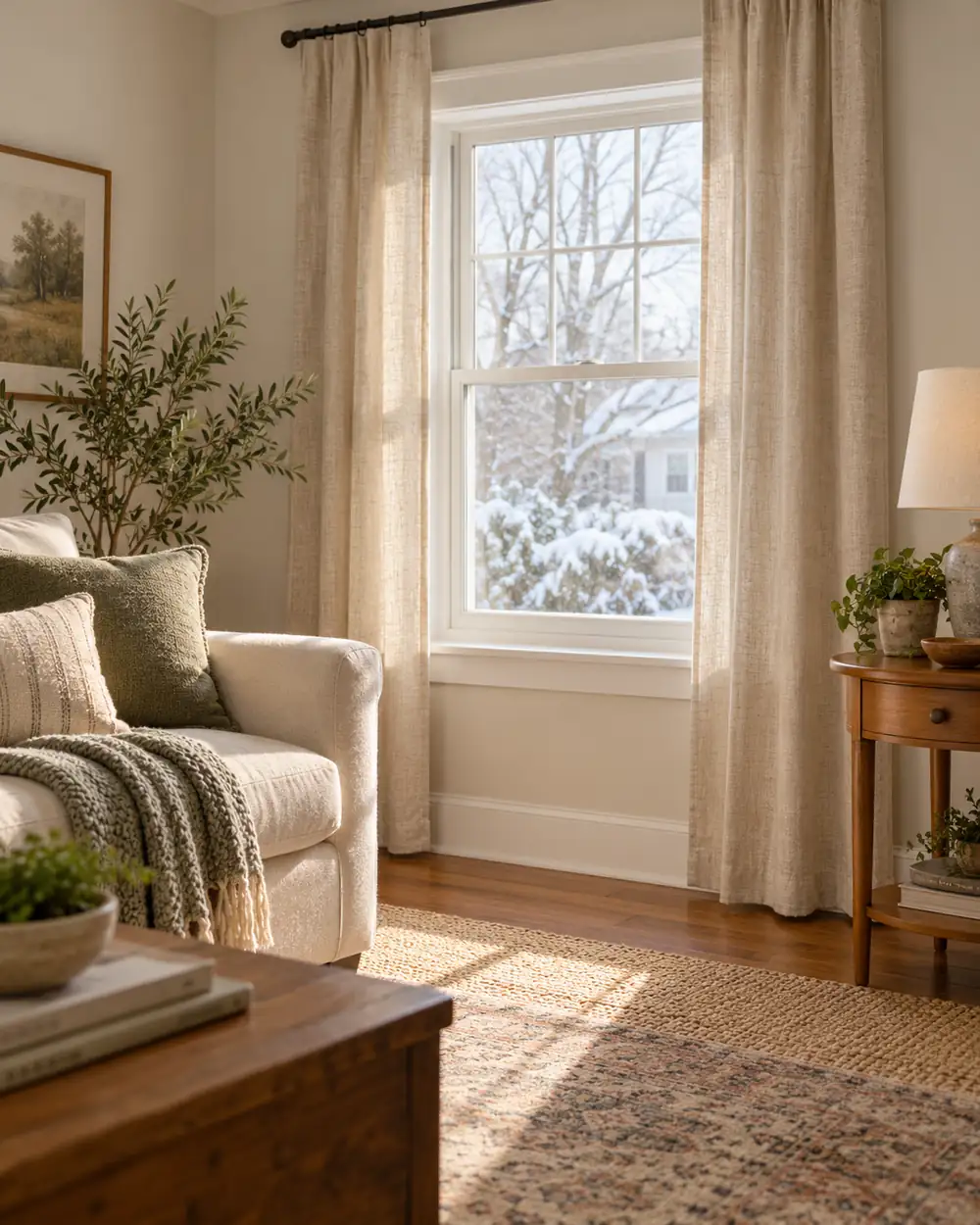
Curtains can bring texture to a winter room without occupying a table or shelf. Choose a fabric weight suited to your needs and keep the window usable. A simple solid color often works when the room already contains pattern.
Measure the window and wall before shopping. Keep fabric clear of heaters and follow nearby appliances’ clearance instructions. Avoid blocking vents or access. If the existing curtains already work, cleaning or refreshing them according to their label may provide enough change without a new purchase.
8. Battery-Operated Candles on a Contained Tray
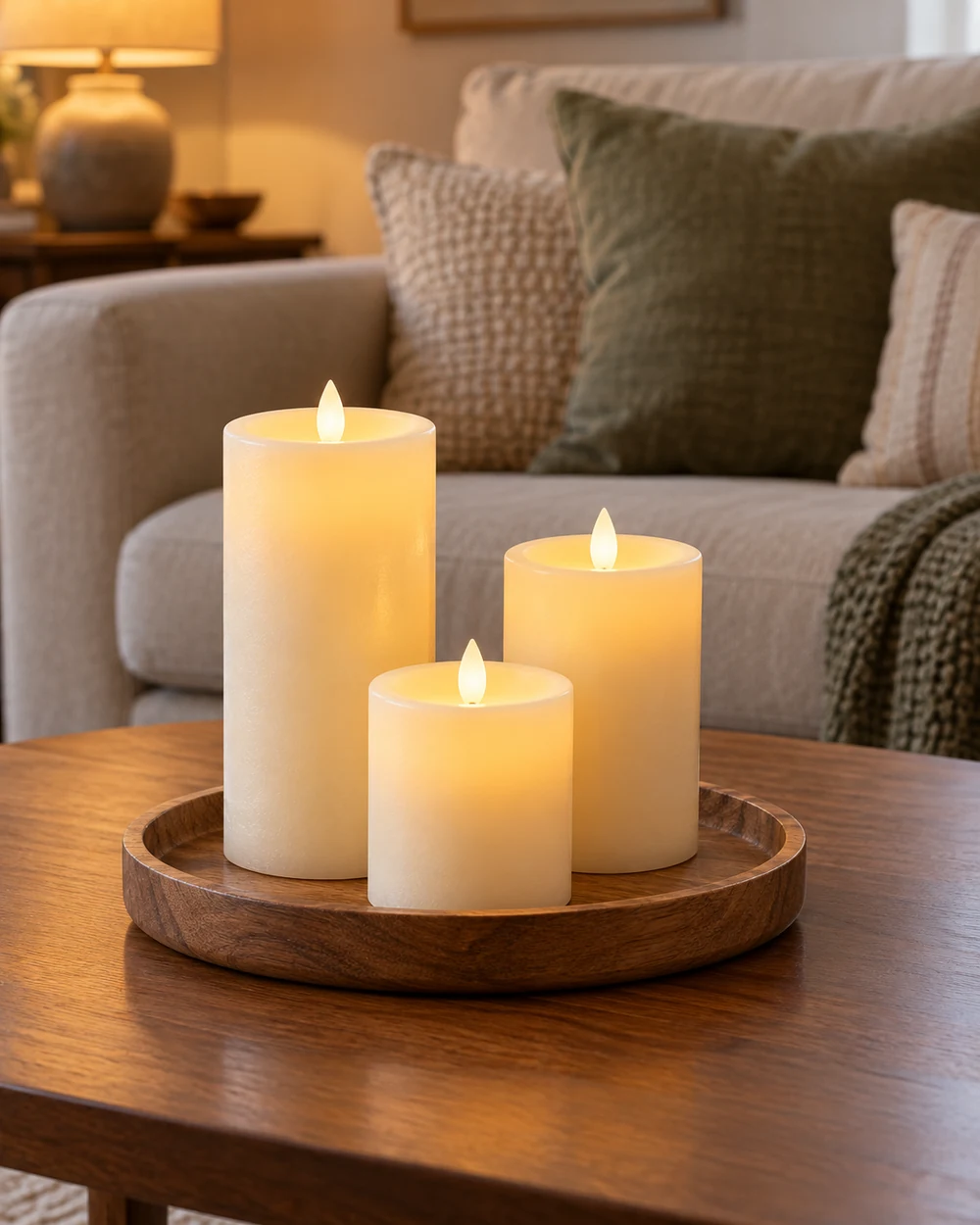
Group a few battery-operated candles on a small tray for an evening detail. Vary the heights within a simple palette and leave space around them instead of filling every gap with loose decorations.
Follow the products’ instructions and use them in suitable locations. Keep battery compartments secure and small batteries away from children and pets. Flameless candles still need sensible placement. The tray should lift away easily so the table remains useful for a snack, a laptop or a game.
9. A Branch Arrangement in a Stable Vase

A few bare or artificial branches can create winter height without a large floral display. Use a stable vase on a console and keep the spread proportionate to the surface. A single material can feel calmer than a large mixed arrangement.
Keep branches away from faces, doors and walking routes. Identify natural materials and consider pets, children and sensitivities. Do not assume an attractive berry or branch is harmless. Artificial branches may be simpler when you want a reusable arrangement with a predictable shape.
10. Closed Baskets for Extra Winter Textiles
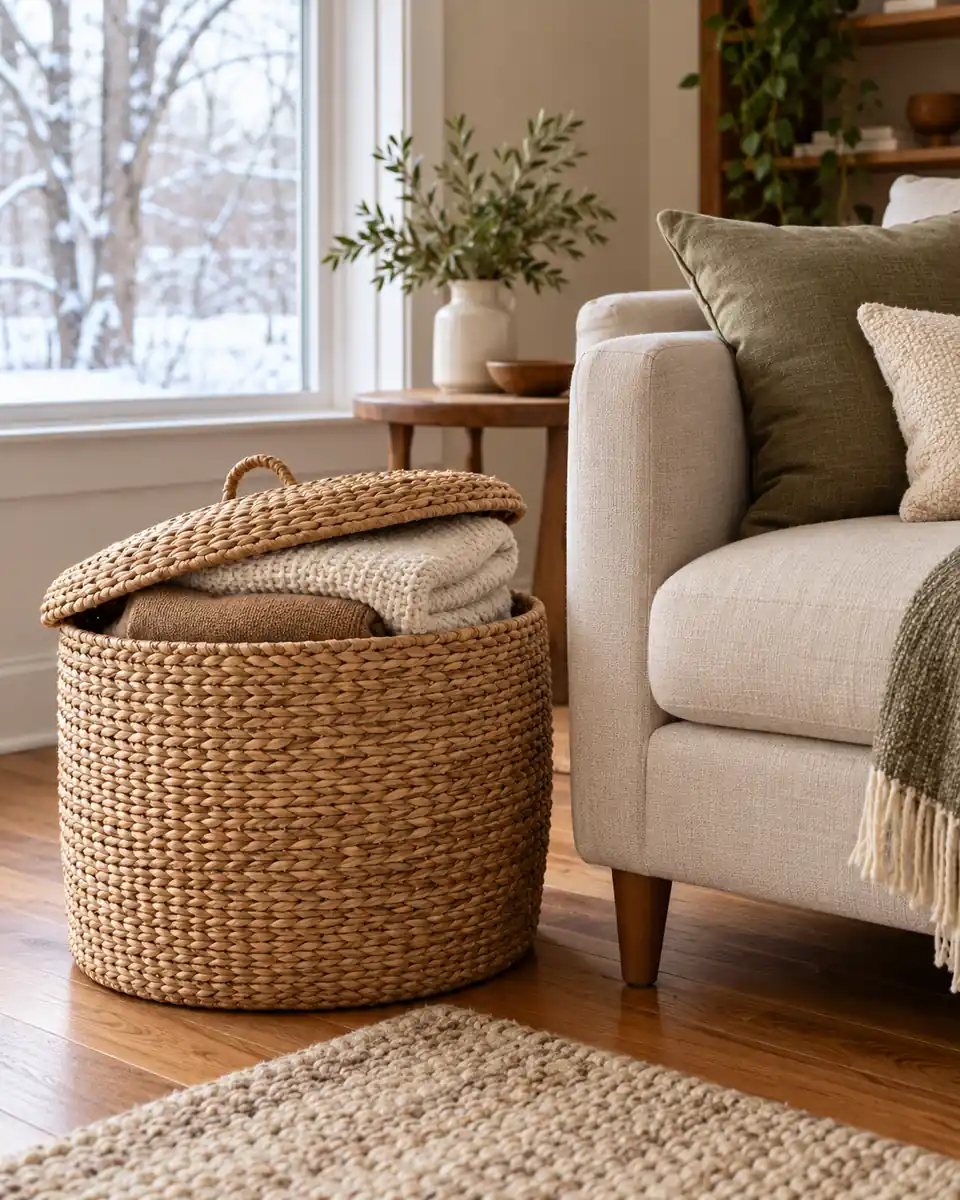
Use a basket to contain spare blankets rather than displaying every textile at once. Put it near the seating where the contents are used. A lid can create a quieter appearance if there is enough room to open it easily.
Measure the spot, including access to sockets, vents and doors. A smooth interior may be kinder to delicate throws than rough wicker. Keep the contents realistic. If the lid never closes, another storage purchase may not solve the problem; reducing the number of items might.
11. A Simple Hot-Drink Station
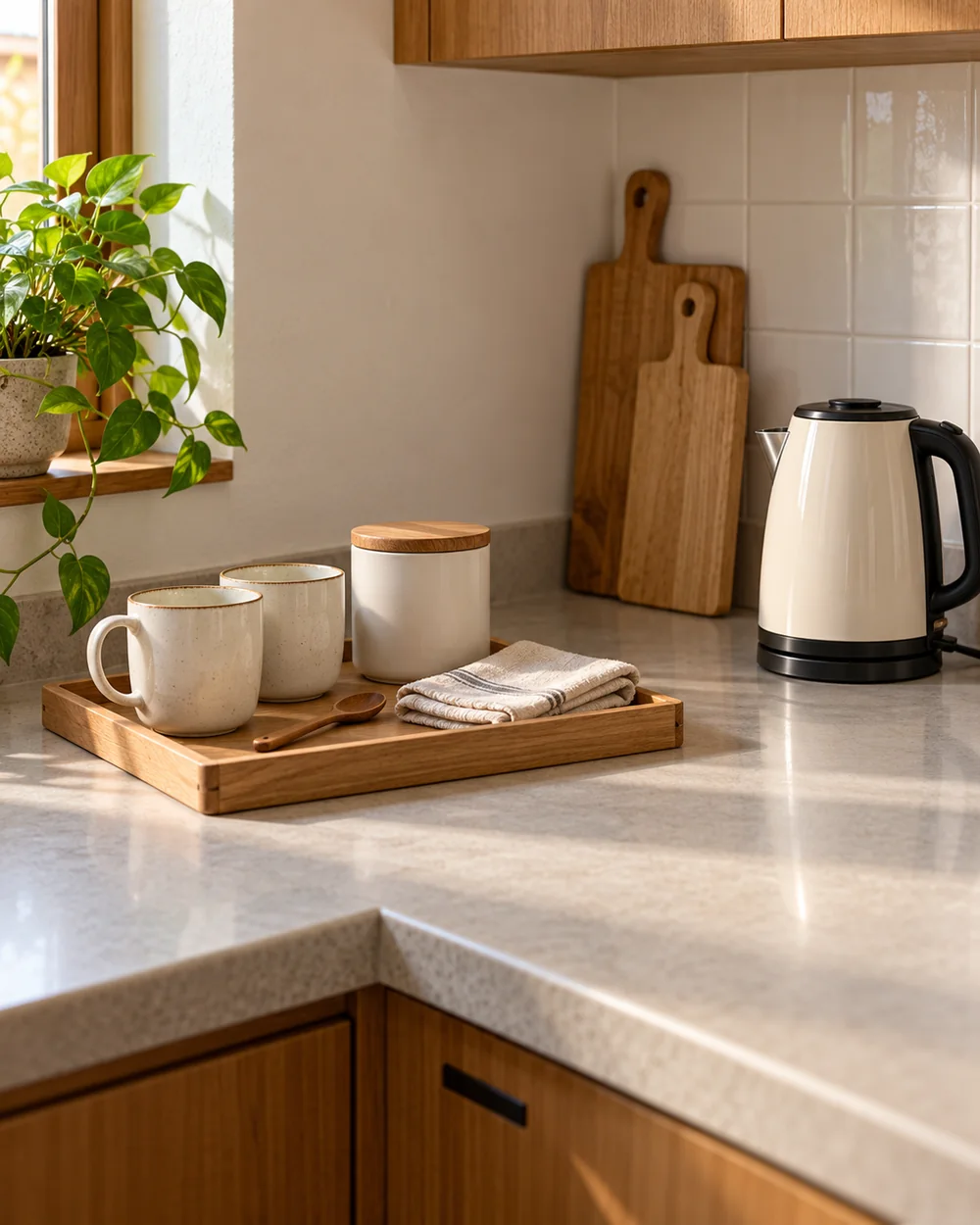
Gather the mugs and supplies you use most often into one practical spot. A small tray or shelf can support a winter ritual without becoming a decorative beverage bar. Keep it close enough to be convenient and clear of appliance heat, steam and connections.
Leave room to prepare a drink safely. Follow appliance instructions and keep cords clear of water and walkways. Store ingredients in suitable containers. One favorite mug and a useful cloth can provide the cozy detail without several signs, jars and ornaments.
12. Art With a Warm Winter Color Palette

Swap one print for artwork in warm brown, muted red, cream or deep green. Reuse the frame if the size works. A single image can shift the room’s mood while keeping shelves and tables free for daily use.
Choose art you have permission to print or display, with a scale related to the wall and furniture. A winter image does not need snow or Christmas symbols. A landscape, still life or abstract composition can connect with your textiles and remain relevant after December.
13. Soft Table Linen for Everyday Meals
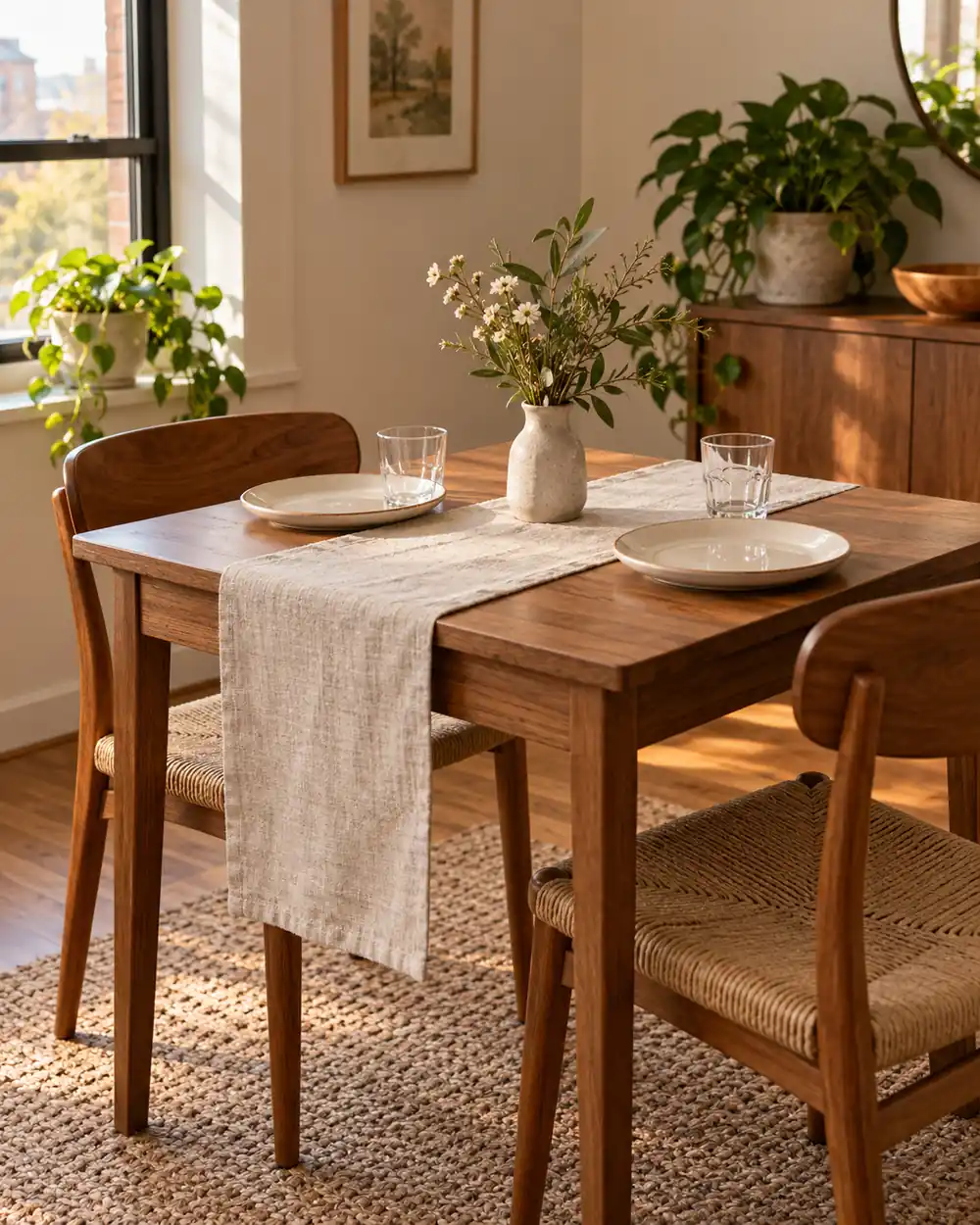
A washable tablecloth, runner or place mats can soften an everyday dining area. Pick a color that relates to the room instead of treating the table as a separate seasonal theme. A textured neutral can work with different dishware.
Check the care instructions and how the material sits. Plates and glasses should remain stable. Avoid hanging fabric that catches when someone stands, and keep it clear of heaters. A table that is easy to clear and use will feel more welcoming than one covered with fragile layers.
14. A Textured Bed Throw and Clear Bedside Surface
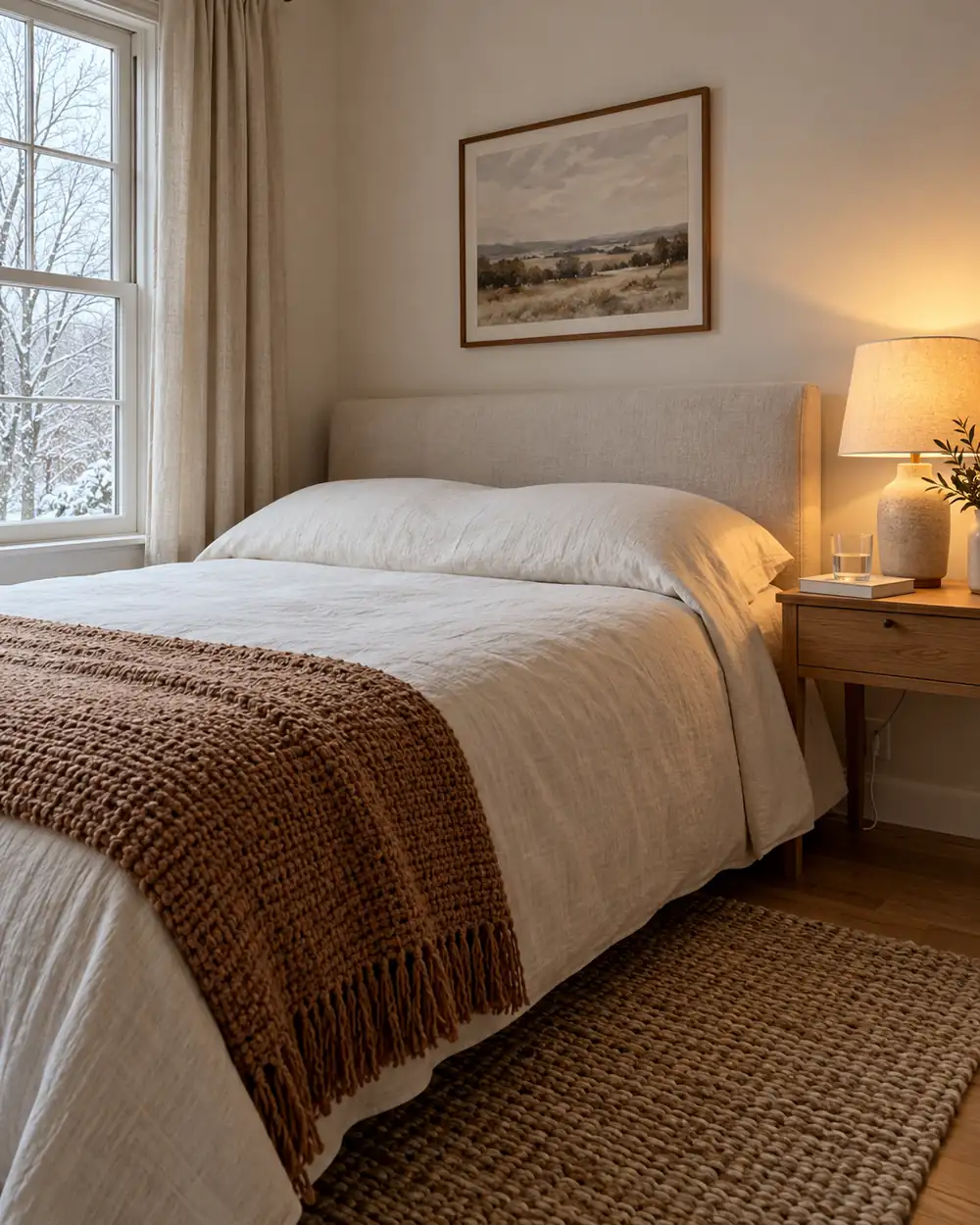
Add a textured throw at the bed’s foot and simplify the bedside table. One lamp, a book and space for water can feel more restful than several decorative objects. Connect the throw’s color with the bedding you already own.
Avoid layers that make sleeping uncomfortable. Fold the throw aside if it is primarily decorative. Keep charging cables orderly and follow electrical-product instructions. Winter bedroom decor should support your routine rather than create another surface to clear or a pile of pillows to remove every night.
15. A Small Mirror Positioned for Existing Light

A mirror can reflect a lamp or a brighter part of the room and add visual depth. Test the view from your main seat before hanging it. A reflection of art or light may be more useful than a view of crowded storage.
Secure the mirror appropriately for its weight and wall. Avoid positions creating glare or concentrating direct sunlight onto furnishings. A mirror changes what you see; it does not replace adequate lighting or make a narrow walking route physically wider. Choose the placement for everyday comfort.
16. A Winter Palette That Works After the Holidays
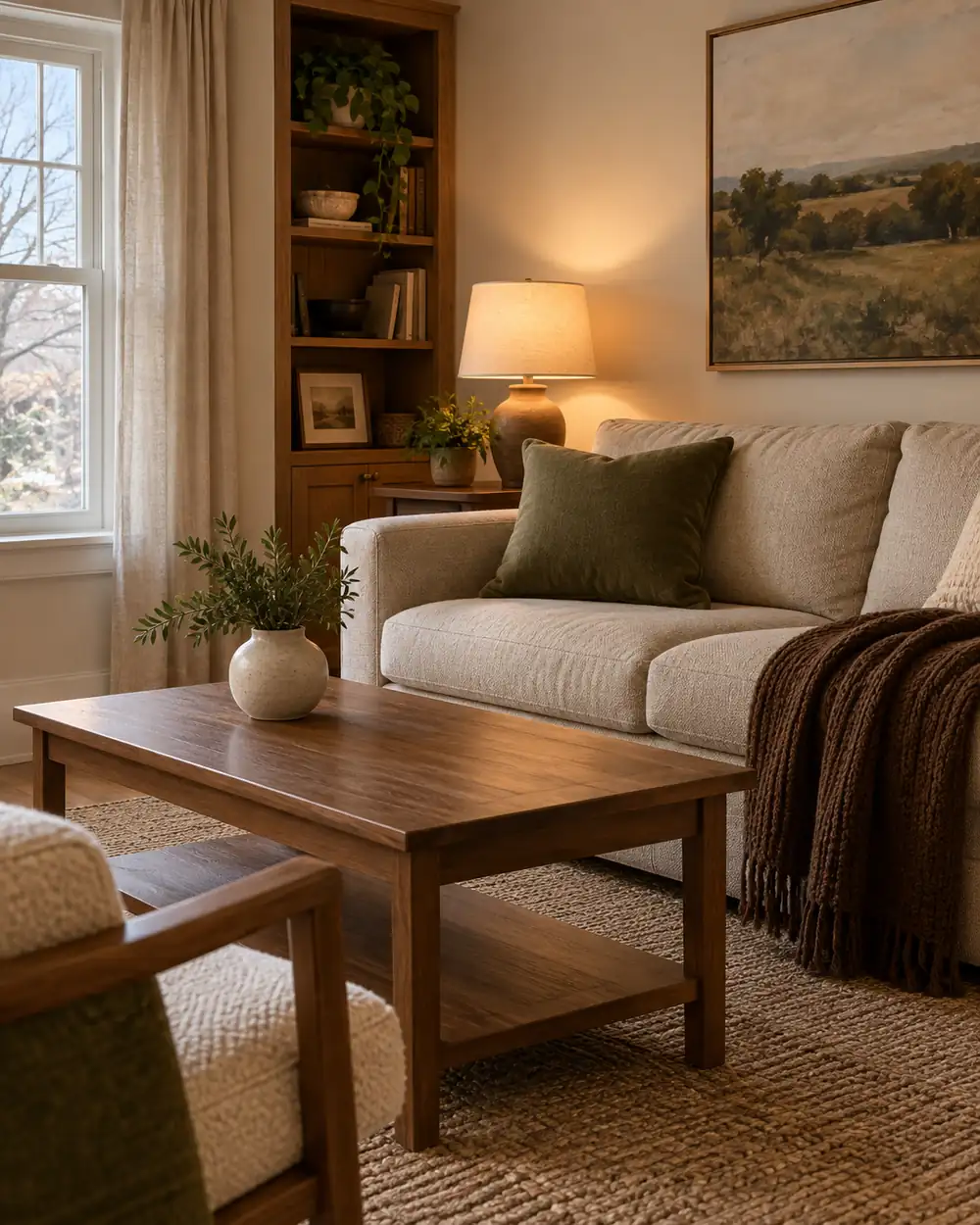
Choose colors you enjoy beyond Christmas: chocolate and cream, navy and warm wood, or muted green and oatmeal. Repeat them in a throw, cover and one accessory rather than changing every surface.
Holiday pieces can sit alongside that base and be removed without leaving awkward gaps. This makes the room easier to live with through January and February. You do not need to replace a room’s established colors because a trend suggests another palette. Start with the furniture and materials you already like.
17. A Weekly Reset for Crowded Surfaces

Choose a short reset for places that collect everyday items. Return books, sort mail, fold the throw and clear part of the coffee table. This may improve a small room’s atmosphere more than another decorative purchase.
Notice which objects repeatedly return. Give them a convenient home rather than treating the clutter as a styling failure. A hook, basket or better tray may solve the practical issue. Decor works more easily when ordinary storage is already doing its job and the room supports the people using it.
Choose changes that fit the space
Start with lighting and one textile before shopping for objects. Look at the room in daylight and after dark, then decide what is missing. A photograph of the main view can reveal competing patterns, but judge comfort by using the room as well.
Keep walkways, exits, heaters and ventilation clear. The U.S. Fire Administration’s holiday guidance is useful when adding seasonal lights and decorations. Follow individual product instructions rather than copying displays that put fabric or greenery beside heat.
Frequently asked questions
How do I make a small home cozy for winter?
Improve light where you sit, add a useful textile and reduce crowded surfaces. Start with a practical discomfort rather than a shopping list. A room can feel warmer in mood without gaining many objects.
What winter decor works after Christmas?
Throws, warm lighting, simple branches and a connected palette can remain useful after holiday-specific pieces are removed. Choose colors and materials you enjoy through the rest of winter.
Do I need new decorations?
No. Move a lamp, change a cover, reuse a frame or clear a surface first. These changes can show what the room needs before you spend anything.
Explore more home decor ideas for rooms that remain comfortable and easy to use.