
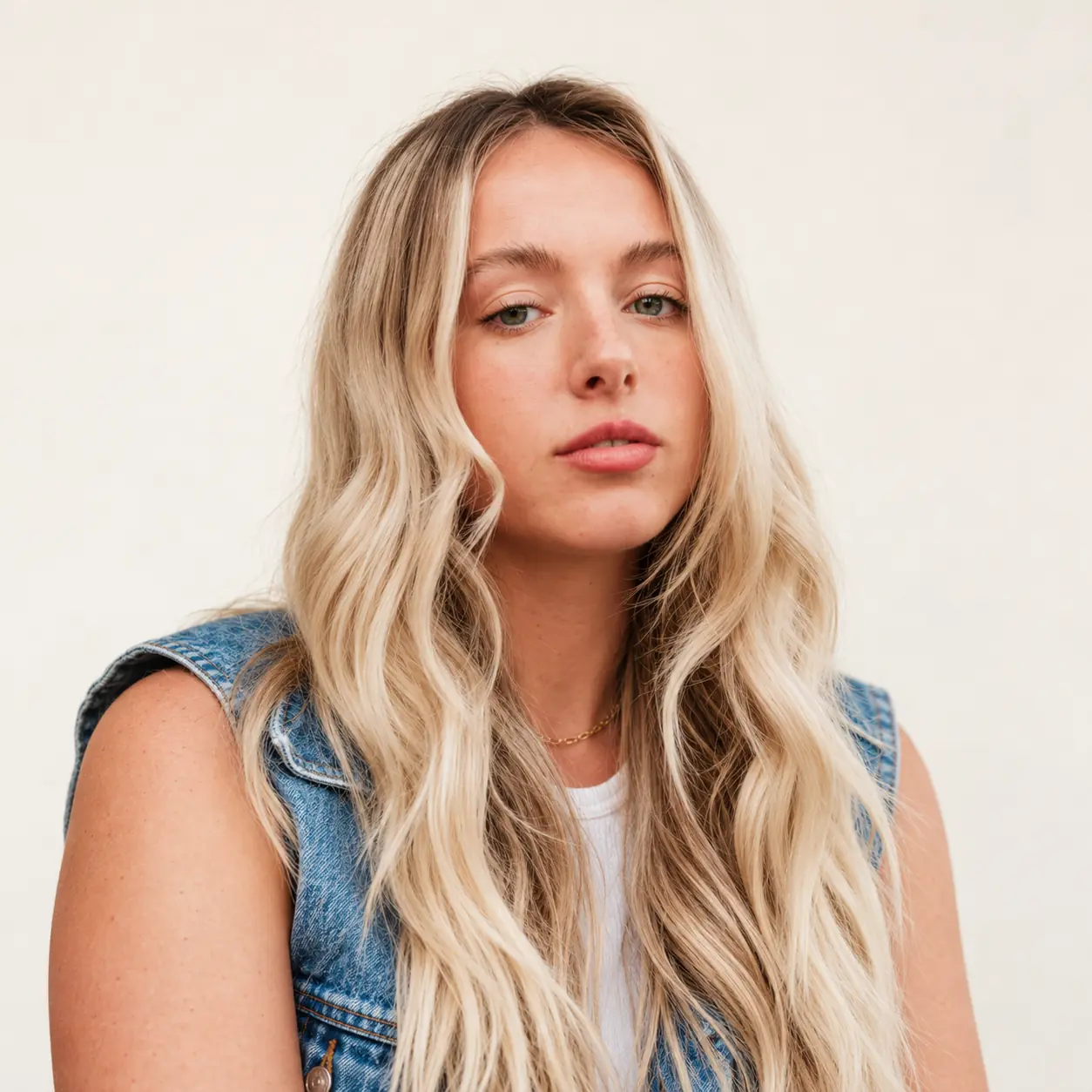
Mocha balayage hair gives a brunette base more variation without making blonde the main event. The difference might be a few cocoa-colored pieces around your face, soft chocolate through the lengths, or lighter ends that show when your hair moves.
The useful question is not simply, “Which brown looks prettiest?” It is how much contrast you want, where you want to see it, and how much upkeep fits your routine. A dark, understated finish and a bright caramel-mocha look can sit under the same inspiration label while requiring very different appointments.
These 19 ideas separate tone, placement, length, and texture so you can take a clearer reference to your colorist. Treat the descriptions as starting points for a consultation, rather than formulas or promises of an identical result.
What Is Mocha Balayage?
Mocha describes a coffee-and-chocolate-inspired brunette color family; balayage describes a highlighting technique. The shade can lean warmer, more neutral, or cooler depending on the result you want. Wella’s mocha-brown guide illustrates this range, including softer brunette dimension and brighter variations.
For your appointment, choose references that show both the roots and the lengths. A beautifully lit close-up of the ends alone will not tell your colorist how dark you want the overall result to remain.
1. Espresso Roots With Fine Mocha Ribbons
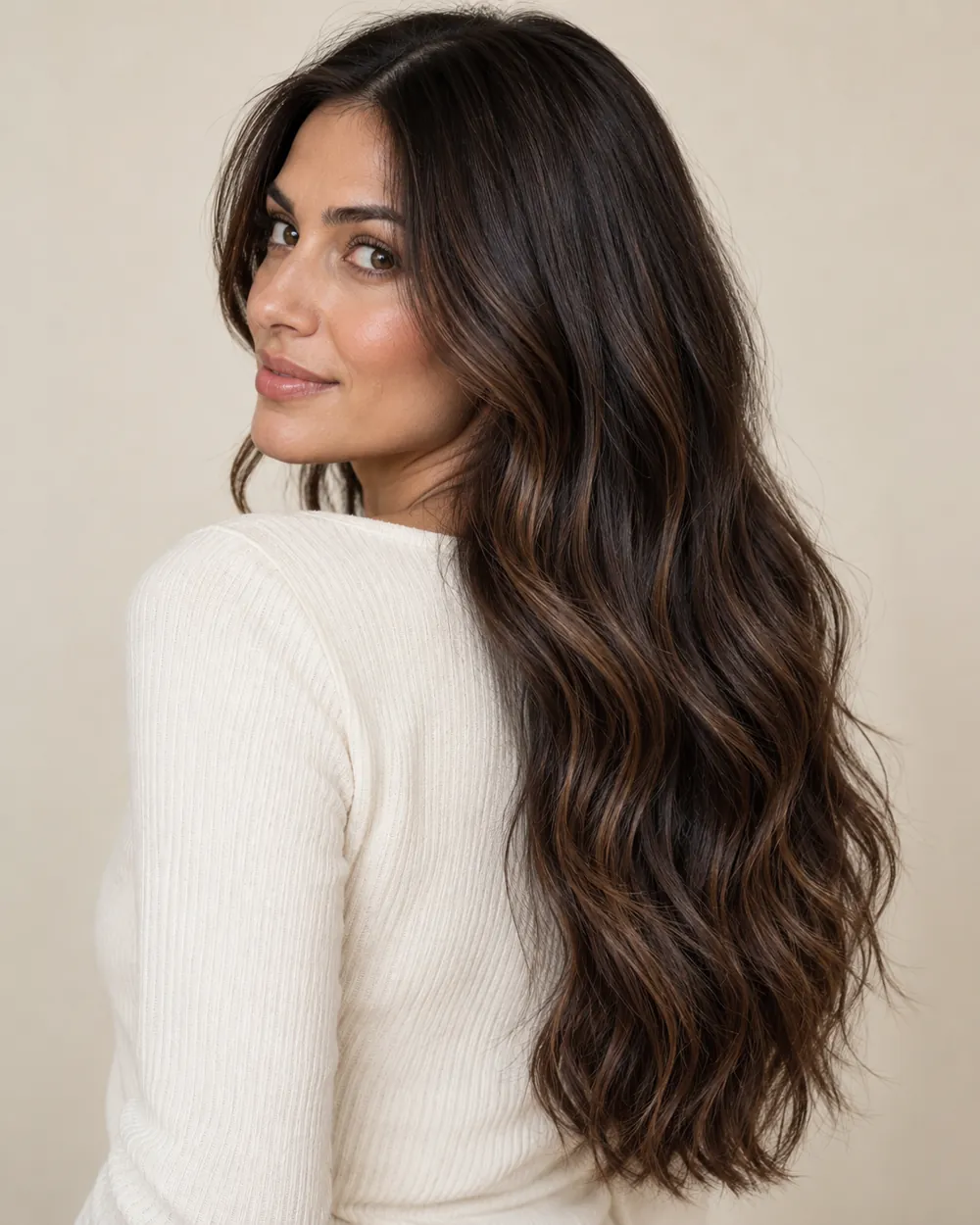
Keep the deepest brown around the root area and ask for slender, softer-brown pieces through the visible lengths. The effect should read as dimensional brunette from a distance, with the individual ribbons becoming clearer in daylight.
This is a useful reference if you want your ponytail and loose hair to look different without a dramatic color split. Ask to see how the placement will appear with your usual part. Fine ribbons around one parting can look quite different when you switch sides.
2. Dark Chocolate Mocha Melt
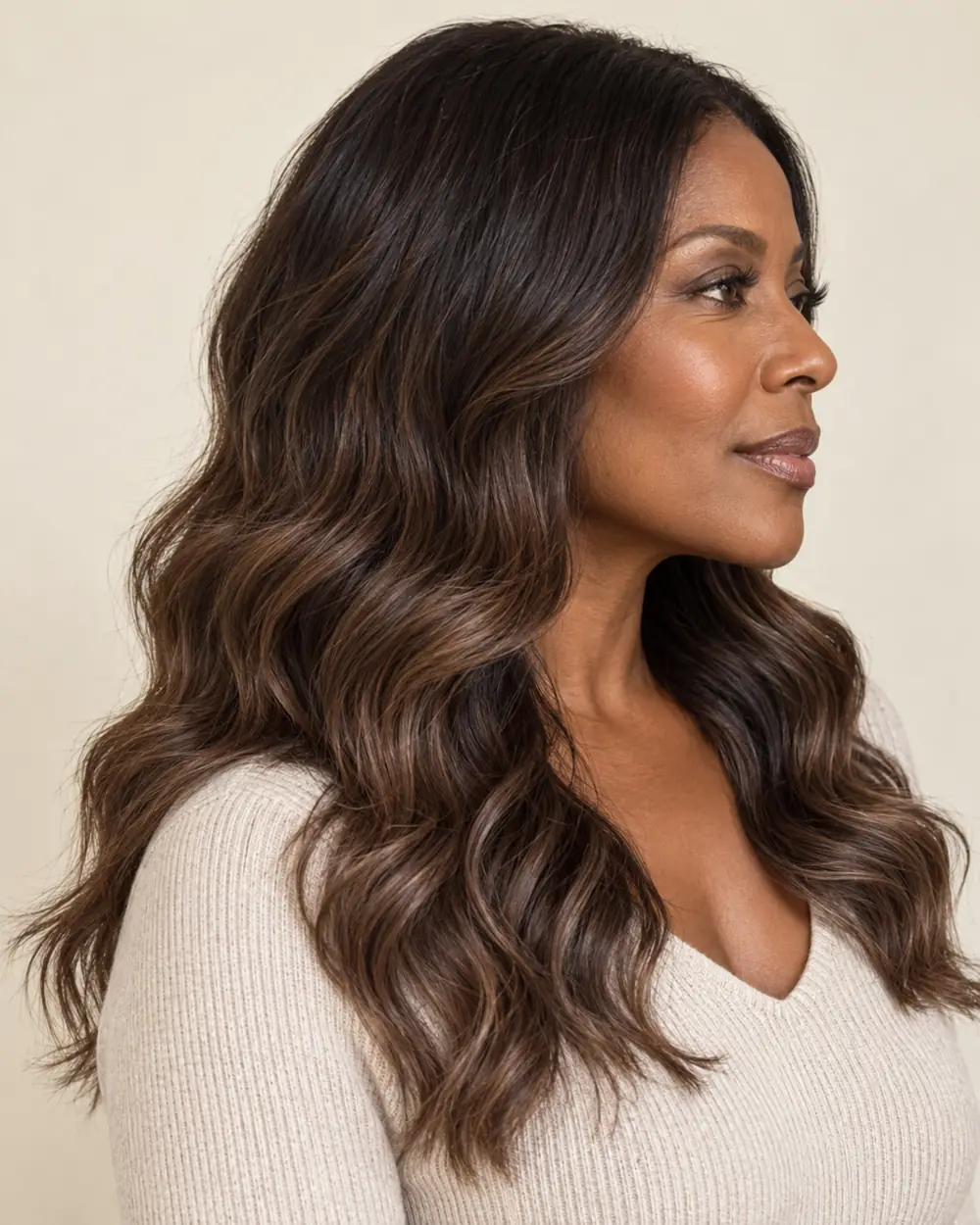
Choose a chocolate base with mocha running gradually through the middle and lower sections. Compared with a strongly highlighted look, this version depends more on a gentle transition between closely related browns.
Bring a picture that still looks dark indoors. Otherwise, a sunlit reference can communicate more brightness than you intended. Explain whether you want the color to be obvious while your hair is straight or only when it catches the light. Those are different visual goals.
3. Neutral Mocha on a Straight Lob
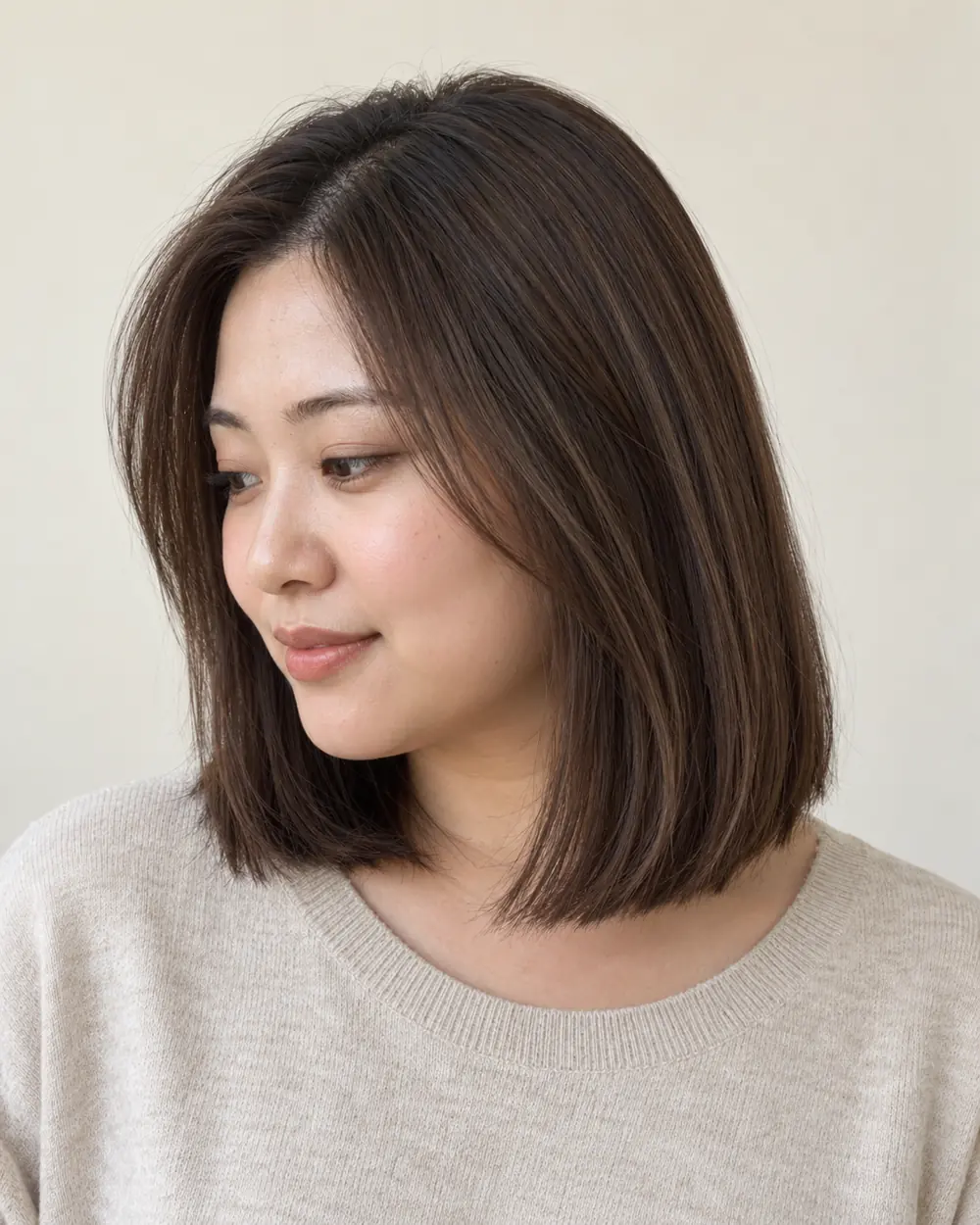
A straight long bob makes color placement easy to see, so use this look to discuss the blend as carefully as the shade. Ask for quiet mocha variation through the mid-lengths while keeping the perimeter visually cohesive.
Photographs with waves can disguise contrasts that become more visible on straight hair. If you normally wear a smooth lob, show your colorist a straight-haired reference as well. You can still style it differently later; the everyday finish should guide the appointment.
4. Soft Caramel-Mocha Face Framing
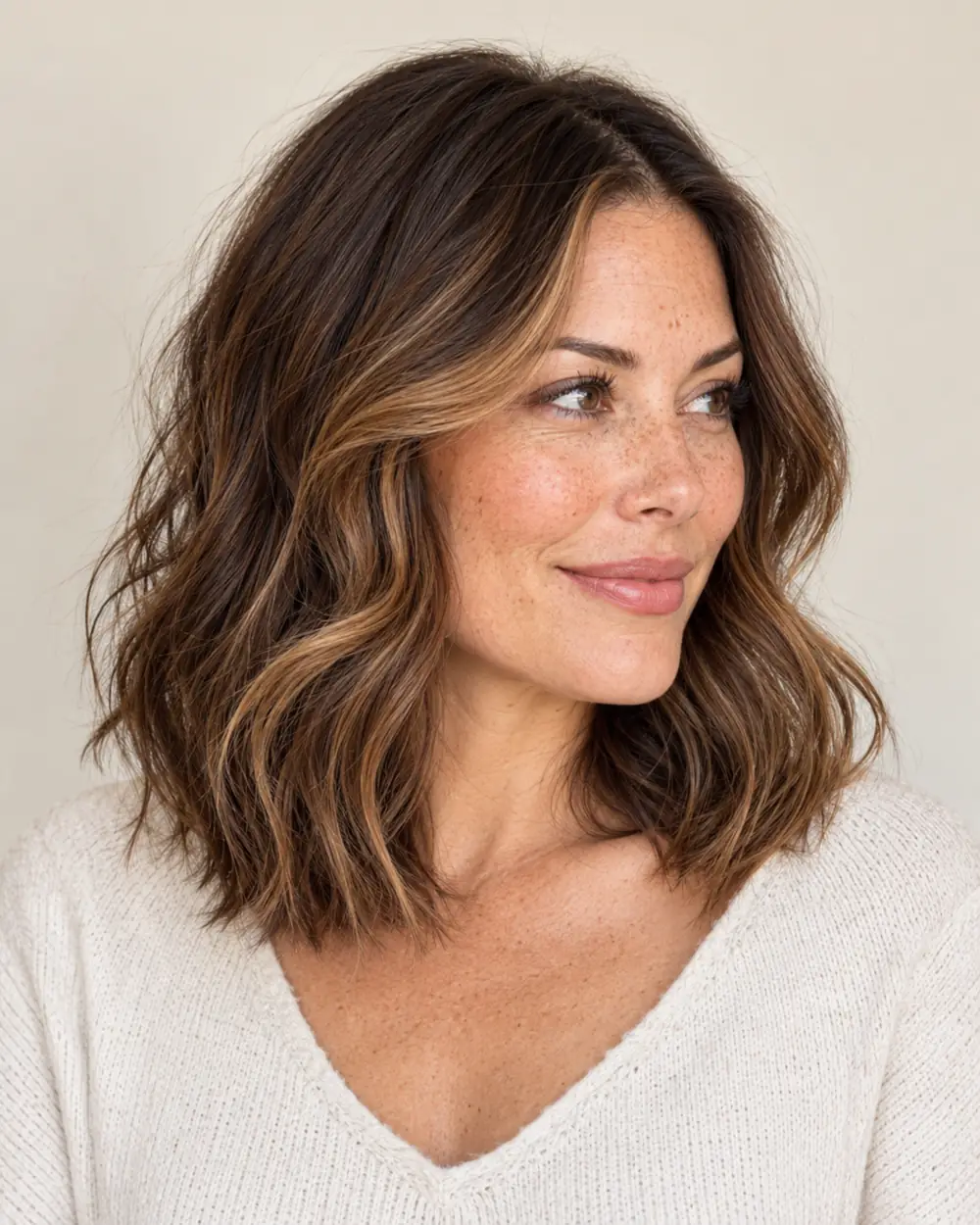
Add a warmer, lighter note around the face while keeping the rest of the hair recognizably brunette. Think softly connected pieces rather than two isolated blonde stripes.
Decide how high you want the brightness to begin. A delicate change near the cheekbones gives a different impression from a strong section starting at the hairline. If you often tuck your hair behind your ears, mention that too: the pieces that remain visible matter more than the ones hidden underneath.
5. Mushroom-Mocha Balayage
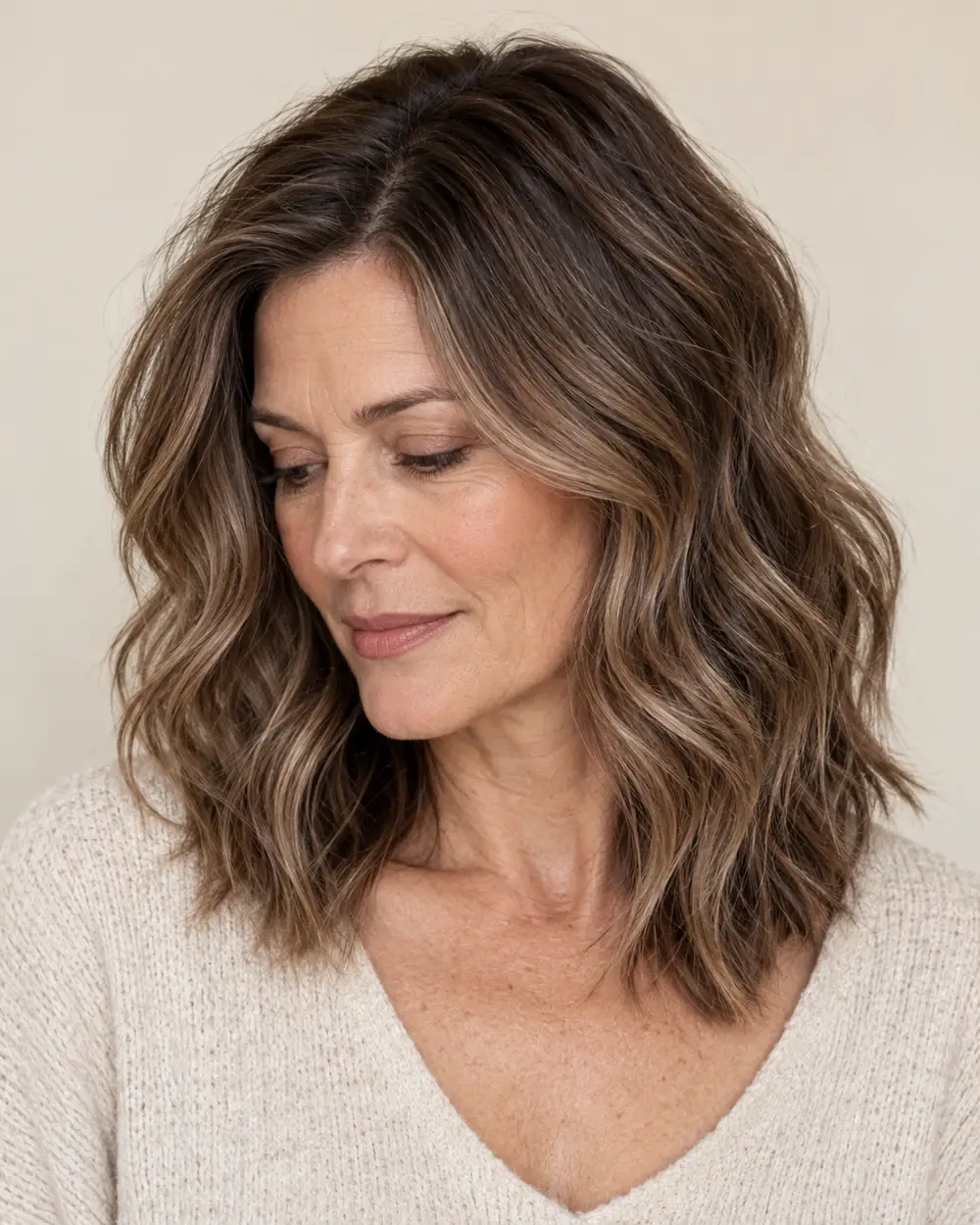
For a less golden reference, look for a muted brown finish with a soft mushroom cast. Keep the inspiration comfortably brunette rather than silvery or gray unless that is deliberately your goal.
Color names are not standardized, and “cool mocha” can mean different things to different people. Show a picture of a result you like and another that feels too ashy. Ask how your existing color history might affect the tone and whether maintaining the muted finish would involve additional visits.
6. Warm Mocha on Loose Waves
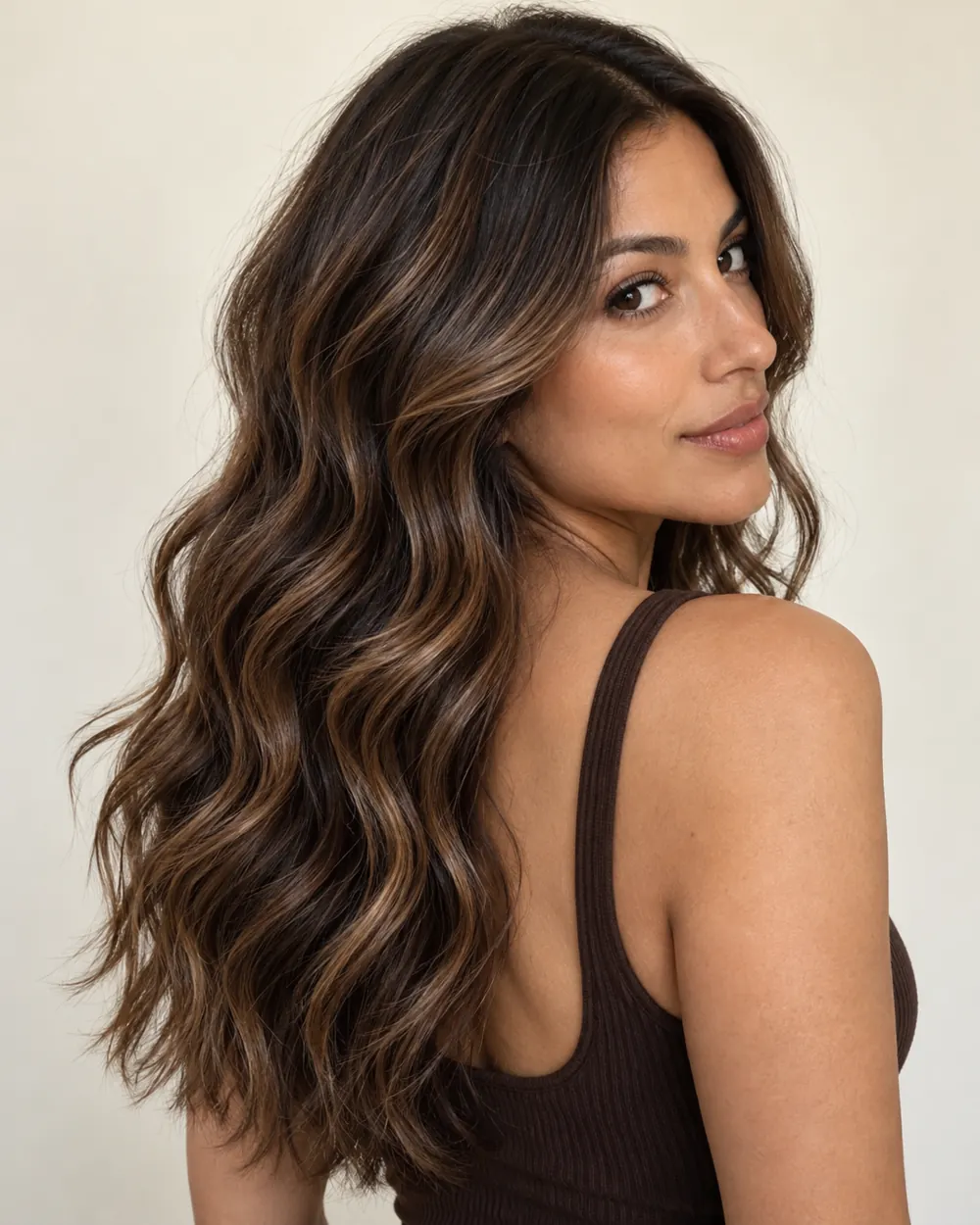
Warm mocha can look especially distinct where a wave turns toward the light. Ask for the lighter sections to follow the movement you actually wear, while leaving enough deeper brown between them.
If your waves are natural, arrive with photographs of your ordinary texture. If they come from styling, explain that instead. The color should still make sense on days when you do less. A reference with very bright ends may require more contrast than the words “soft mocha” suggest.
7. Mocha Ribbons Through Natural Curls
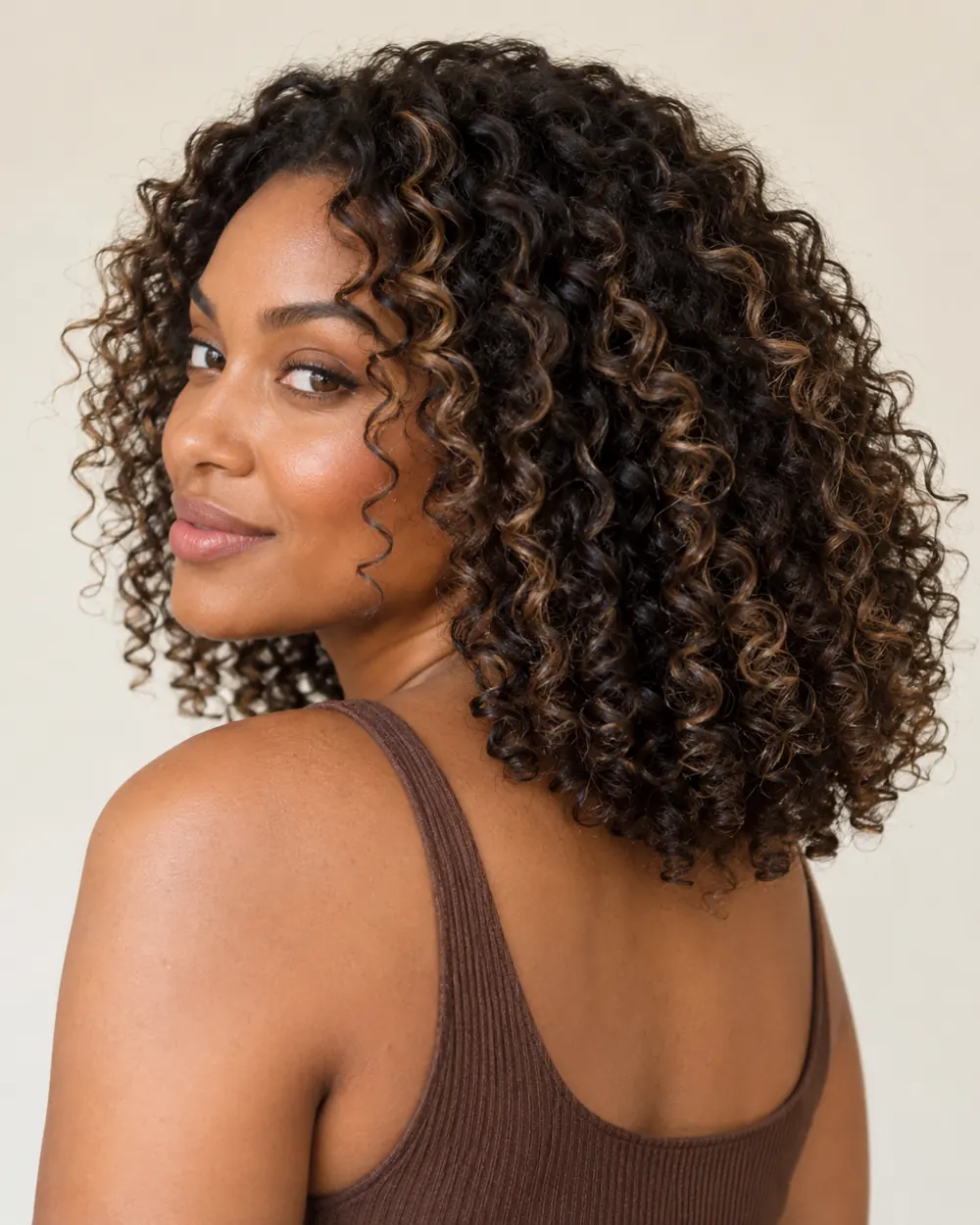
Use curl definition and placement as part of the consultation. You might want a few visible lighter curls around the face, dimension across the outer shape, or color that appears when you lift your hair.
Ask your colorist how they would map the placement around your usual curl pattern and shrinkage. A straight-haired reference alone cannot show that relationship. Keep the appointment focused on your hair’s current condition and desired contrast rather than assuming every curl needs an identical highlight.
8. Fine-Hair Mocha Babylights
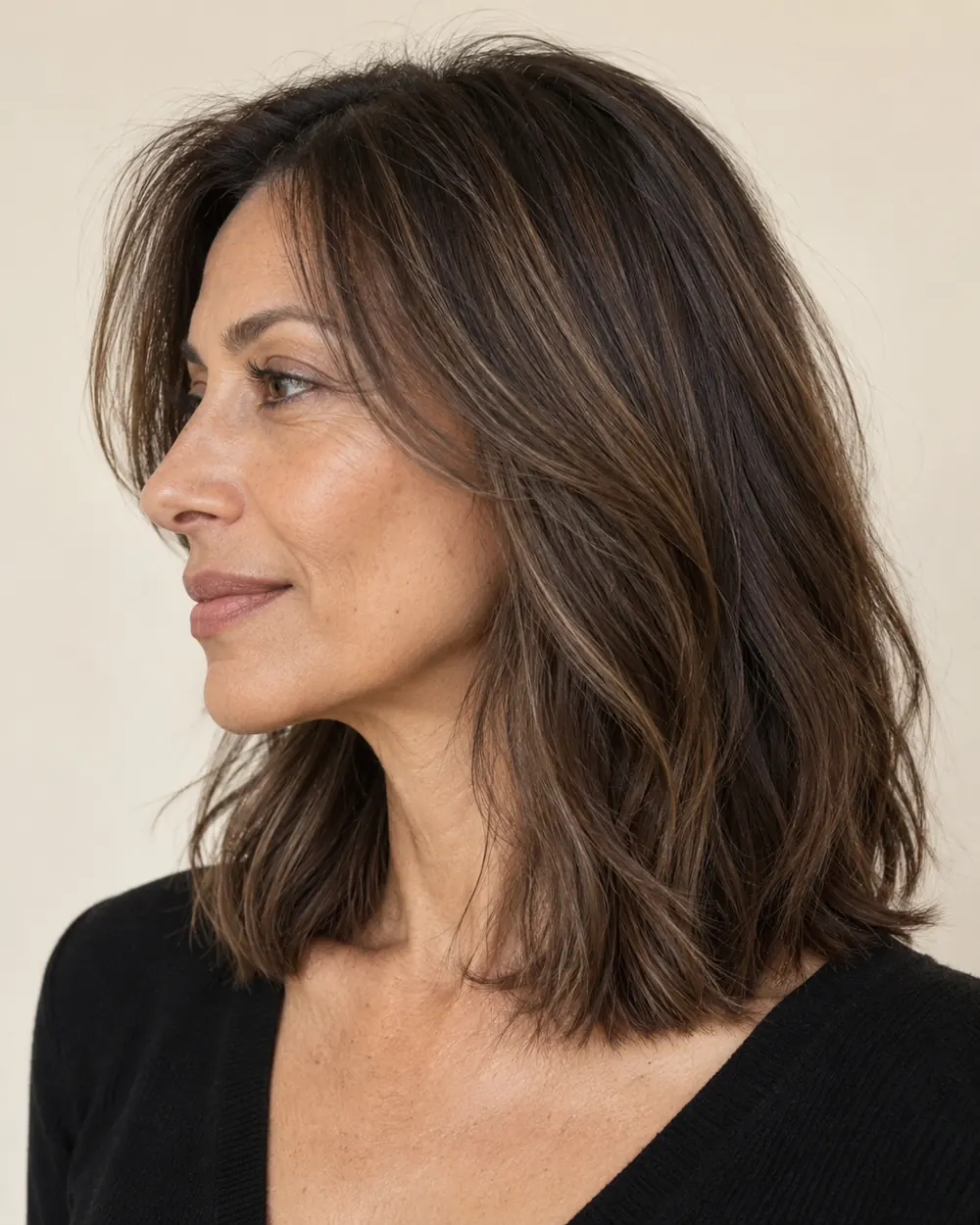
For a delicate version, use very fine highlighted pieces as your visual reference. The goal is a gentle change in tone rather than a dramatic division between dark and light sections.
Ask how to retain the appearance of depth through the ends instead of automatically requesting more highlights. Color cannot guarantee thicker hair, and too much brightness may move you away from the brunette look you wanted. Bring a photograph of your hair without a salon blowout so the plan reflects your normal finish.
9. Wider Mocha Panels for Thick Hair
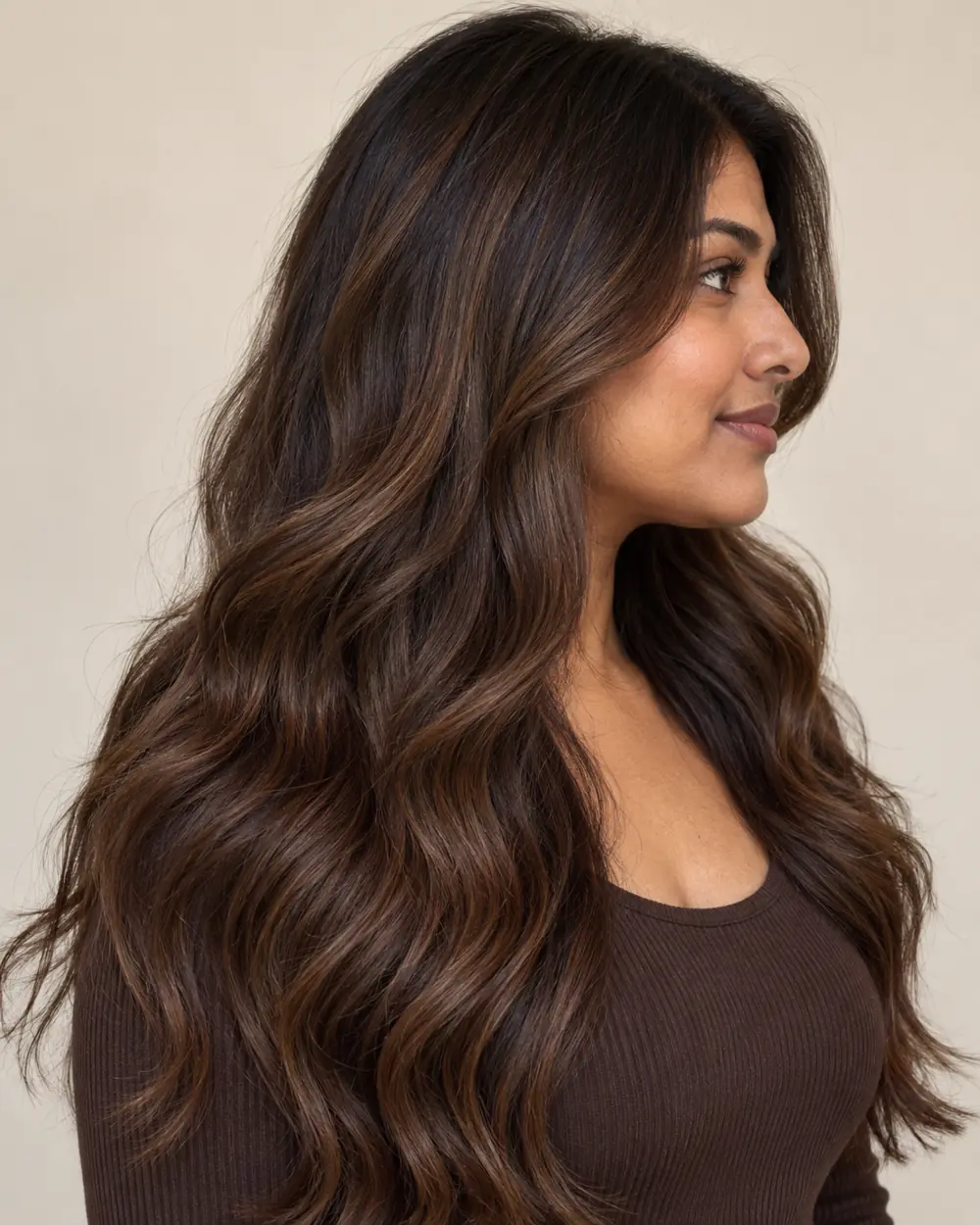
If tiny highlights disappear inside your usual hairstyle, a reference with wider mocha sections may communicate the dimension you are after. Leave clearly darker sections between them so the finished color has separation.
Discuss how much of the lower hair you usually expose in buns, braids, or half-up styles. More visible contrast does not necessarily mean highlighting every section. Ask your colorist which areas would contribute most to the result and which could remain closer to your existing base.
10. Mocha Balayage on a Jaw-Length Bob
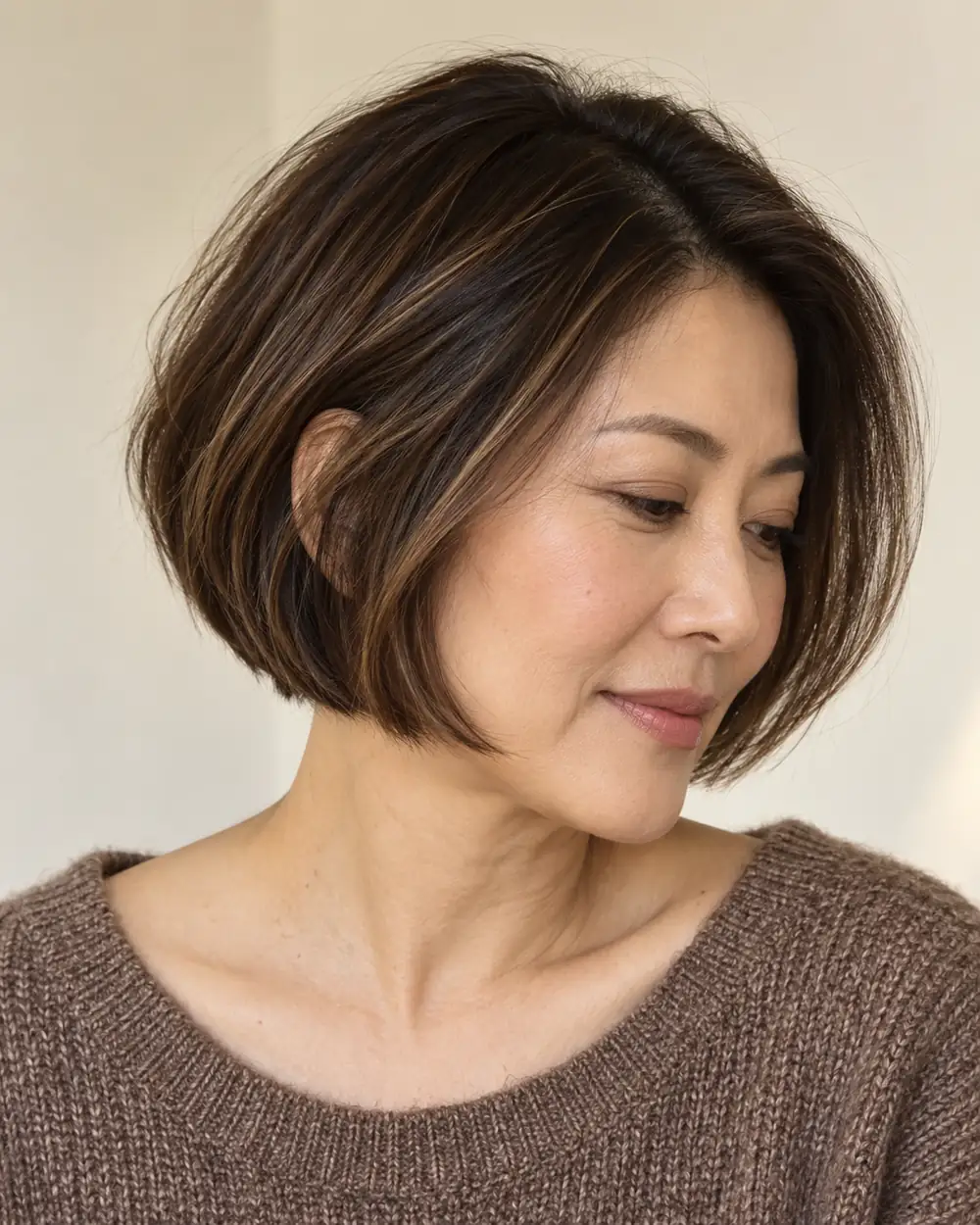
A shorter bob needs a reference that shows the limited distance between root and ends. Instead of copying the dramatic gradient of waist-length hair, ask about a smaller amount of well-placed variation.
Choose whether you want a face-framing detail, scattered surface pieces, or a subtle change near the ends. If a haircut is also planned, discuss the cut before committing to color placement. Removing length afterward can change how much of the highlighted section remains visible.
11. Collarbone Mocha Lob With Brighter Ends
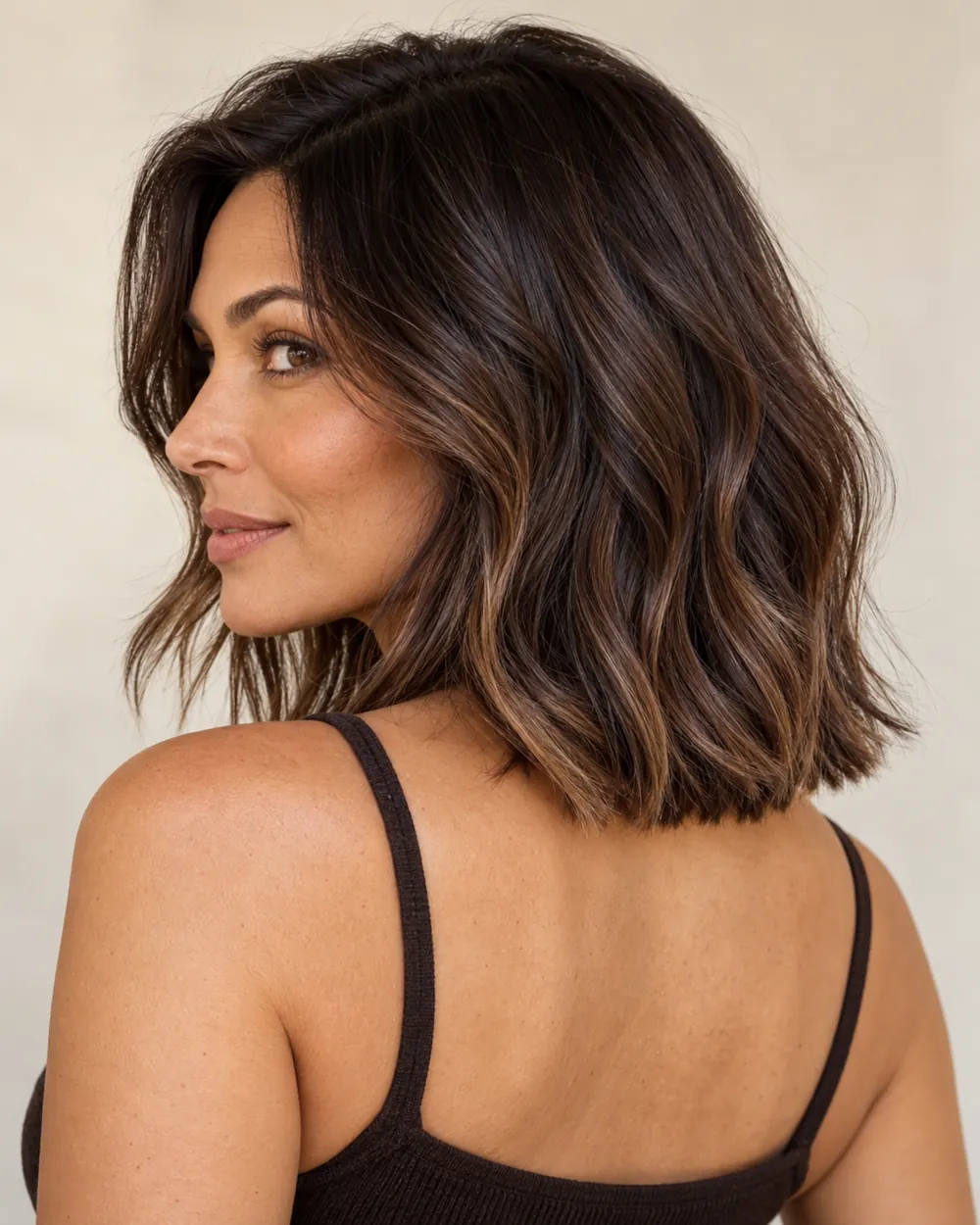
Let the brightness collect toward the lower part of a collarbone-length cut while keeping the upper sections deeper. This can be a clearer choice than asking for general “dimension” without specifying where you want it.
Check that your reference includes enough brunette between the lighter pieces. A uniformly light band along the bottom is a different look. Talk through how the color will appear with the ends flipped, air-dried, or pulled into a small ponytail.
12. Mocha Balayage With Curtain Bangs
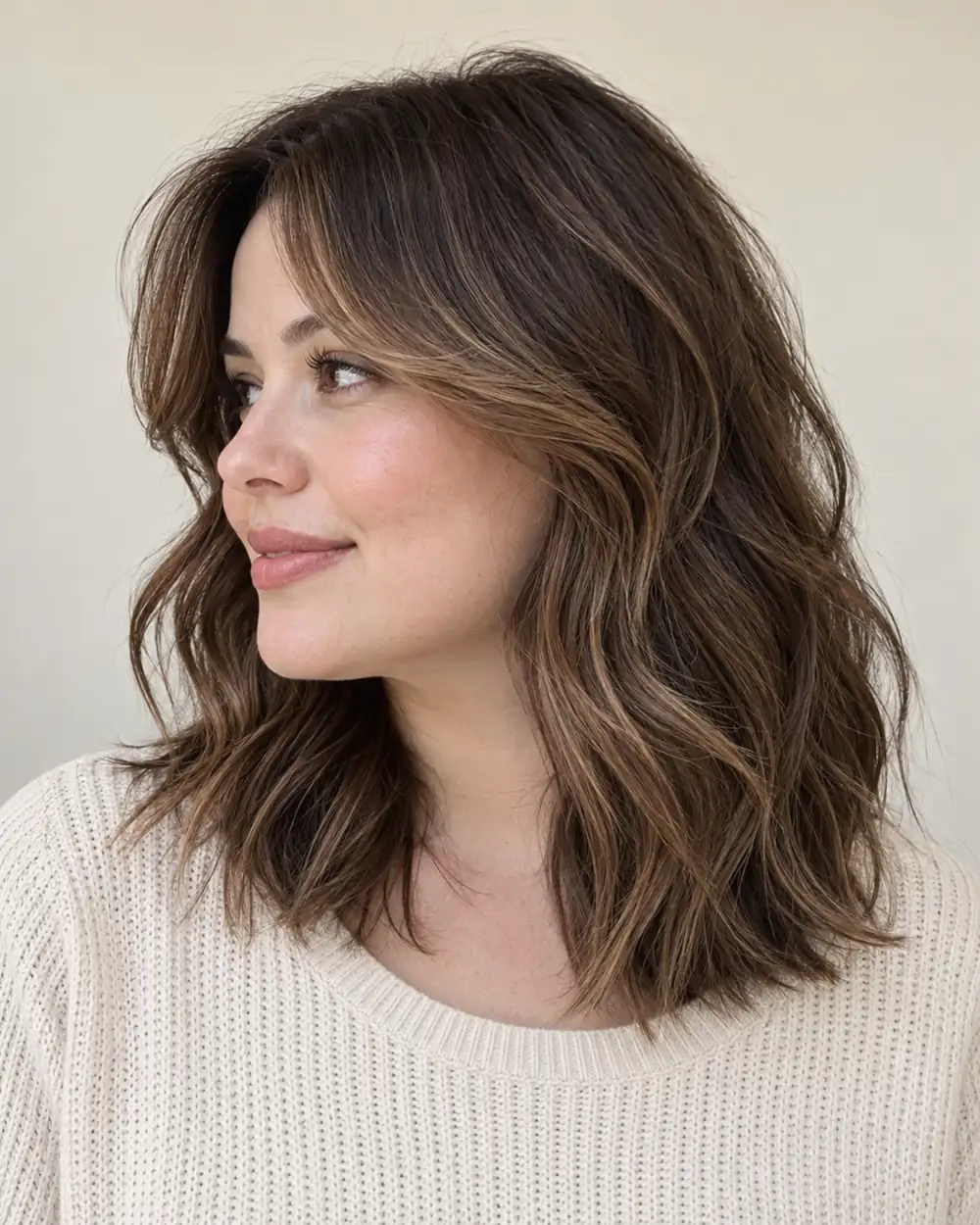
Keep the fringe connected to the rest of the color story. You may prefer subtle brightness where the bangs open, or a deeper fringe with lighter pieces beginning farther down the sides.
Tell your colorist whether the bangs are a permanent part of your routine or something you are growing out. They may be trimmed more often than the rest of your hair, which changes the visible placement over time. Avoid choosing the front pieces without looking at the whole haircut.
13. Long Layered Mocha Brunette
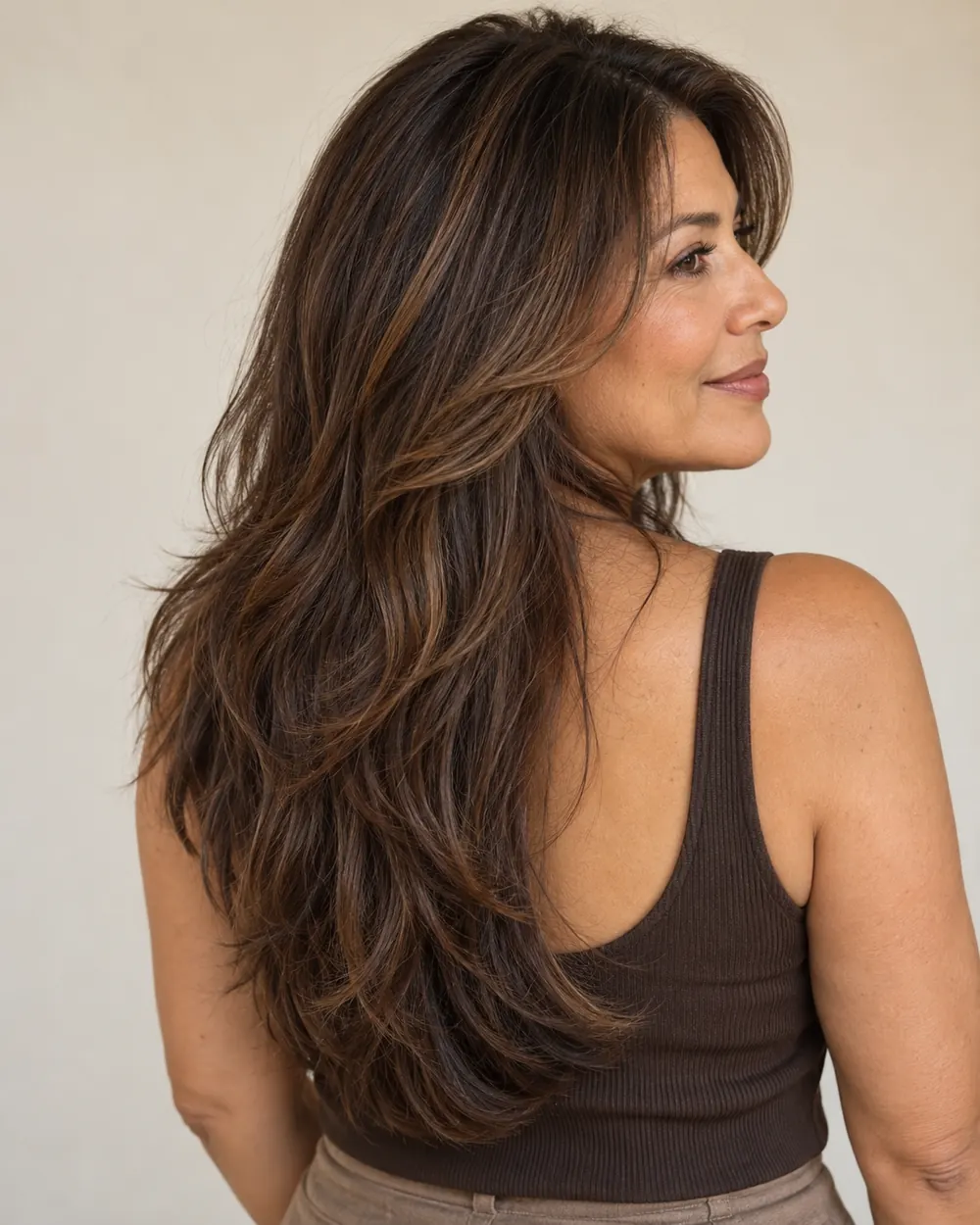
With long layers, use the different lengths to show a progression of brunette tones. Ask for the shorter framing pieces and longer ends to feel related without making every layer equally light.
Bring a reference that shows the back as well as the front. A bright face frame can make a dark overall color appear lighter in a selfie. Also discuss how much old color is already on the ends; length alone does not tell you what those sections can tolerate.
14. Subtle Mocha on Nearly Black Hair
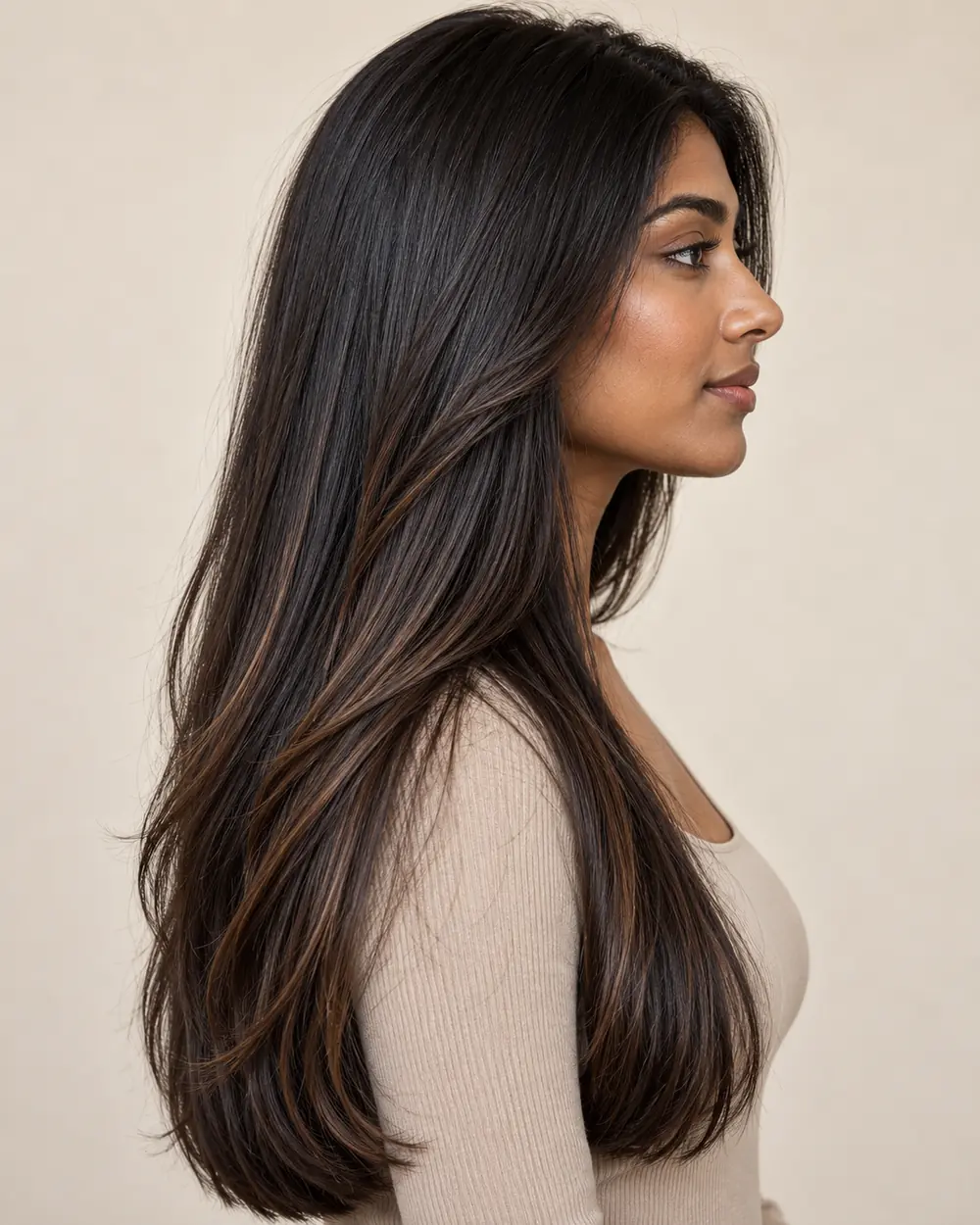
For a restrained change, look for dark references with a small amount of brown visible through selected sections. The overall impression should remain deep rather than turning into a high-contrast blonde balayage.
Be specific about whether your base is natural, previously colored, or both. Ask what is realistic from that starting point and whether the result may take more than one appointment. A soft-looking photograph does not necessarily mean a small or simple chemical change for every head of hair.
15. Chestnut-Mocha Dimension
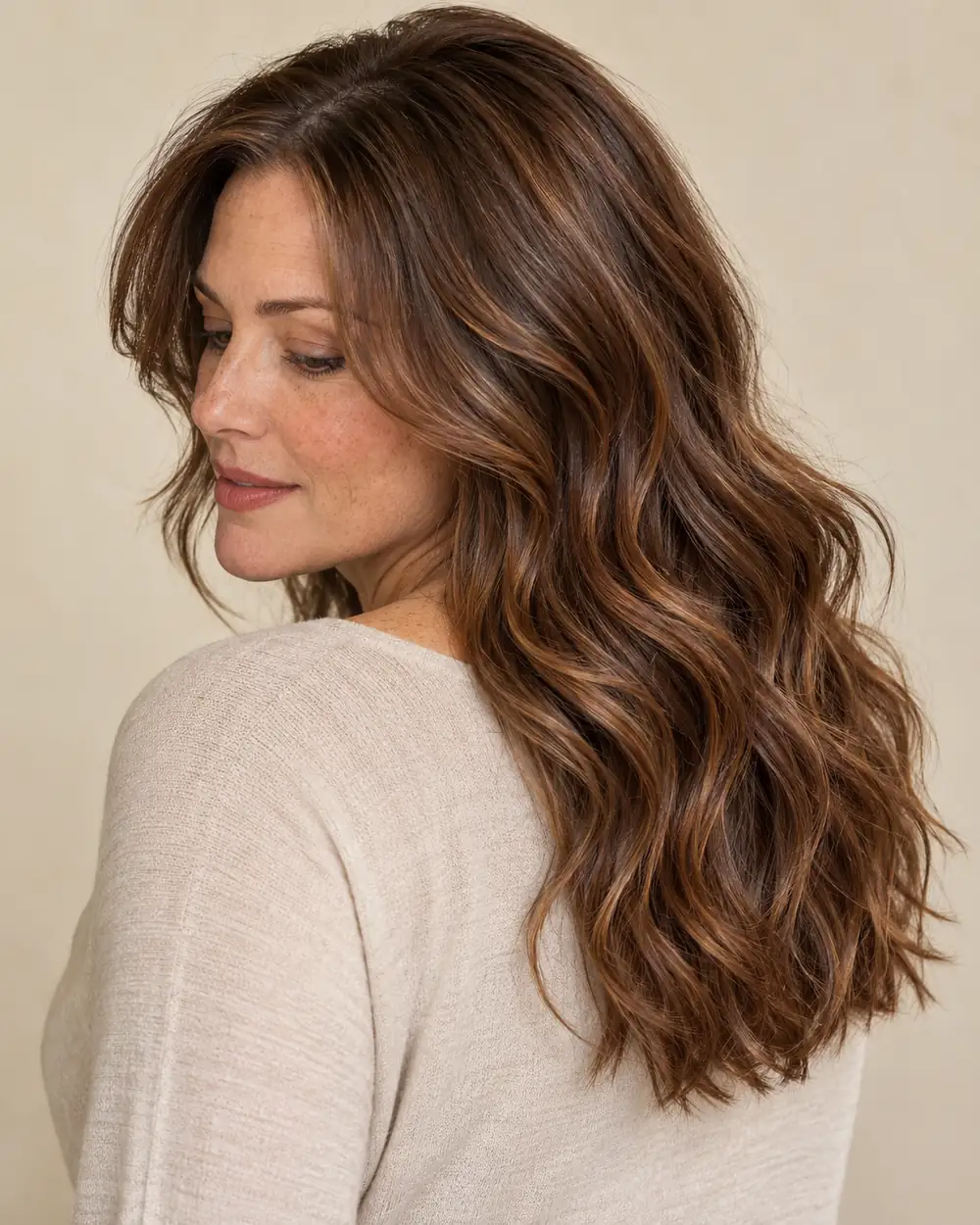
Chestnut introduces a warmer note while mocha keeps the reference grounded in brunette. Choose pictures that show how much golden or reddish warmth you enjoy, rather than relying on the name alone.
This is particularly useful if you like warmth but do not want the result to look copper. Compare references in similar lighting and ask your colorist to describe the difference. Screen filters can shift brown noticeably, so a consultation with shade references is more useful than a phone image by itself.
16. Cinnamon Accents in Mocha Brown
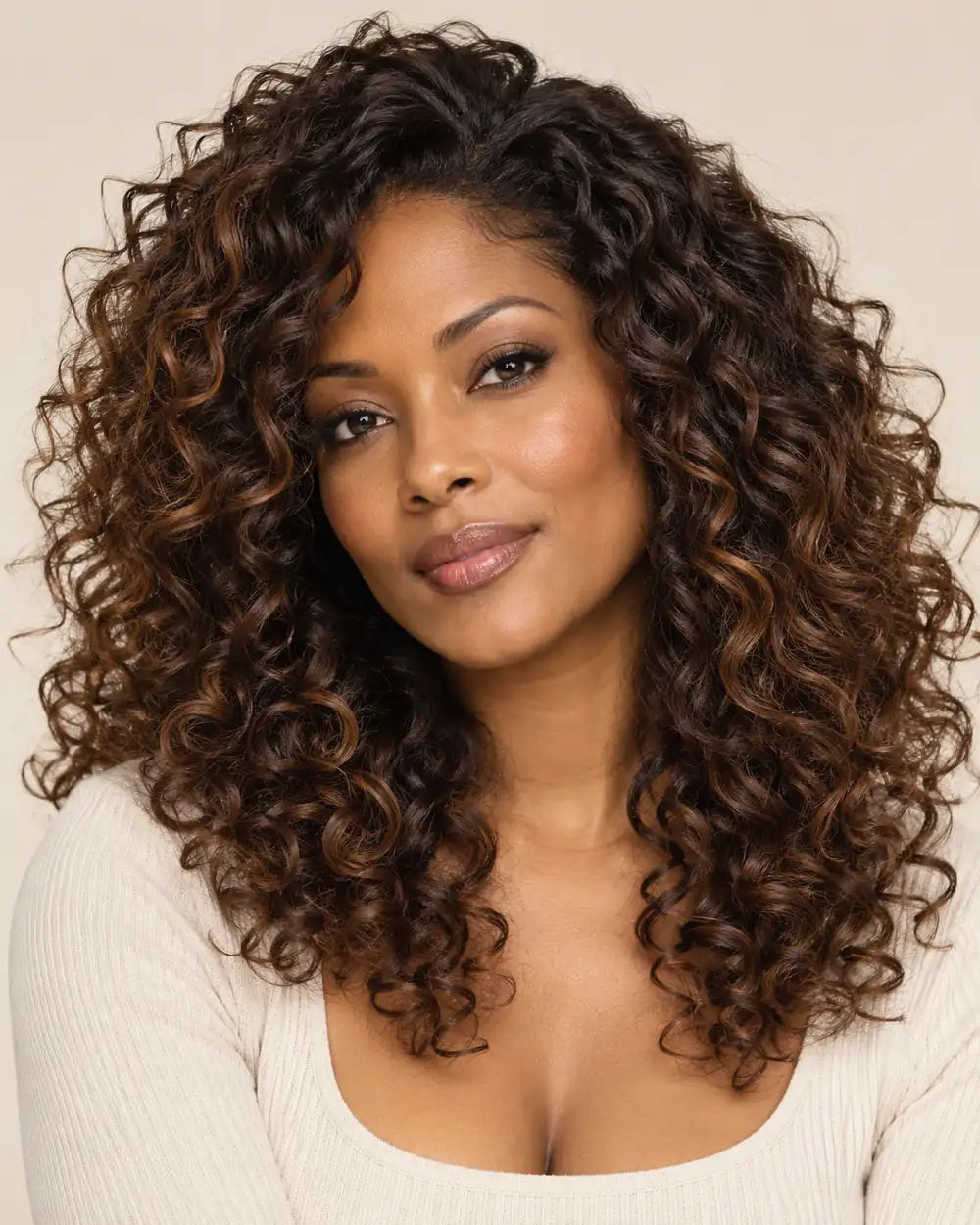
Use cinnamon as a small accent instead of the main shade: a little warmth through the face frame, the ends, or selected curls. The brown base should remain visible enough to keep the look within your chosen color family.
Decide whether you want those accents noticeable immediately or mainly in brighter light. If you dislike red tones, say so before the service. “Warm” can describe several different directions, and explaining the colors you do not want helps narrow the brief.
17. Muted Mocha-Bronde Ends
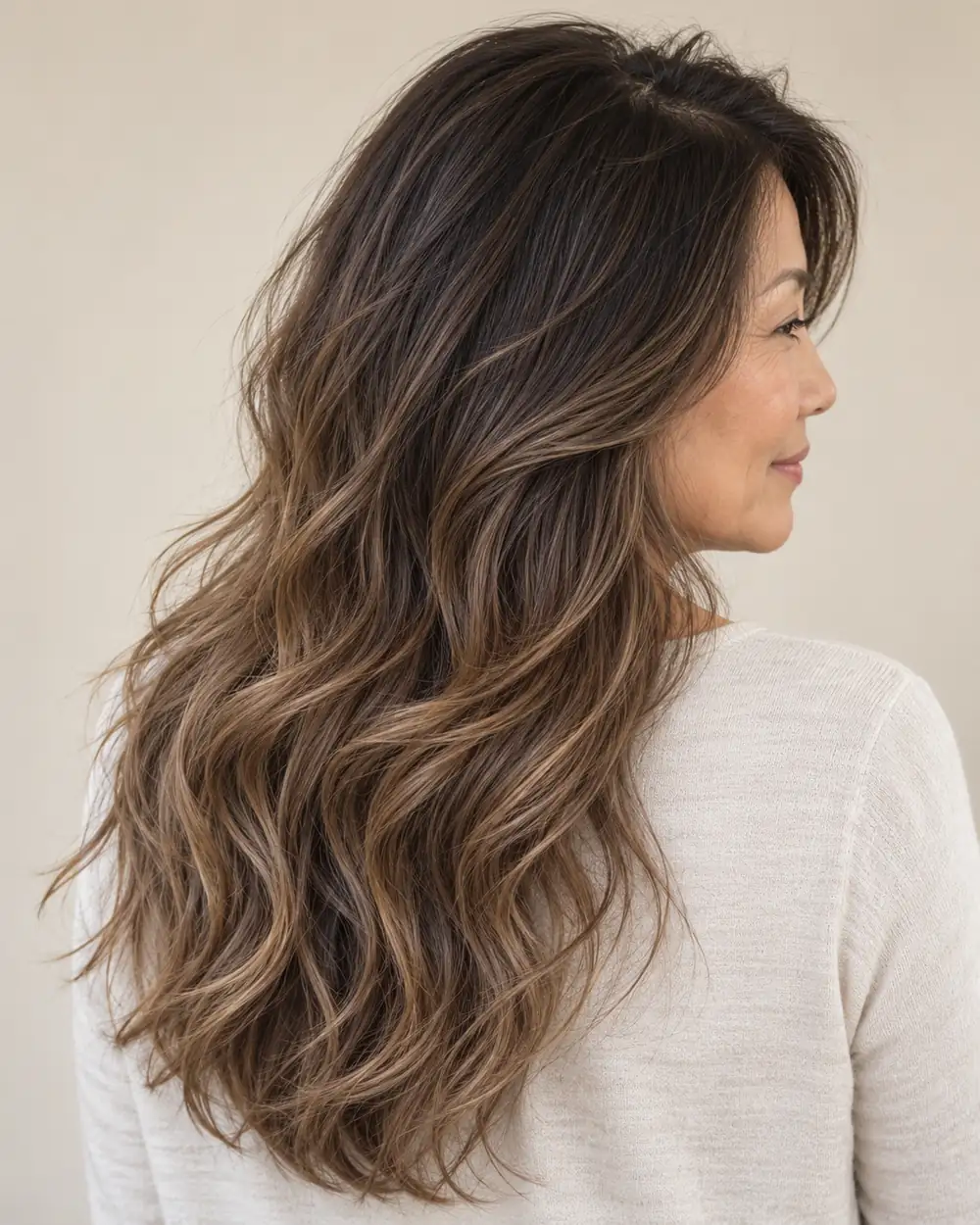
This is the brighter option for someone comfortable moving toward a brown-blonde blend. Keep the upper sections rooted and use a muted, creamy finish through the ends rather than an obvious golden stripe.
Compared with a barely-there brunette refresh, this reference may involve a greater change. Ask about the lightening process, care, cost, and future appointments before choosing it. Lower placement can soften the look of regrowth, but it does not make the hair’s condition or color upkeep irrelevant.
18. Rooted Mocha With a Delicate Money Piece
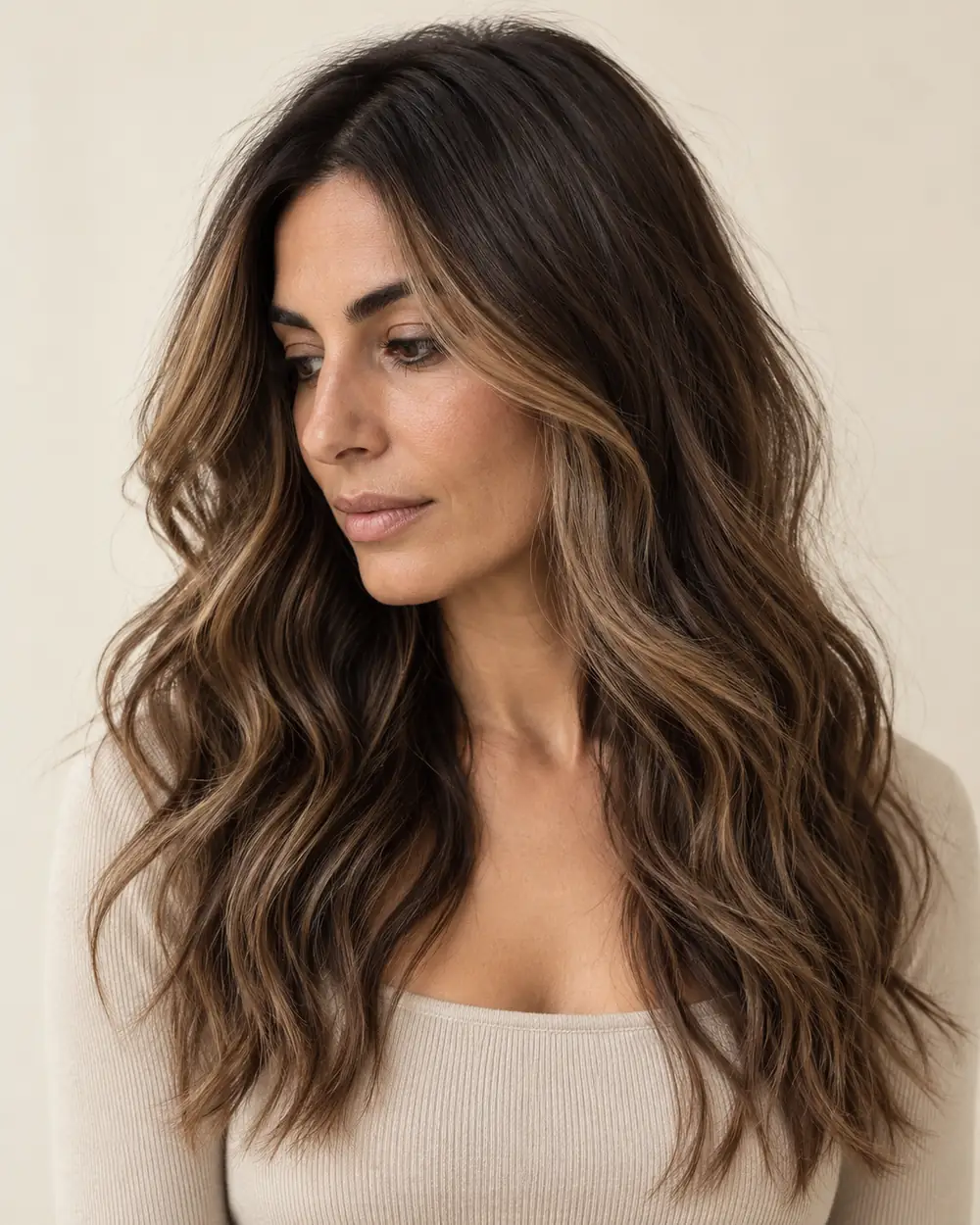
Choose a little extra brightness at the front while the main lengths stay quieter. For a softer finish, ask for the face-framing section to connect visually with smaller pieces through the rest of the hair.
Show how you wear your part and whether you pull the front sections back. A money piece can be a small detail or the strongest part of the finished look. Be clear about which you mean, especially if a dramatic front stripe would feel unlike your everyday style.
19. Barely-There Mocha for a First Color Appointment
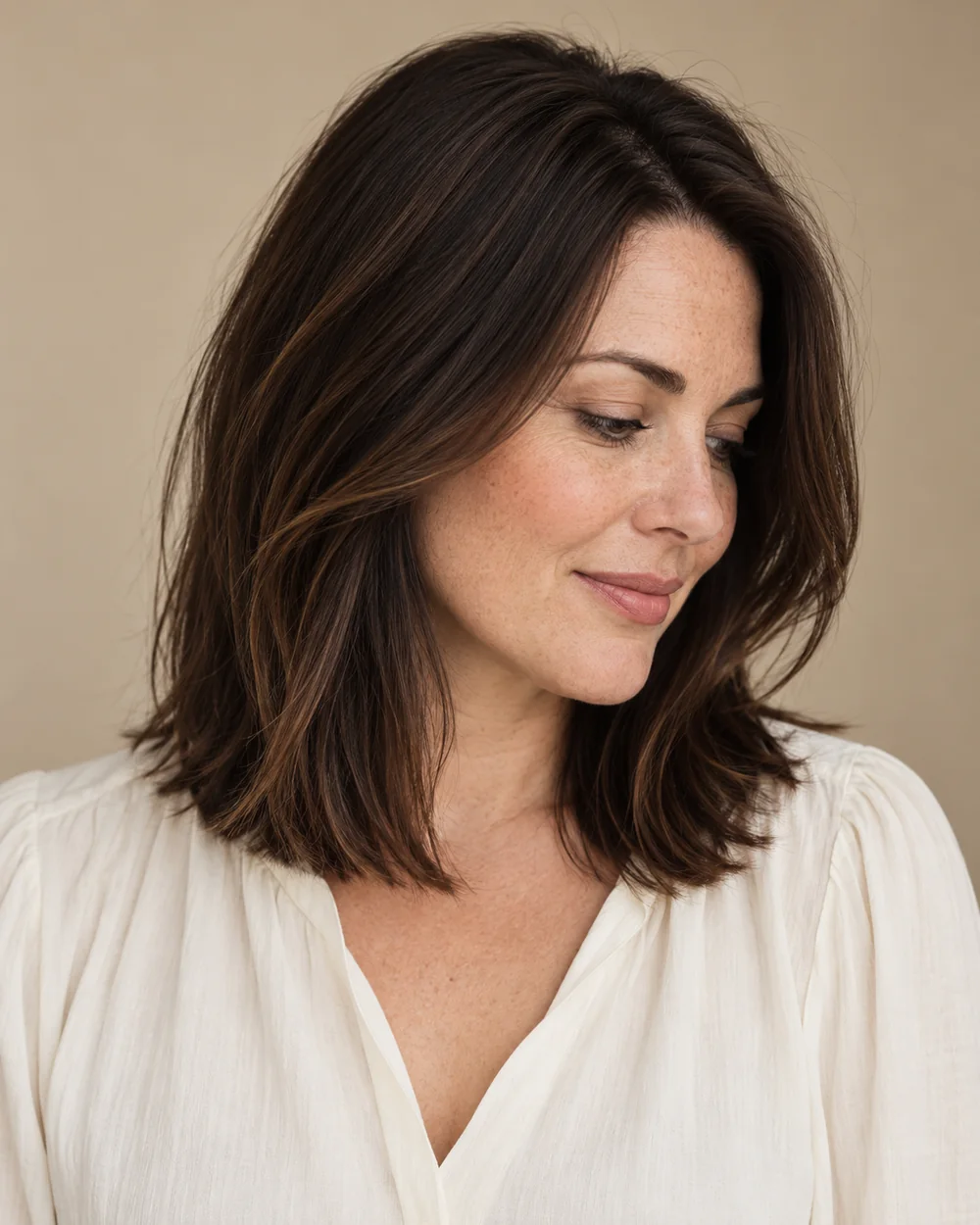
Start the conversation with subtlety: a few visible pieces, an overall dark impression, and no expectation that the result must resemble bright balayage photographs. Ask your colorist what small change makes sense for your hair and history.
You do not need to commit to a more noticeable finish simply because it photographs dramatically. Choose a reference you would enjoy in ordinary daylight, at work, and with your hair tied back. A clear, modest goal is still a complete color brief.
What to Ask Your Colorist
Before your appointment, save two or three references with similar starting colors and decide which detail matters most: the tone, contrast, face framing, or placement through the ends.
Useful questions include:
- How much lightening would my chosen result require?
- How does my previous color affect the plan?
- What will the color look like straight and in my usual texture?
- Which parts of the service need refreshing, and what would those visits cost?
- Can we keep more of my existing depth?
Mocha is a color description, not a universal formula. The useful result of the consultation is a plan for your hair, rather than an attempt to copy another person’s recipe.
Caring for Your Color Without Promising Effortless Upkeep
A softer root transition can make a change in color less obvious as hair grows, but your highlights, tone, and hair condition still need attention. Ask your colorist which products and refresh schedule fit the service you actually received.
Conditioning and reducing unnecessary heat are practical starting points. The American Academy of Dermatology’s guidance on preventing hair damage recommends conditioner after shampooing and less frequent, lower-heat styling.
Follow product directions and allergy-testing instructions. The FDA’s hair-dye safety guidance emphasizes following warnings and testing before dye use. A salon consultation should also include your previous reactions and treatment history.
Do not assume a blue or purple shampoo is automatically right for every mocha shade. Ask what effect a toning product would have on your particular color before adding it to your routine.
Frequently Asked Questions
Is mocha balayage warm or cool?
It can be either. Choose references showing the direction you prefer and explain whether you want golden, reddish, neutral, or muted-looking browns. The name alone is not precise enough to communicate the result.
Can mocha balayage work on short hair?
It can be adapted to shorter lengths, but placement has less distance to transition. Bring a bob or lob reference rather than expecting a long-haired color gradient to look identical after a shorter cut.
Is mocha balayage low maintenance?
Maintenance depends on the contrast, starting color, service, desired tone, and your hair. A soft root blend does not mean the color needs no care. Ask about both highlight refreshes and any separate toning appointments.
Can I get mocha balayage without bleach?
That depends on the starting hair and intended change. A darker or tonal refresh is different from making selected sections lighter. Ask a qualified colorist what can realistically be achieved; do not assume one product or process suits every reference.
Which picture should I take to the salon?
Choose a photo with a starting base and texture close to yours, plus visible roots and lengths. Tell your colorist exactly which detail you like. If possible, include another image showing a result that would feel too light, too warm, or too high contrast.
Choose the Detail You Actually Want
Before saving another twenty photographs, choose one clear preference: darker roots, softer face framing, warmer ribbons, or brighter ends. That decision will make your next conversation more useful.
For more ideas as our collection grows, explore IconBiography’s Hair category. Save your favorite reference with a short note about the tone and placement you want to discuss at your appointment.

You can use without permission