
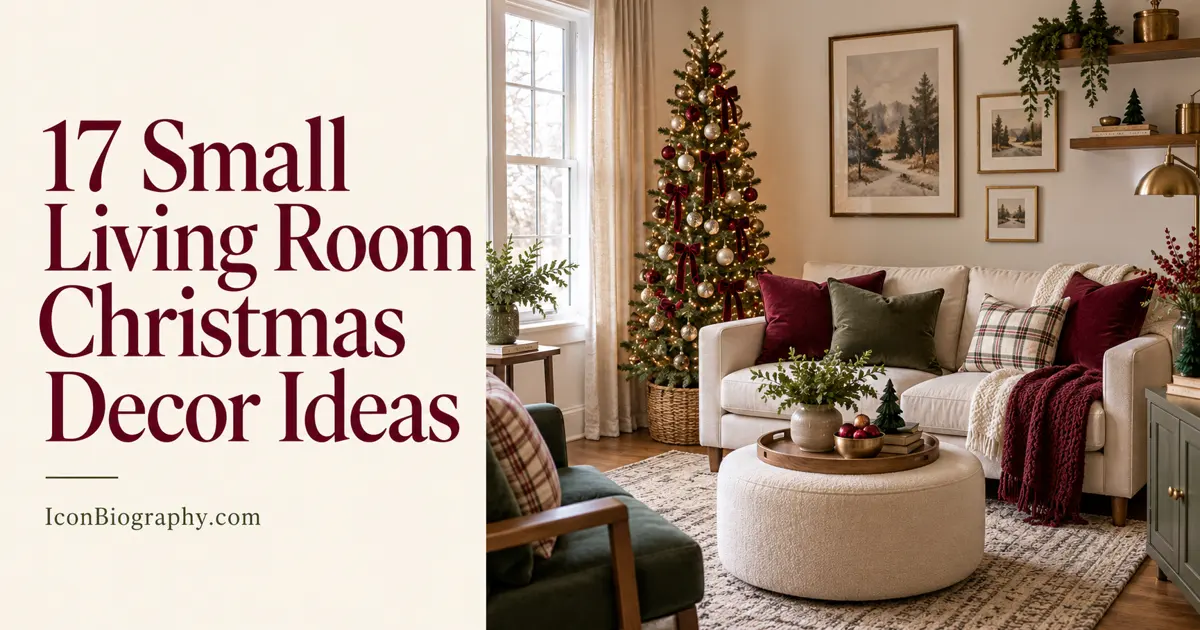
Christmas decorating in a small living room works best when the furniture can still do its job. You need somewhere to sit, a route through the room and enough table space for ordinary life. The tree and ornaments should fit around those needs.
These small living room Christmas decor ideas use existing shelves, simple textiles and contained displays. There are options with a slim tree, a tabletop version or no tree at all. Choose the ideas that suit your room rather than trying to include every festive feature in one space.
Before unpacking decorations, clear the surfaces and measure the places you intend to use. A tree’s width, the reach of its branches and the room needed to open a door matter as much as its height.
1. A Slim Tree in an Unused Corner
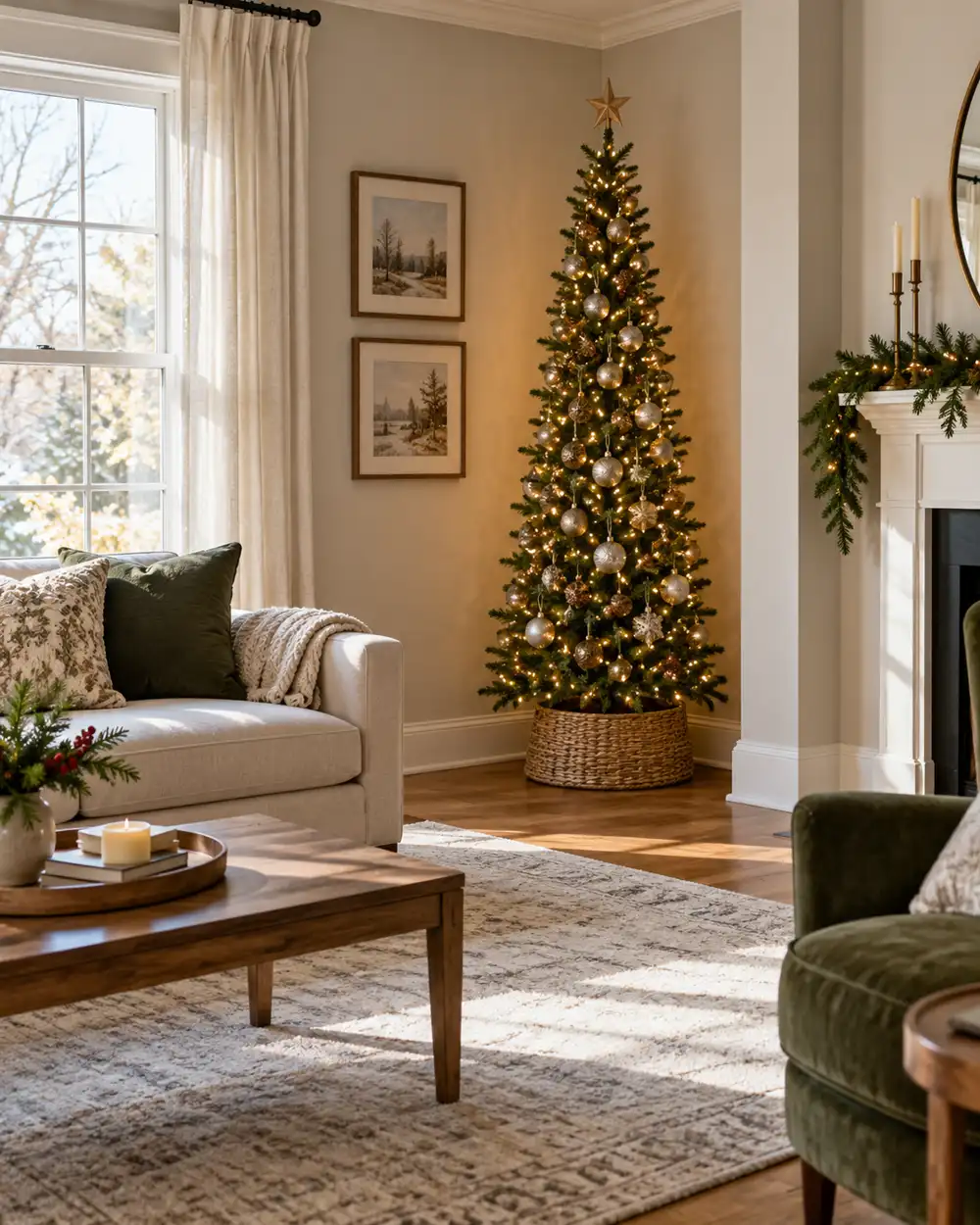
A slim tree can create a Christmas focal point in a corner that is genuinely unused. Measure the tree’s widest point and compare it with the available floor area, including the stand. Leave the seating and walking routes comfortable.
Do not solve the fit by moving the tree into an exit or too close to heat. The U.S. Fire Administration recommends keeping Christmas trees at least three feet from heat sources. Follow the tree and light instructions as well, and choose a smaller tree if the room cannot accommodate the required clearance.
2. A Tabletop Tree on a Stable Console
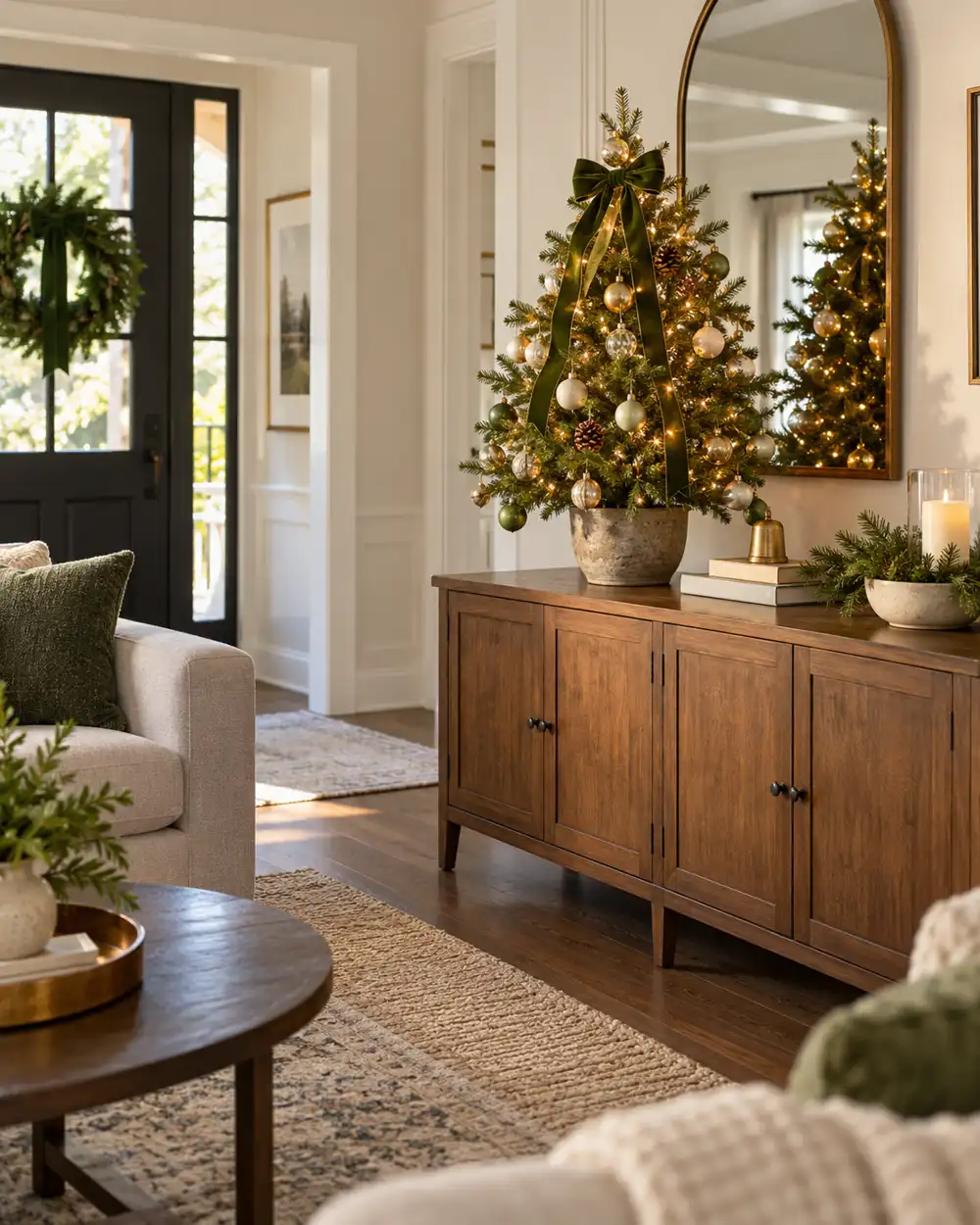
A tabletop tree can provide the seasonal shape without taking up a full floor corner. Use a stable console or sideboard with enough depth for the entire base. Keep the decorations lightweight and proportionate to the tree.
Check that the furniture supports the weight and that the tree cannot be knocked by a door or bag. Do not balance it on a narrow edge to gain height. A small tree can look complete with a restrained ribbon or ornament palette; it does not need the contents of a full-size tree’s decoration box.
3. One Decorated Shelf Instead of Multiple Displays

Choose one existing shelf for a small group of Christmas pieces. Remove a few everyday objects first so the display has room. A short arrangement in a connected palette often reads more clearly than seasonal items scattered across every available surface.
Keep shelf loads within their limits and place heavier pieces securely. Leave books and frequently used items accessible. If you have to dismantle the display whenever you need something, move it or simplify it. The shelf can be festive without becoming unusable for the rest of the month.
4. A Restrained Mantel Arrangement With Heat Clearance
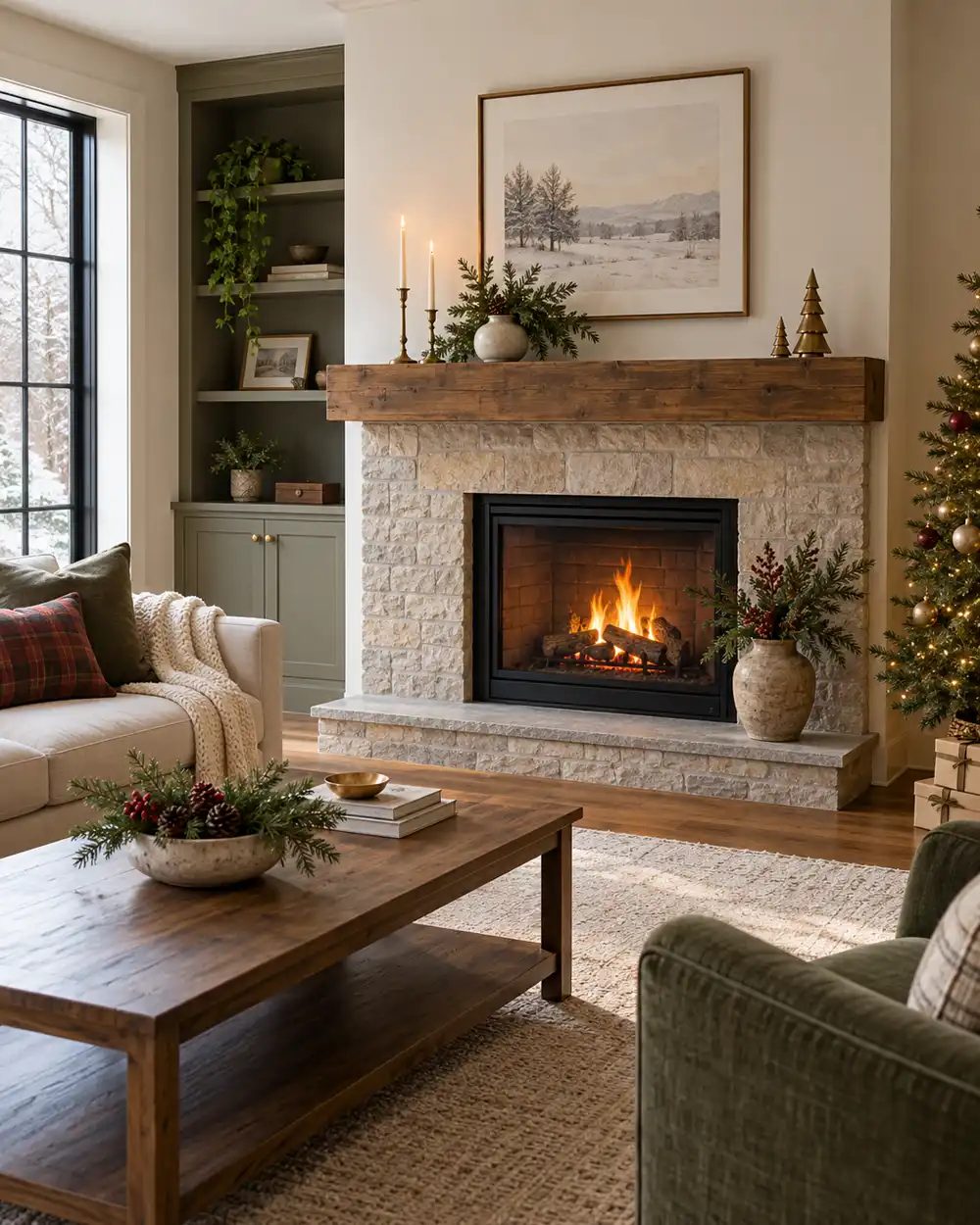
A mantel can hold a modest seasonal arrangement if the fireplace and surrounding materials permit it. Start with one or two stable objects and leave clear space around them. Use the fireplace manufacturer’s clearance guidance rather than copying an image online.
Keep fabric, greenery, paper and hanging decorations away from heat and flames. A decorative mantel arrangement may need removing when a fireplace is in use. If the location cannot safely accommodate the materials, decorate another shelf. A festive focal point does not have to be above the fire.
5. Seasonal Pillow Covers Instead of Extra Pillows
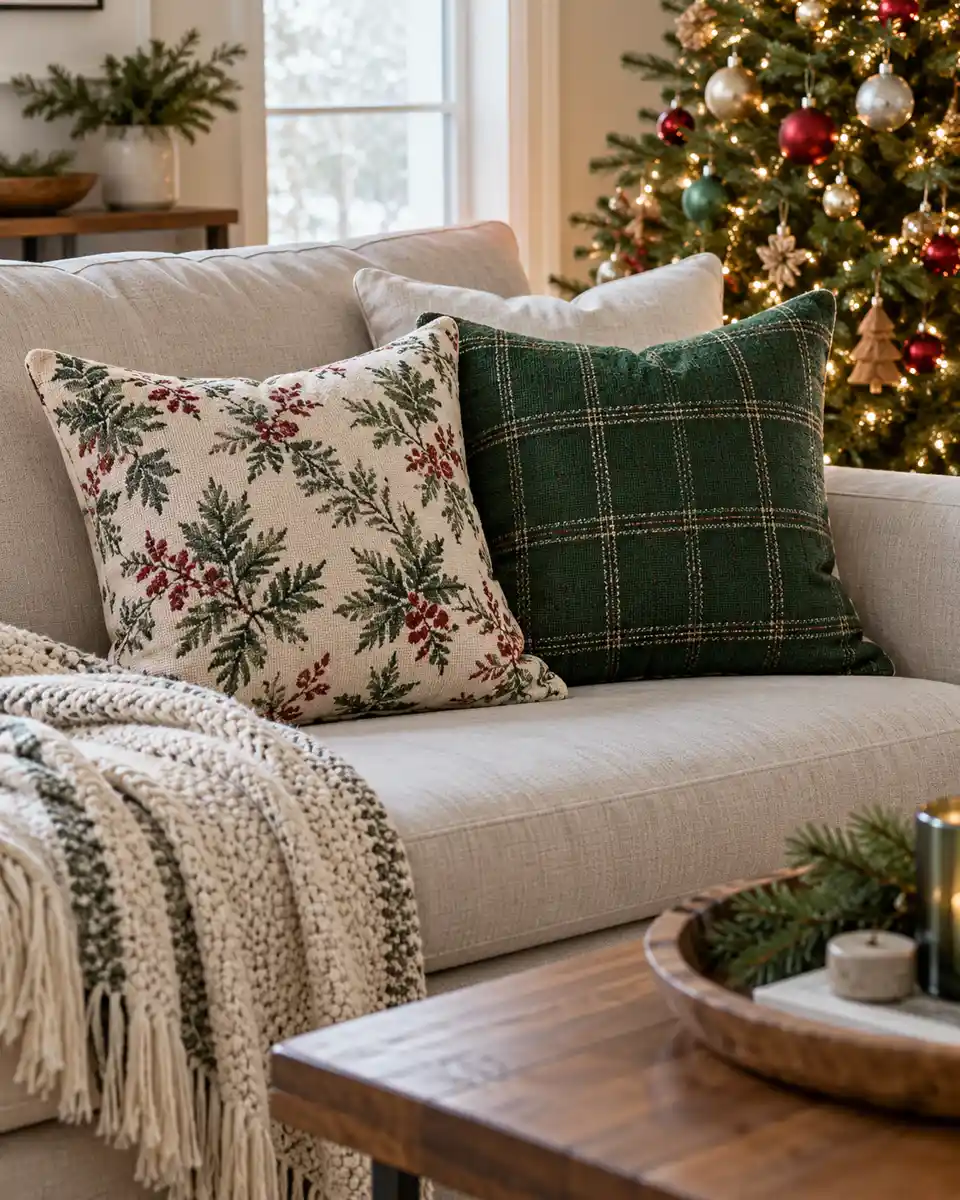
Change the covers on pillows you already own rather than adding more. Two seasonal covers in colors related to the tree or room can create a clear Christmas reference. Keep the number of pillows appropriate for the seating.
Choose covers that feel pleasant when someone leans against them. Rough embellishments may look attractive but make a small sofa less comfortable. Check dimensions before buying, and store the everyday covers neatly for the change back. This gives the room a different texture without creating a larger pile of inserts.
6. A Single Warm Throw on the Sofa

Place one useful throw on the sofa in a color that connects with the decorations. Burgundy, forest green, cream or brown can work depending on the room. Fold it neatly or drape it where it is easy to reach.
Pick a blanket people can actually use rather than a delicate piece that must be removed before sitting. Follow its care label and leave the seat clear. If a throw repeatedly falls into a walkway, use a nearby basket or fold it over the sofa arm instead of trying to maintain a decorative drape.
7. A Compact Coffee-Table Tray
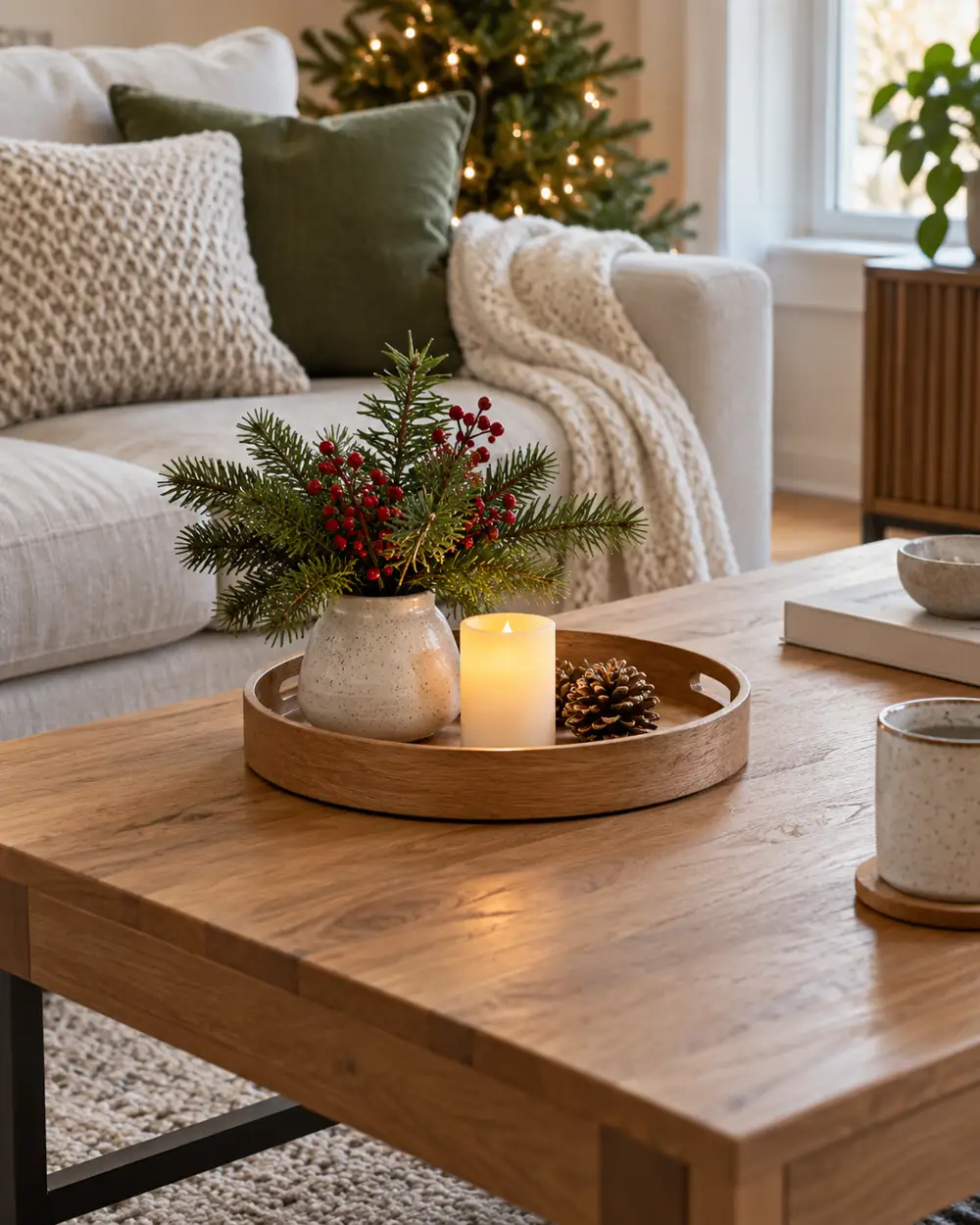
Contain a small display on a tray that lifts away easily. One stable decorative object and a battery-operated candle may be enough. Leave room for cups, remotes and whatever the table normally needs to hold.
Test the tray’s footprint while seated. A display can look modest in an empty room but become inconvenient once people use the table. Keep small parts away from children and pets, and follow candle-product instructions. Avoid loose filler that scatters whenever the tray moves or someone reaches across it.
8. Window Decorations That Leave Ventilation Clear
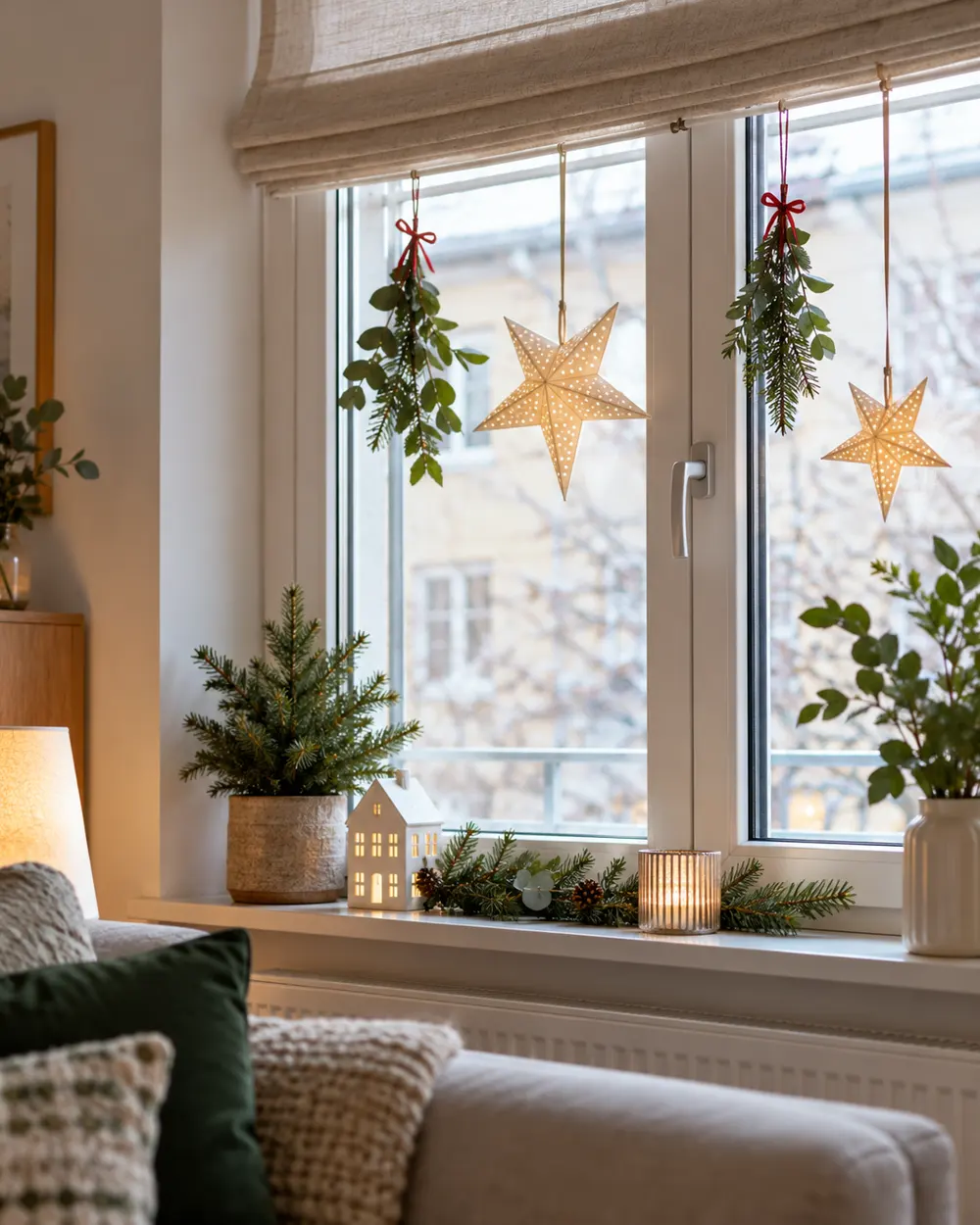
A few lightweight window decorations can add Christmas detail without using floor space. Choose a hanging method appropriate for the frame or glass and keep the arrangement simple enough to remove easily.
Leave handles, ventilation and any required escape access clear. Do not let cords or ribbon interfere with blinds, curtains or normal window use. Consider condensation before attaching paper or delicate material. If the window is difficult to access safely, choose another location rather than climbing onto unstable furniture to reach the top.
9. A Coordinated Ribbon Palette

Use one or two ribbon colors across the tree and a small shelf arrangement. Repetition can connect different ornaments without requiring a matching set. Try burgundy and cream, green and muted gold, or navy with soft silver tones.
Keep ribbons clear of heat sources and follow lighting instructions. Shorter tails are easier to manage in a small room and less likely to catch. You do not need a bow on every surface. A few repeated details can create cohesion while leaving the rest of the room quiet.
10. A Tree Basket That Does Not Obstruct the Stand
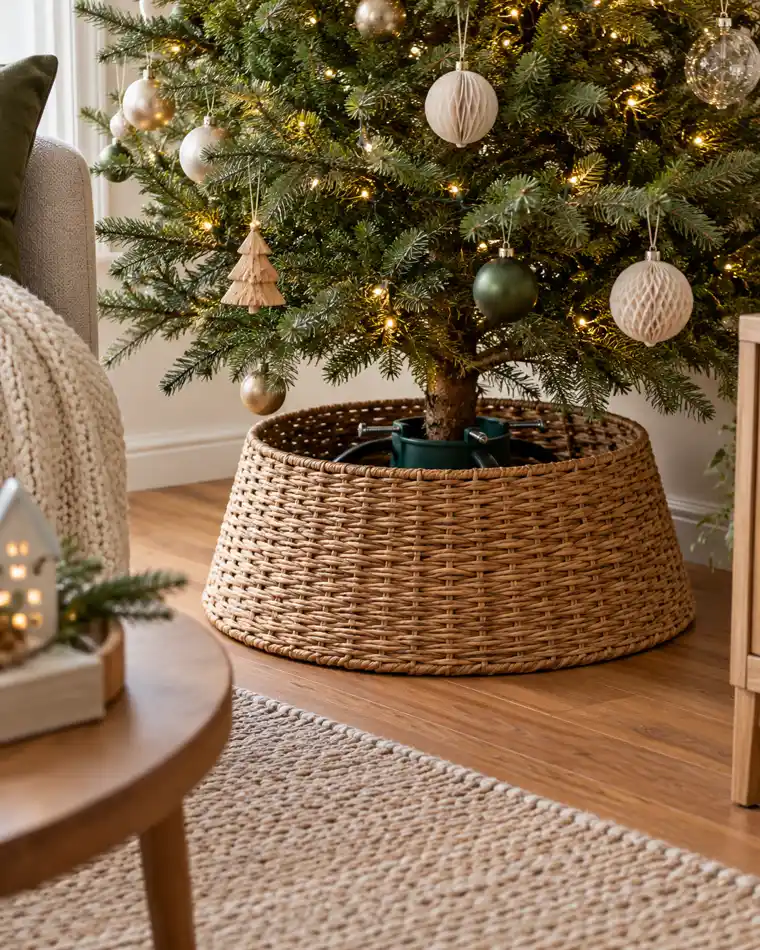
A basket-style tree surround can tidy the base if it is designed to work with your tree and stand. Check the dimensions, stability and access before buying. The surround should fit around the support rather than replace or compromise it.
For a real tree, keep the water reservoir accessible and follow the stand’s care instructions. Avoid hiding a setup that you then cannot check. Keep fabric and packaging clear of electrical connections. If the surround makes watering or inspection awkward, a simpler base arrangement may be the better choice.
11. Wall Art Swapped for One Seasonal Print

Change one print in an existing frame instead of adding more wall objects. A winter landscape, branch illustration or simple festive composition can shift the room’s mood while leaving furniture and surfaces untouched.
Use art you have permission to print or display. Keep the frame securely mounted and choose a scale that relates to the furniture below. A seasonal print need not contain words or a large Christmas symbol. It can connect with the room through color and remain suitable for the rest of winter.
12. A Narrow Entry-to-Living-Room Console Display
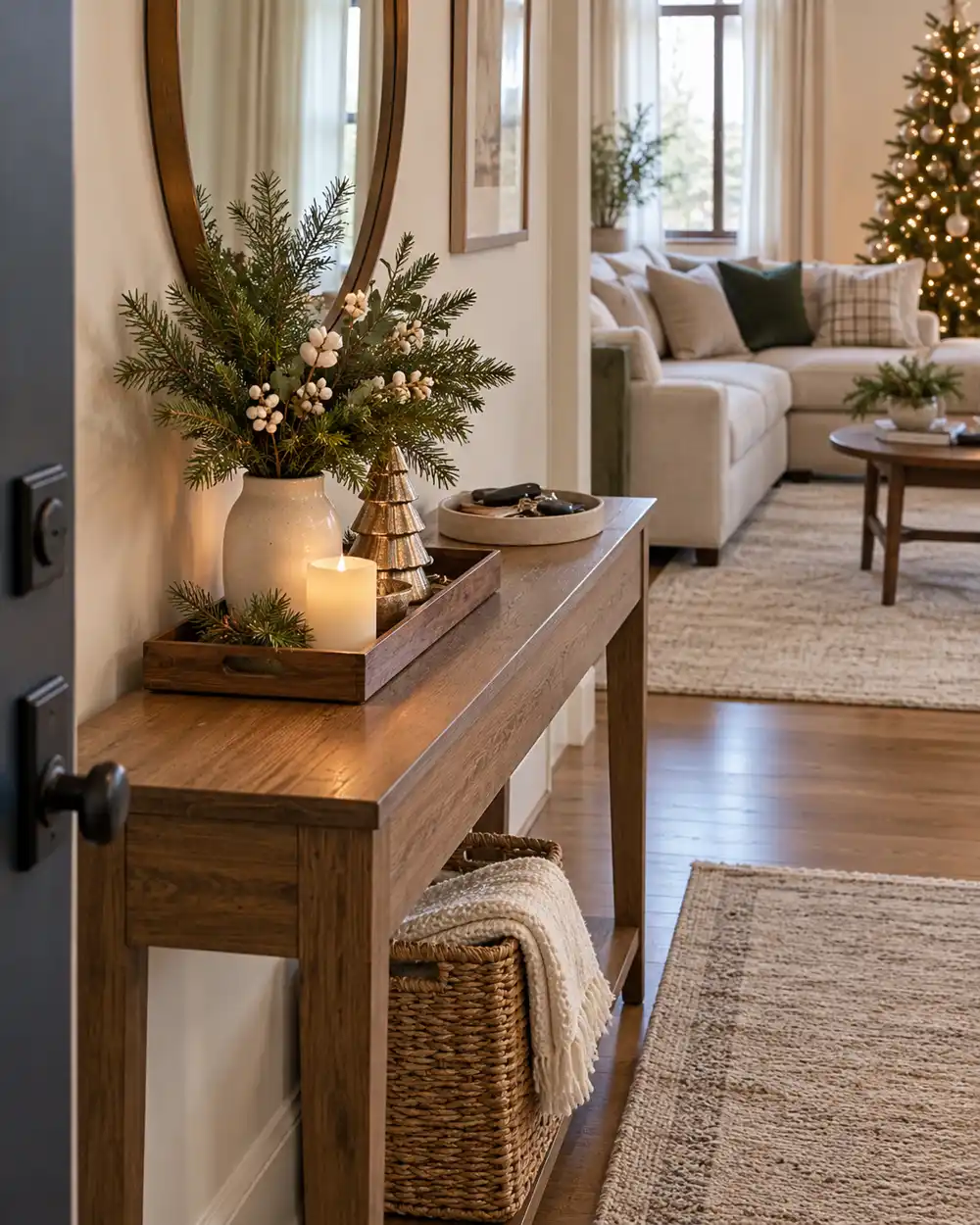
If a console sits between the entry and living room, keep its Christmas display narrow and contained. Leave a usable area for keys and daily essentials. One small arrangement can welcome people without making the entry another storage obstacle.
Check the walking route with coats, bags and doors in use. Do not allow branches or ornaments to project into faces or catch a passing sleeve. A shallow tray or stable frame may work better than a full garland. The console should remain useful when the room fills with visitors.
13. Battery-Operated Lights Suited to Their Location

A small string of battery-operated lights can provide a gentle seasonal detail on a suitable shelf. Choose a product intended for the location and follow its installation and operating instructions. Use secure attachments without damaging wires.
Keep battery compartments closed and small batteries away from children and pets. Do not trap wires beneath furniture or place decorations where they obscure a heat source or vent. A few lights can be enough in a small room. More strands do not automatically create a more comfortable atmosphere.
14. A Small-Room Arrangement Without a Full-Size Tree
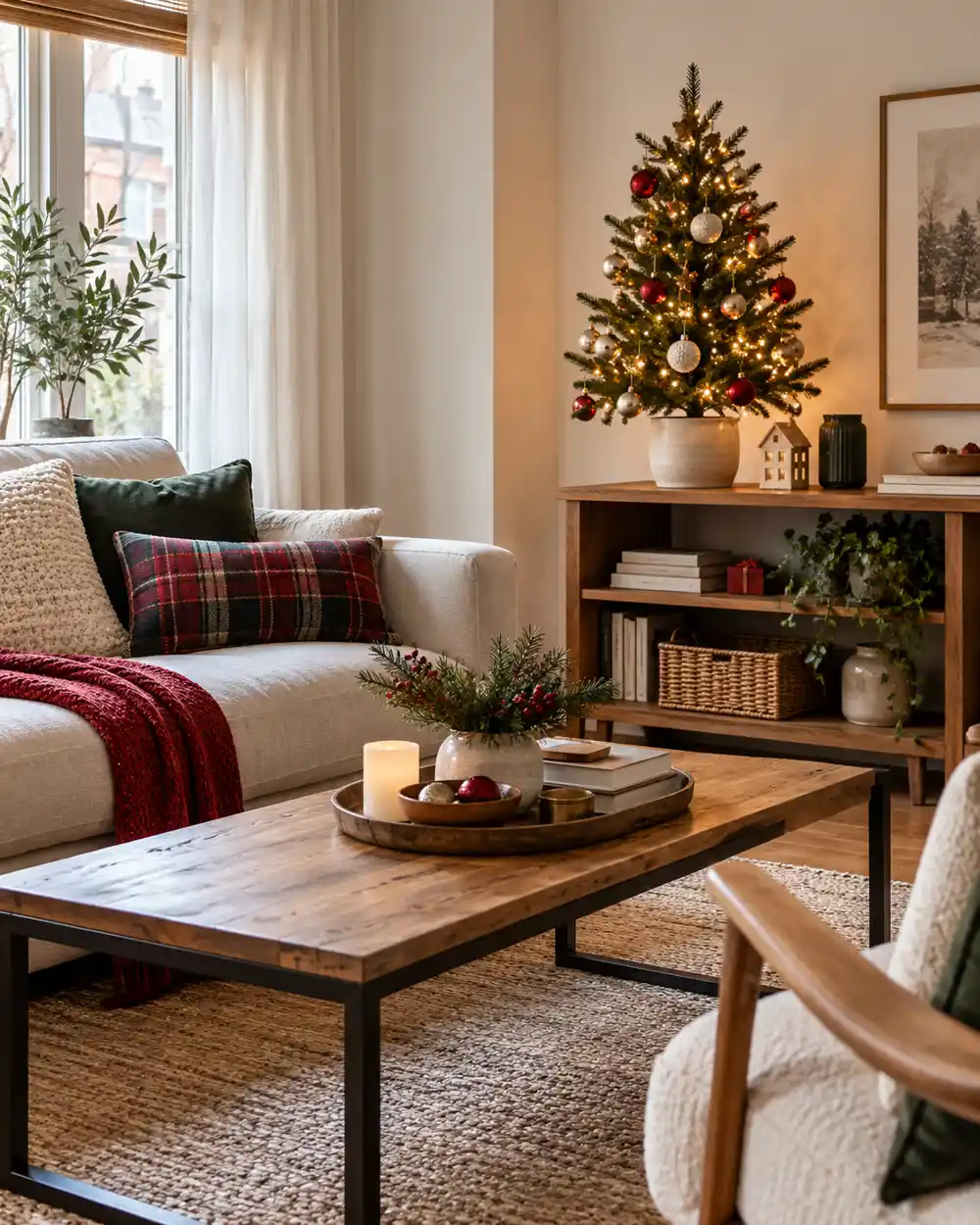
Use a tabletop tree, one decorated shelf or a simple group of ornaments as the main Christmas reference. A room can feel festive without a full-size tree, especially if the larger option would remove a seat or block a route.
Choose one focal point and connect it with a textile or a small color repeat elsewhere. This keeps the arrangement deliberate rather than looking like several leftover decorations. Use the space you gain for comfortable seating and ordinary table use instead of filling it with another large display.
15. Decorating an Existing Bookcase
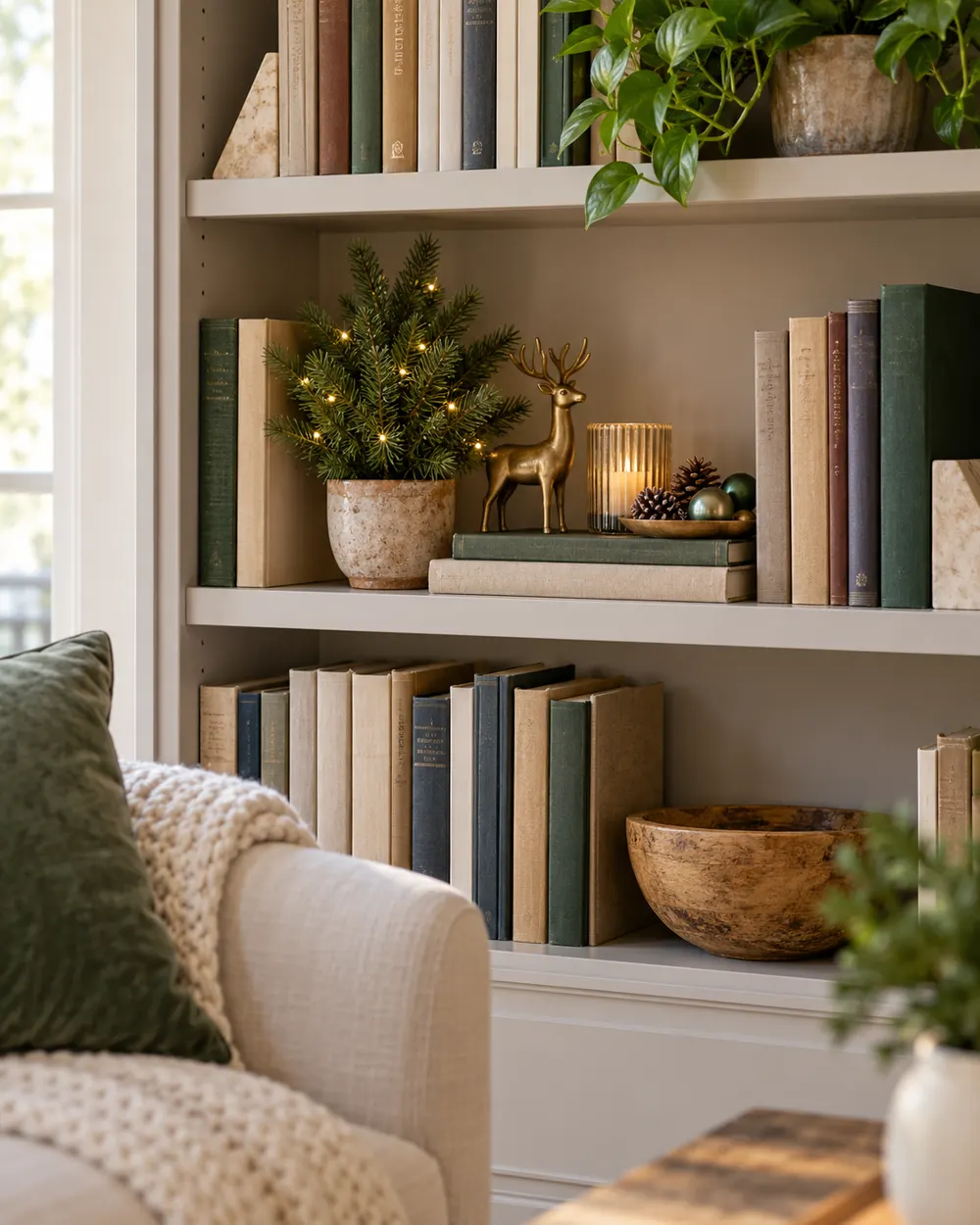
Clear one section of a bookcase and add a small group of seasonal objects among the books. Keep the colors connected and let the books remain part of the room rather than hiding them behind decoration.
Place objects securely and keep frequently used shelves accessible. Avoid hanging loose pieces across the front where they can catch when someone removes a book. If the shelf already feels crowded, decorate only one area. The goal is a small seasonal change within existing storage, not a second layer covering everything.
16. Wrapped Decorative Boxes Stored Away From Exits
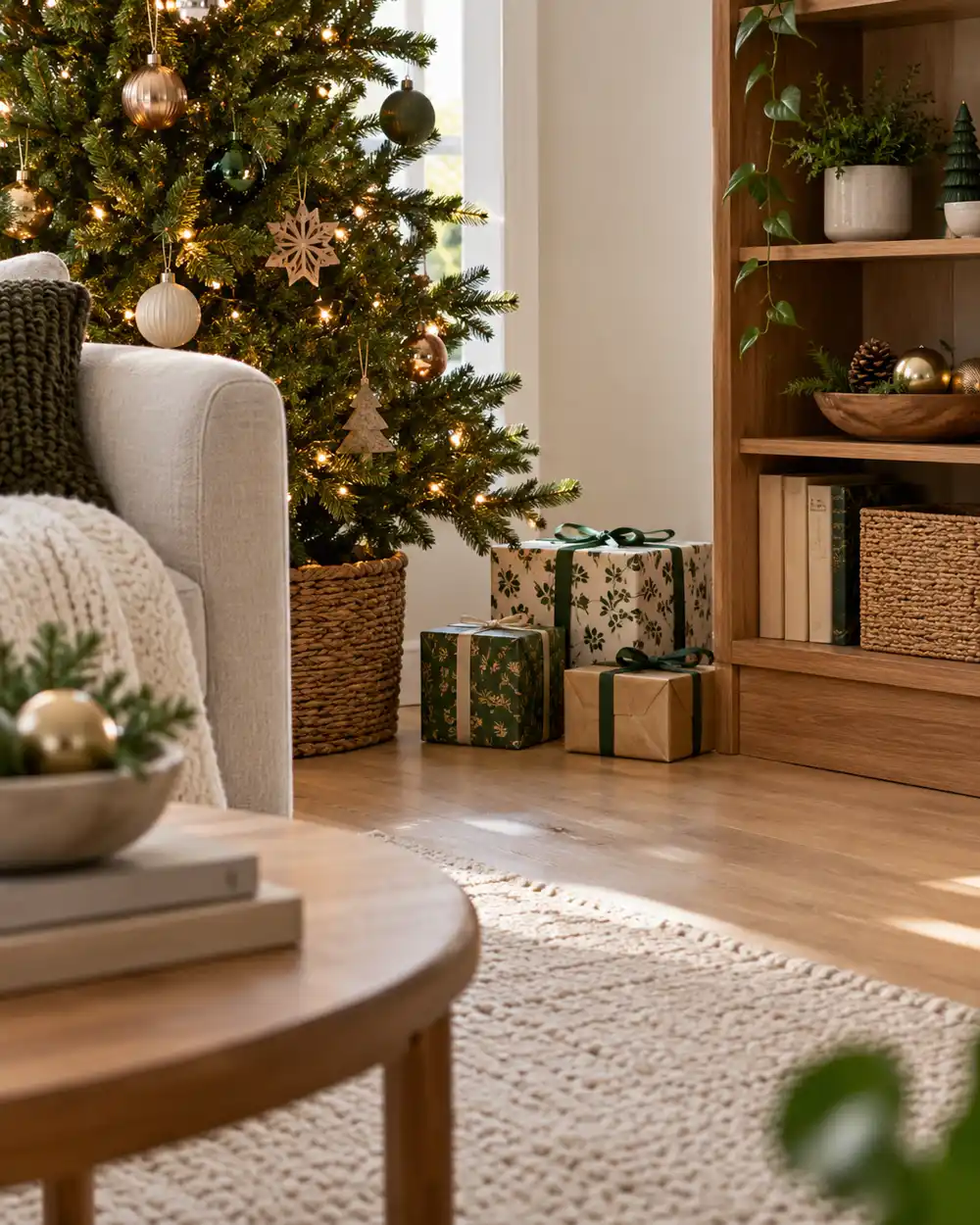
A few empty wrapped boxes can add color near a tree or on a suitable shelf. Use a small number in related papers and keep the arrangement stable. Clearly separate decorative boxes from actual gifts if that makes the household routine easier.
Keep boxes away from exits, walkways, heaters and electrical connections. Paper is combustible, so placement matters. Do not stack them where they can topple when someone sits or passes. If the room is already tight, the same wrapping colors can appear in smaller shelf details instead.
17. A Pack-Away System for the End of the Season
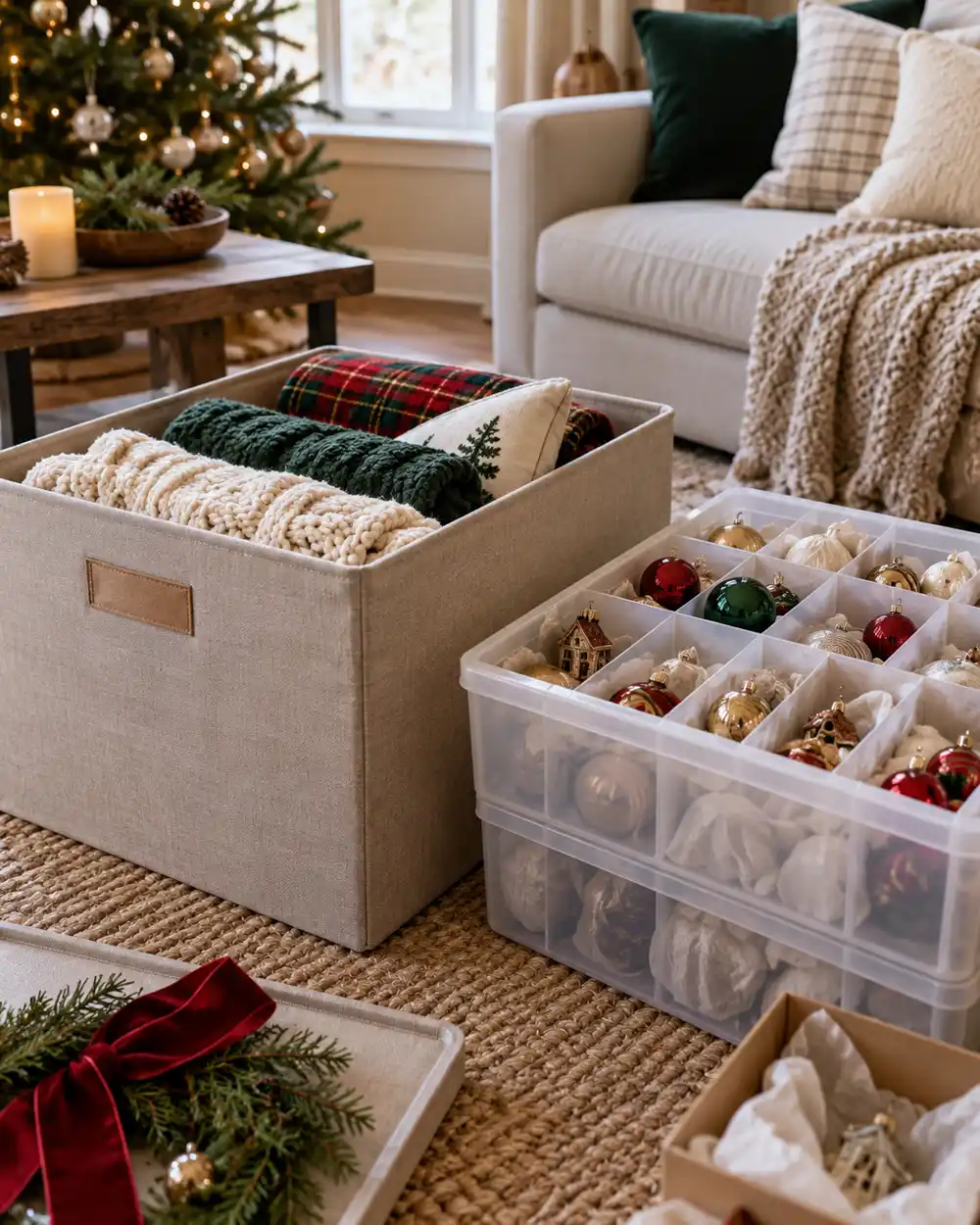
Choose a storage limit before decorating. One labeled box for textiles, one for delicate ornaments or another system suited to your available space can make the January reset easier. Keep instructions with electrical items.
As you unpack, notice which pieces fit the room and which remain difficult to place. You do not need to display every decoration every year. Pack delicate pieces so they are protected rather than crushed beneath heavier objects. A manageable collection is easier to enjoy, maintain and use again next Christmas.
Keep the room comfortable for visitors
Walk through the space as you would during an ordinary evening. Sit on each seat, reach for the table and open the doors. Check the route with a bag or coat rather than judging only an empty floor plan. Remove anything that regularly gets knocked or moved.
A small room benefits from pauses between decorative areas. Leave some surfaces and walls plain so the festive pieces have room to be seen. Choose one main focal point, then use a few connected details rather than giving every corner its own competing theme.
Frequently asked questions
What size Christmas tree works in a small living room?
Measure the available height and width, including the stand and branch spread. Leave comfortable routes and the required clearance from heat sources. A slim or tabletop tree may fit better than a shorter but very wide tree.
Can I decorate a living room without a tree?
Yes. A decorated shelf, seasonal textiles and one simple focal arrangement can feel festive. Choose the option that preserves seating and movement in your room.
How do I avoid Christmas clutter?
Remove everyday objects before adding seasonal ones, contain displays and limit the palette. Keep useful surfaces available. You can rotate favorite ornaments between years rather than displaying the whole collection at once.
Explore our living room decor collection for ideas that work with the space you actually have.