
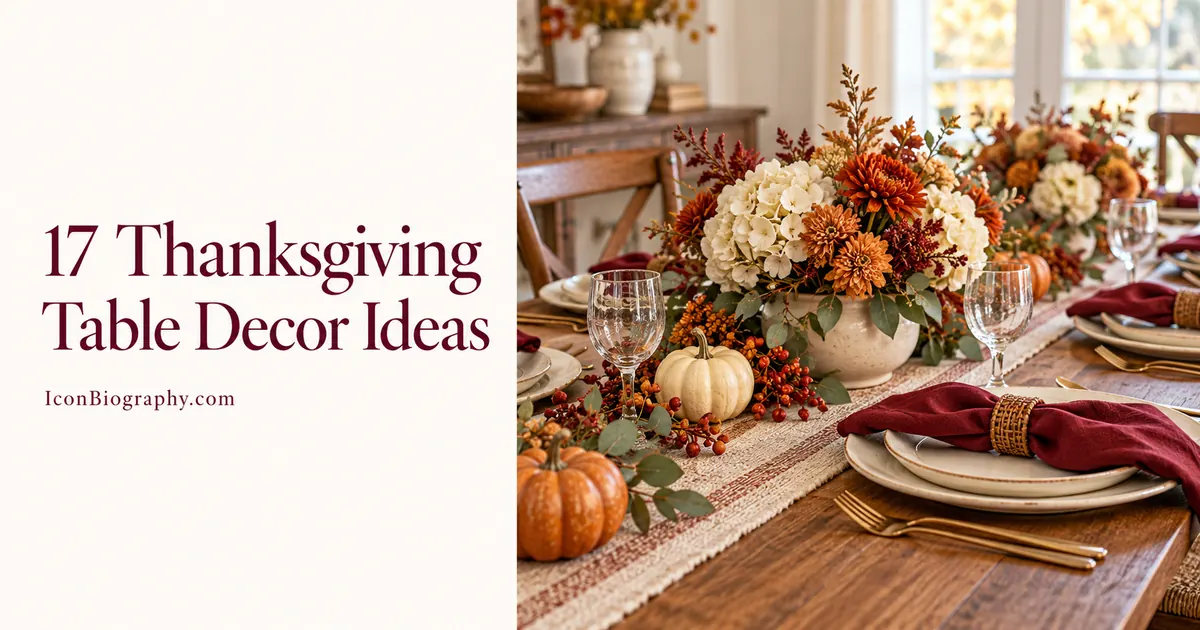
A small Thanksgiving table has several jobs before it becomes a photograph. People need somewhere to sit comfortably, pass a serving dish, put down a glass, and talk without looking around a wall of flowers. Good Thanksgiving table decor ideas work with those needs instead of competing with them.
Start by setting out the plates and the serving pieces you genuinely expect to use. The empty spaces left afterward are your decorating space. You may discover that a narrow runner, a few thoughtful place settings, and one movable arrangement provide all the atmosphere the table needs.
These 17 ideas offer different ways to create that feeling. Pick a few that suit your furniture and household rather than attempting to fit every detail onto one surface.
Start With the Meal Layout
Put an empty plate, glass, napkin, and cutlery at each seat. Place your largest serving bowl on the table, then check how someone will pass it. If you prefer serving food elsewhere, reserve a clear landing spot for dishes people bring back.
Use this rehearsal to decide whether the centerpiece can stay during dinner. A display that looks lovely before guests arrive can move to a sideboard when the food is ready. Planning that move is easier than balancing decorations in the kitchen at the last minute.
1. A Narrow Runner With One Low Arrangement
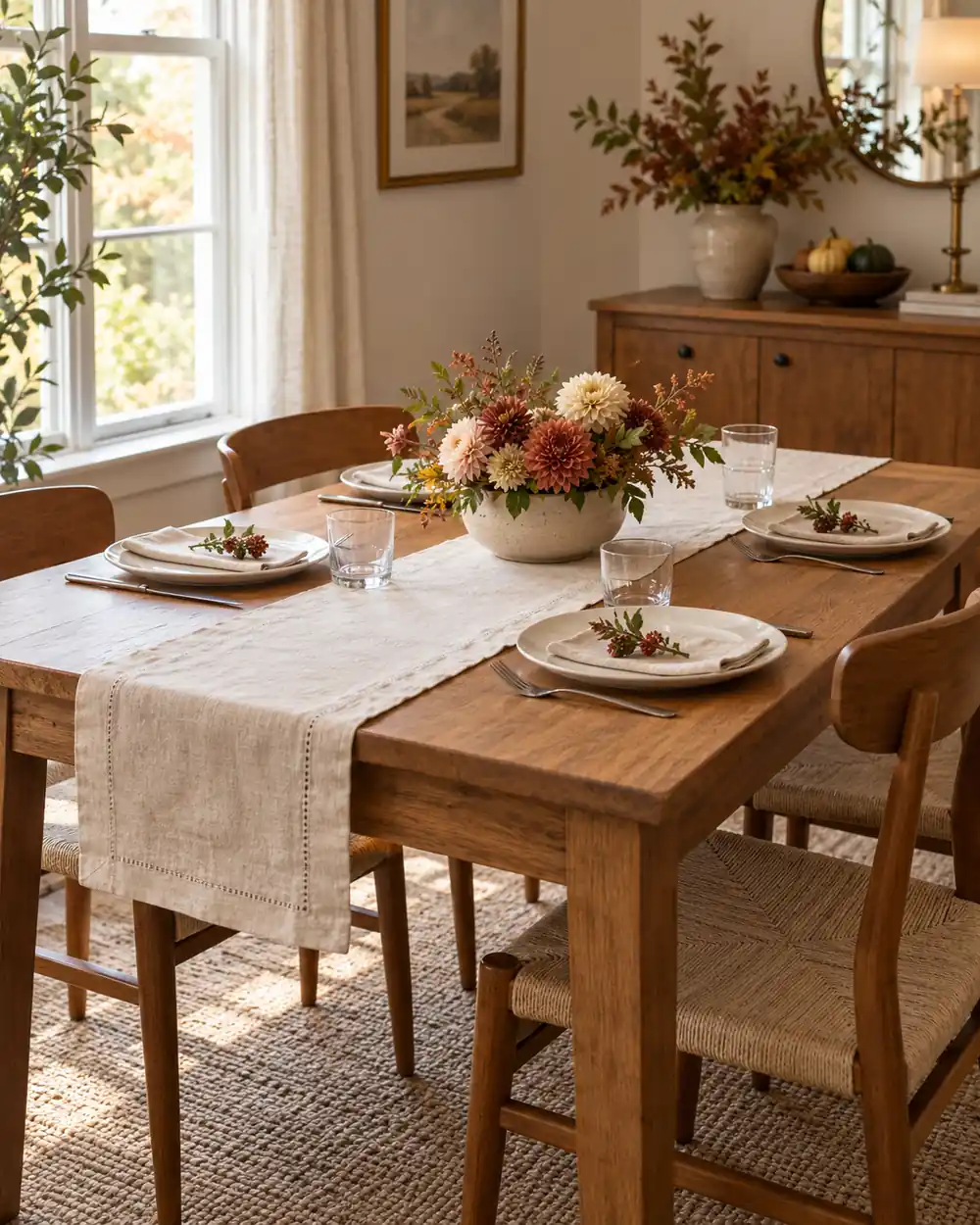
Choose a runner that leaves visible tabletop on both sides and use one low bowl of flowers or foliage as the focal point. Keep the arrangement compact enough that a person opposite you remains easy to see.
For a relaxed look, let the runner have a little texture rather than adding several decorative layers underneath it. Before finishing, put a serving dish beside the bowl. If the two compete for space, make the arrangement smaller or move it before dinner.
2. Bud Vases Between Serving Dishes
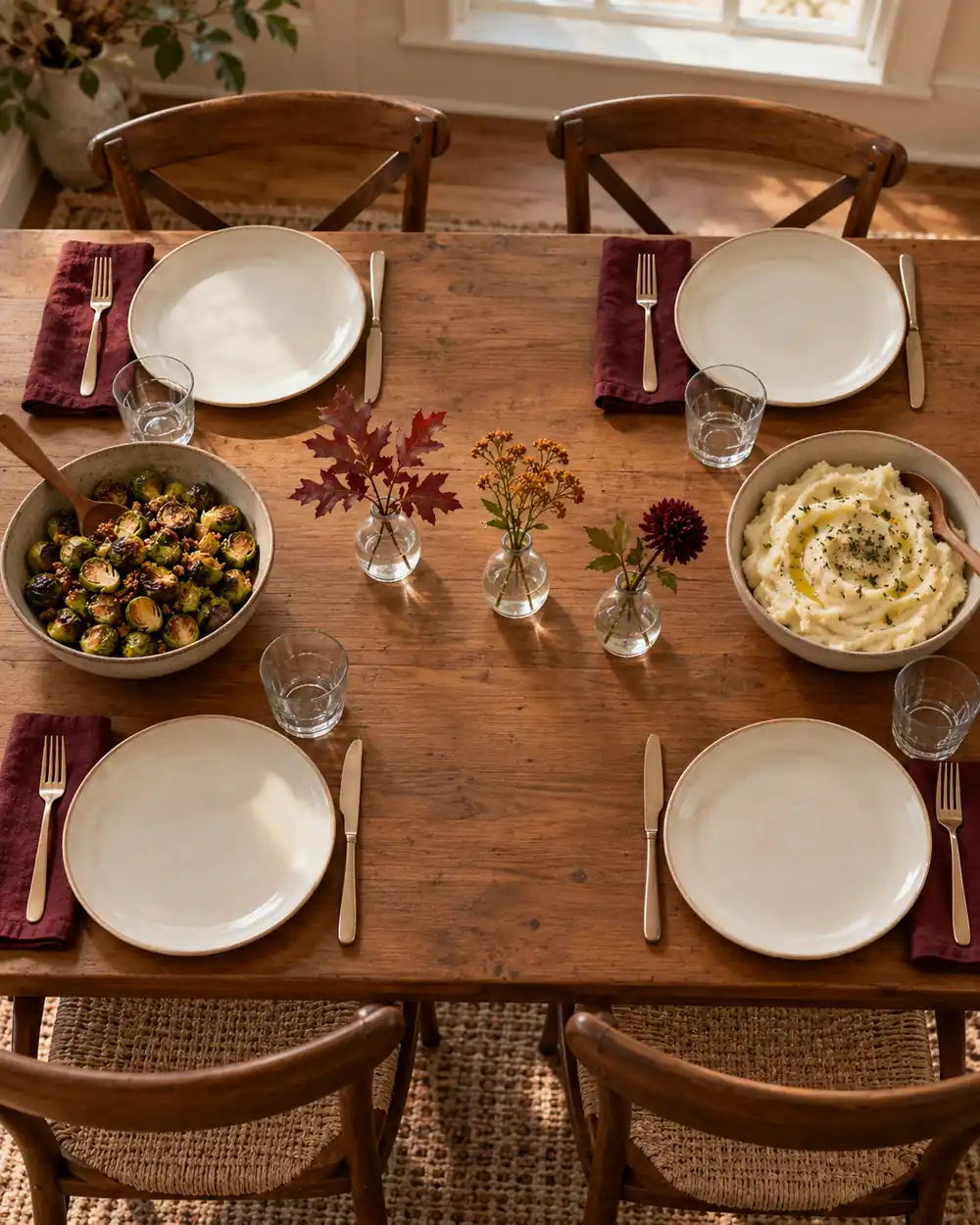
A few small vases let you distribute flowers through spaces that would not accommodate a large centerpiece. Use short stems and stable vessels, then place them where hands and serving spoons will not repeatedly pass.
The vessels do not need to match exactly. Similar height or a repeated material can make a collection feel connected. Keep a small tray nearby so the vases can leave together if extra food arrives; flexibility is more useful than a perfectly fixed arrangement.
3. Cloth Napkins With Simple Ribbon Ties
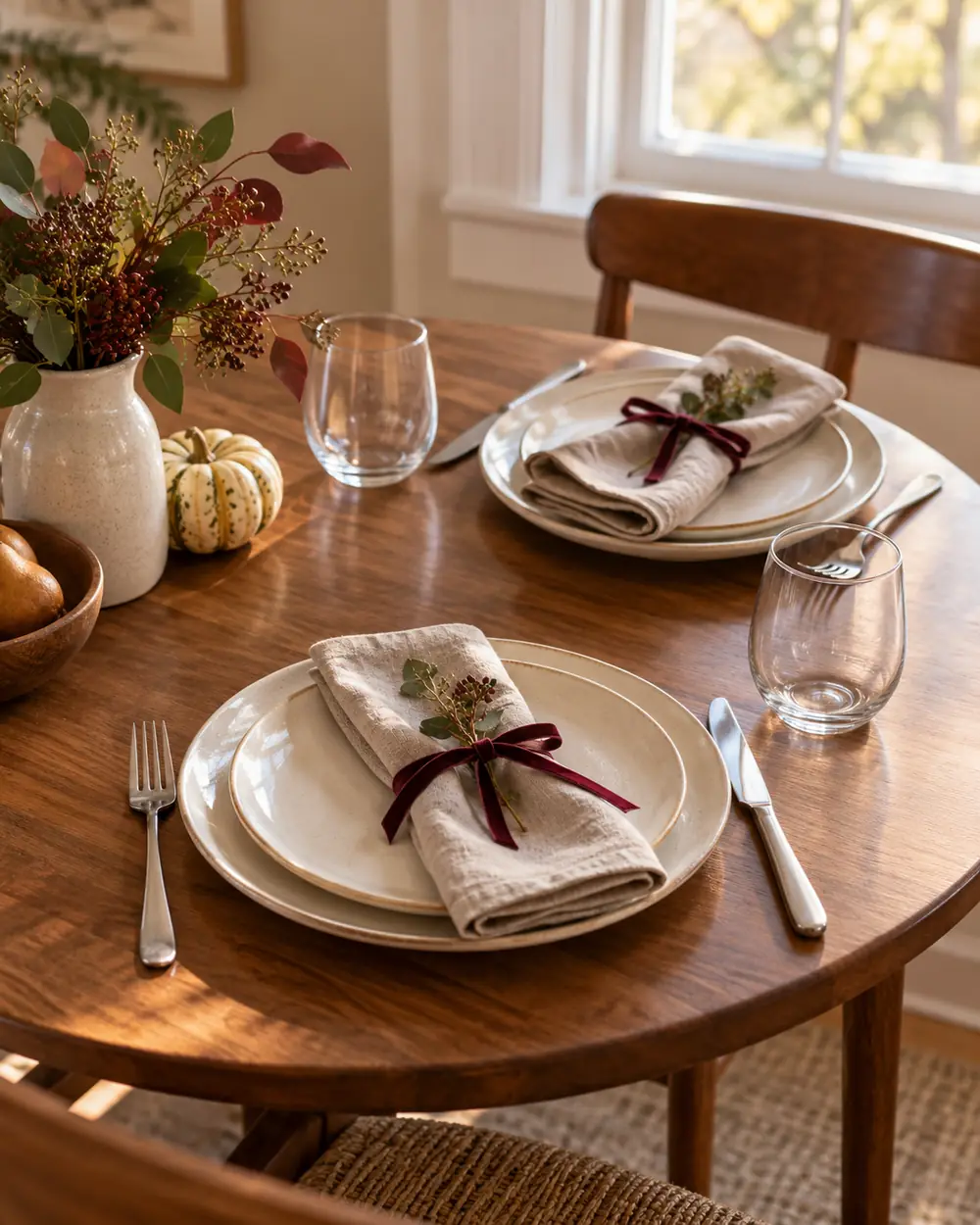
Fold cloth napkins into neat rectangles and tie each with a short length of ribbon. A single warm color, such as rust, cranberry, or olive, can establish the holiday palette without requiring themed plates.
Keep the tie loose and simple to remove. Long tails, elaborate knots, or multiple attached ornaments create clutter as soon as people unfold their napkins. If you already own patterned dishes, choose a plain ribbon that repeats a small color in the pattern.
4. Mini Pumpkins as Movable Place Markers
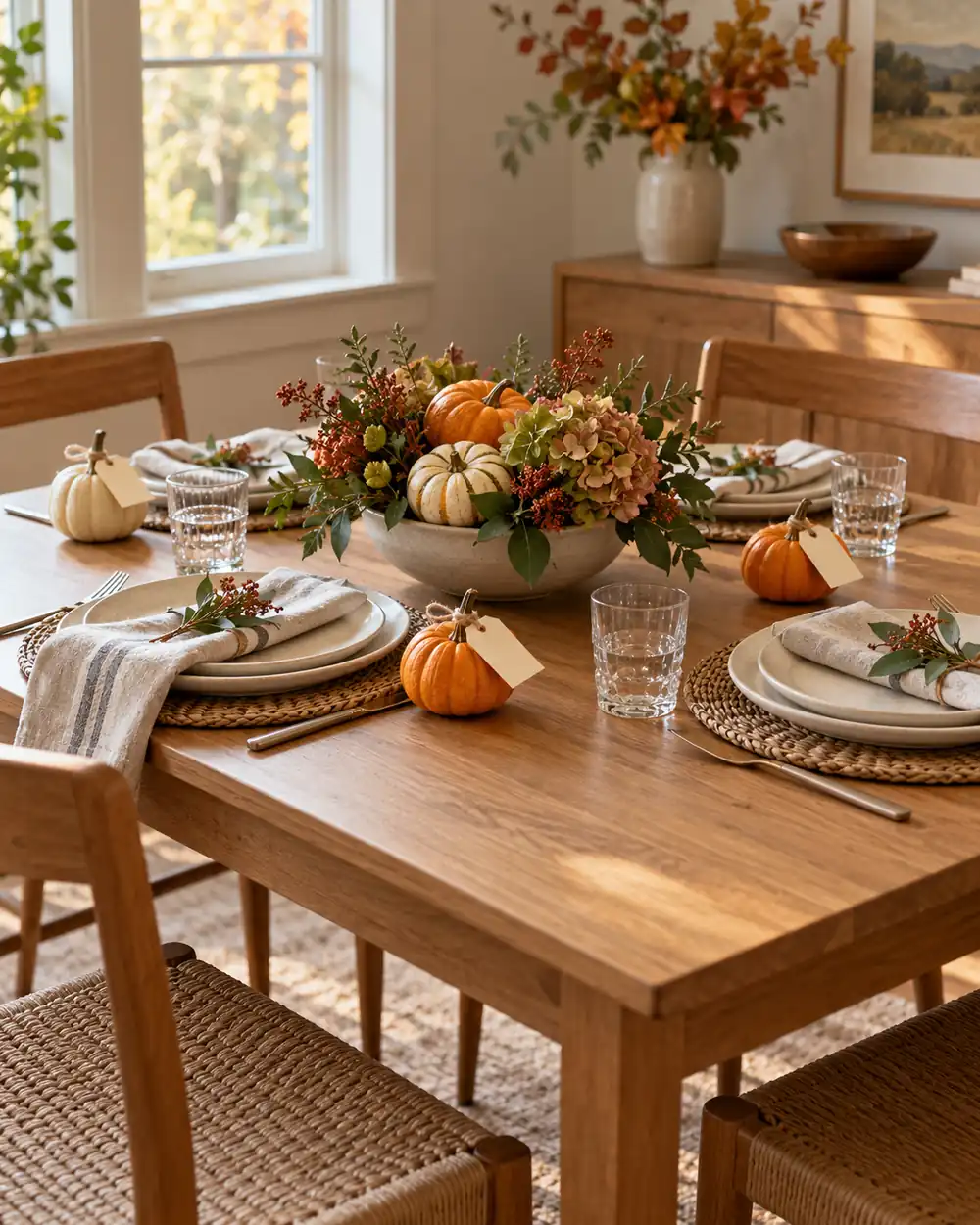
Place a small pumpkin above each setting with a name card beside it. This distributes the seasonal detail around the table instead of creating a large pile in the middle.
Check the size against the actual place setting rather than choosing pumpkins from a photograph. If there is no space beyond the plate, position the marker on the folded napkin before guests sit down, then provide a nearby spot for it. Washable imitation pumpkins are another option for repeated use.
5. Cream Dishes With Cranberry Accents
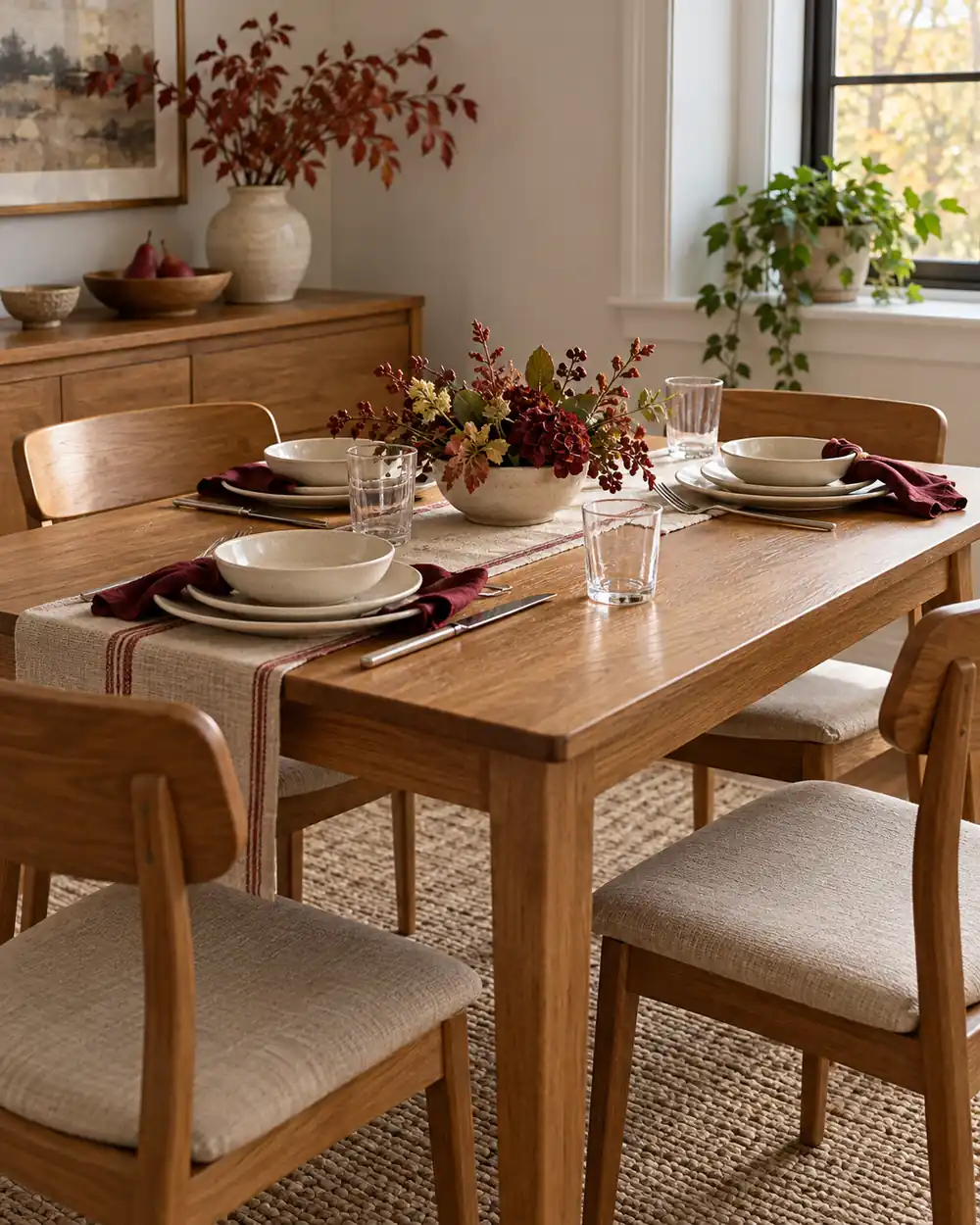
Let plain dishes provide a quiet background and add cranberry through one element: napkins, a small floral arrangement, or simple place cards. Repeating the color in three controlled places feels more deliberate than introducing a different shade at every seat.
This approach also works with white everyday plates. Avoid buying an entire holiday dinnerware set simply to obtain a seasonal effect. Use the dishes you enjoy serving from and choose the accent color around them.
6. A Centered Arrangement for a Round Table
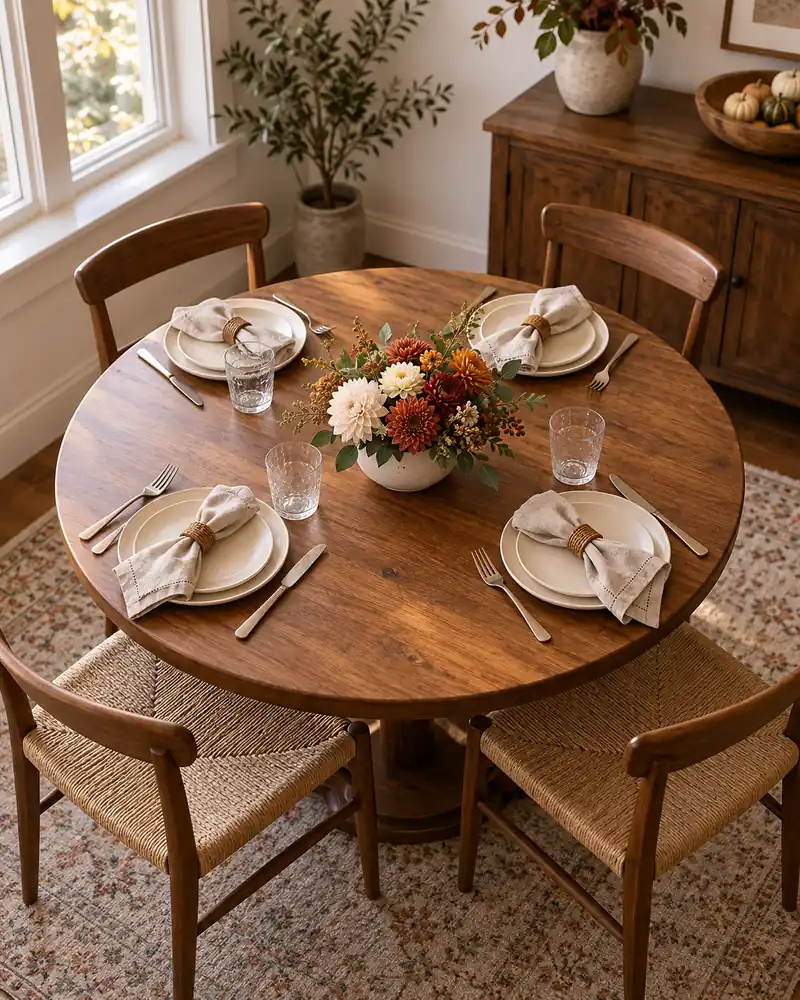
A round table often suits one compact central arrangement better than a long line of decorations. Start with the serving pattern: will bowls sit around the center, or will the meal be plated elsewhere?
Choose a stable low vessel that leaves enough room for whichever arrangement you use. A small circle of decorative objects can still occupy more space than expected, so measure the whole display, including any tray. Keep the table edge clear for place settings and comfortable arms.
7. A Sideboard That Holds the Extra Decor
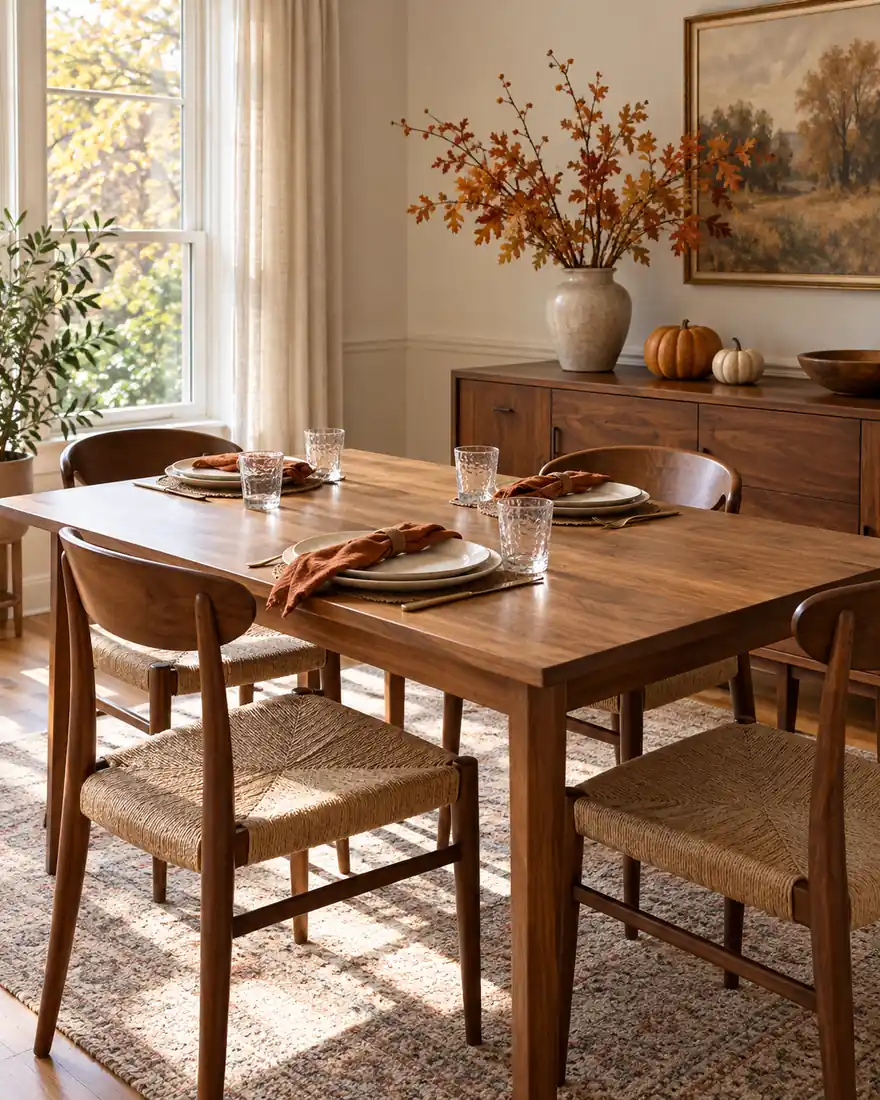
If the table barely accommodates dinner, let a nearby console or sideboard carry the larger seasonal arrangement. Guests still experience a decorated dining area even when the eating surface stays almost bare.
Use a runner or a repeated napkin color to connect the two areas. The sideboard should retain its practical job, too: leave a usable space for drinks, serving utensils, or dessert plates. Decorate one end rather than turning every surface into a second centerpiece.
8. Battery-Operated Candles With Low Greenery
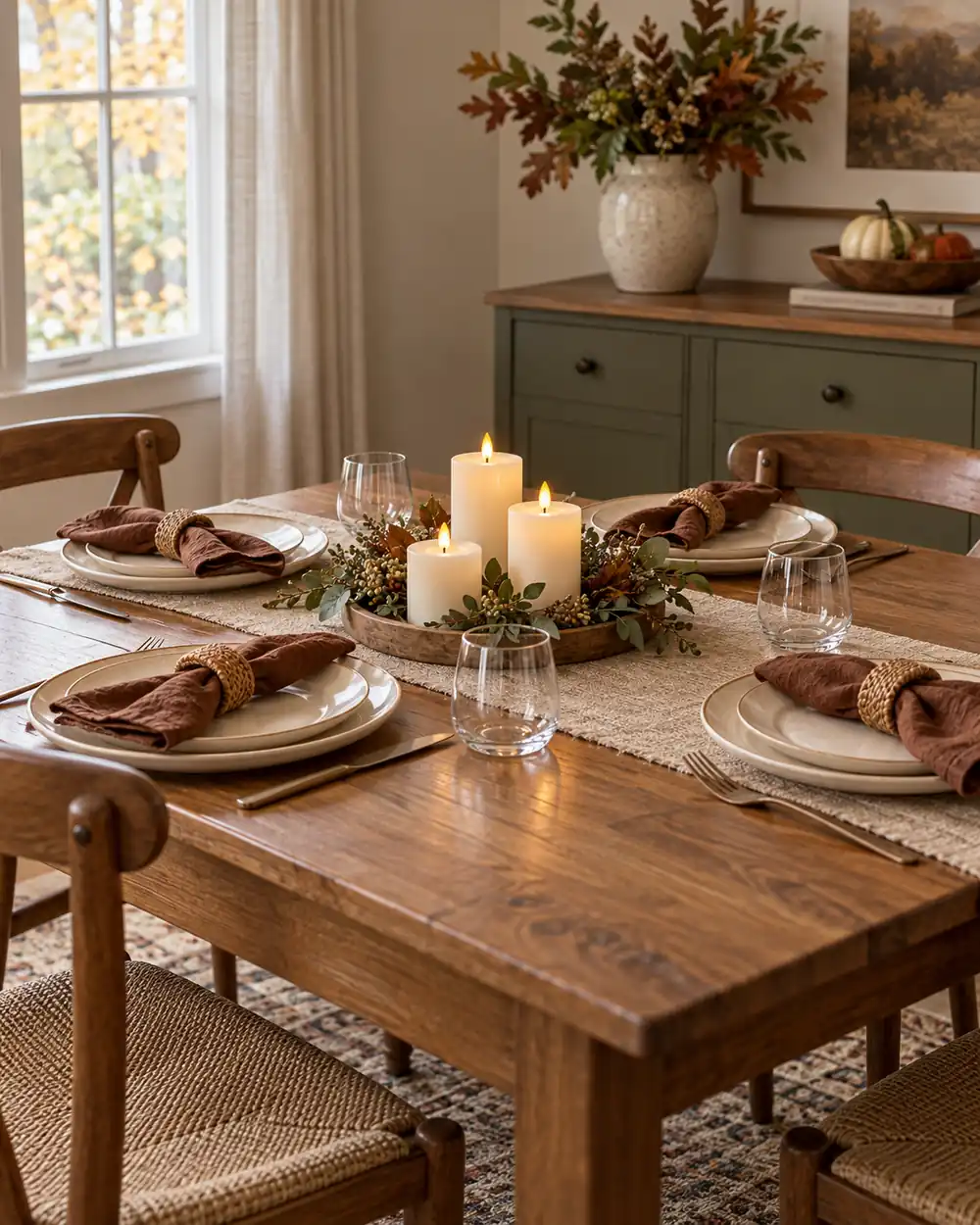
For a candlelight effect without open flames, use battery-operated candles in sturdy holders. Arrange a small amount of decorative greenery around the base while leaving switches and battery compartments accessible.
Choose products appropriate for their location and keep loose batteries away from children. Check the arrangement from a seated position, especially if the candles are tall. If the lighting feels busy, use fewer pieces and let the room’s existing lamps contribute to the atmosphere.
9. A Restrained Brown and Ivory Palette
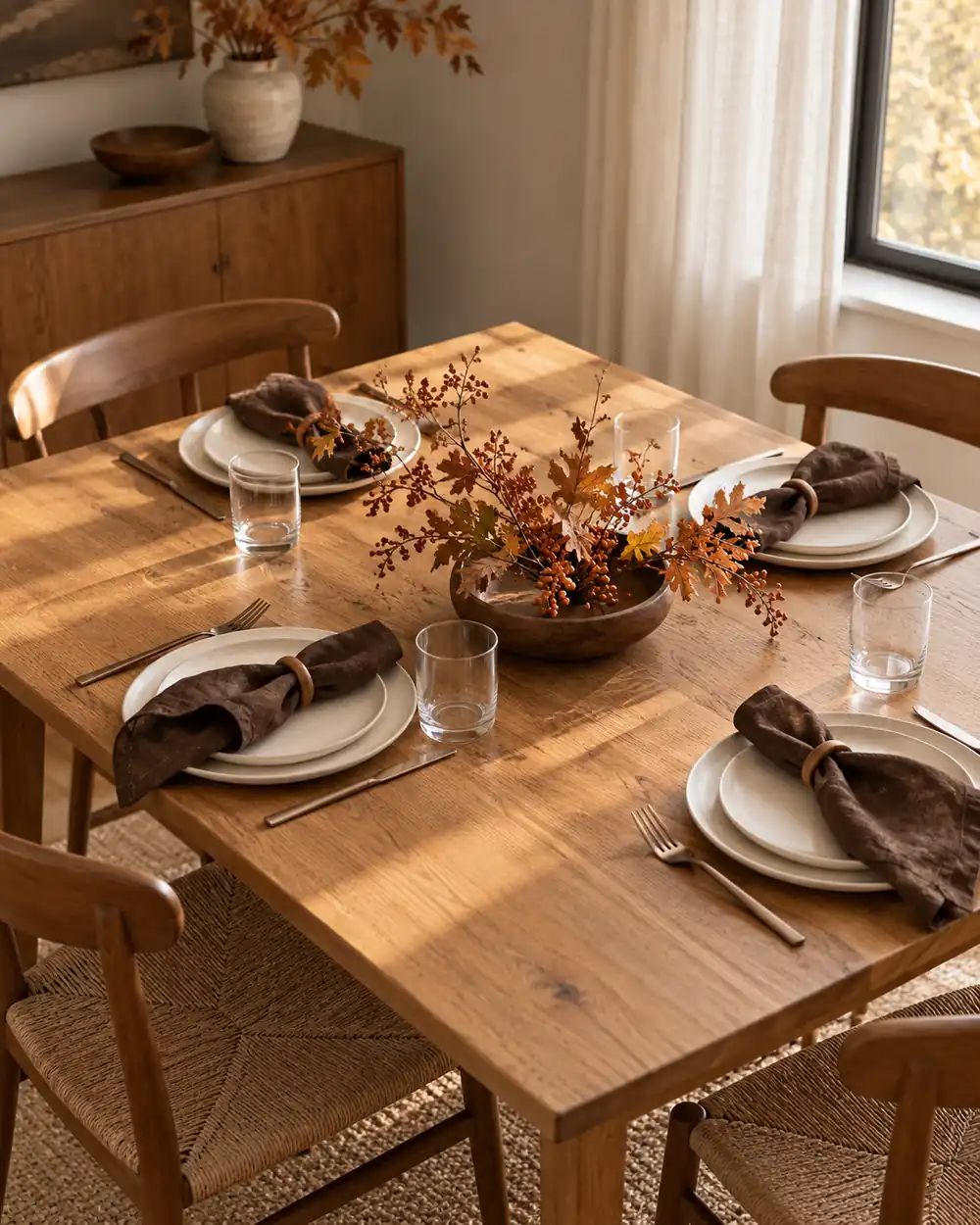
Combine ivory plates or napkins with brown linen, wooden accessories, or a small arrangement in a deep brown vessel. The contrast feels seasonal without requiring a literal autumn motif.
Vary the texture so the table does not become visually flat. Smooth dishes beside a woven runner may be enough; you do not need extra layers at every seat. If your table itself is dark wood, let some of it remain visible as part of the color scheme.
10. Handwritten Cards on Folded Cardstock
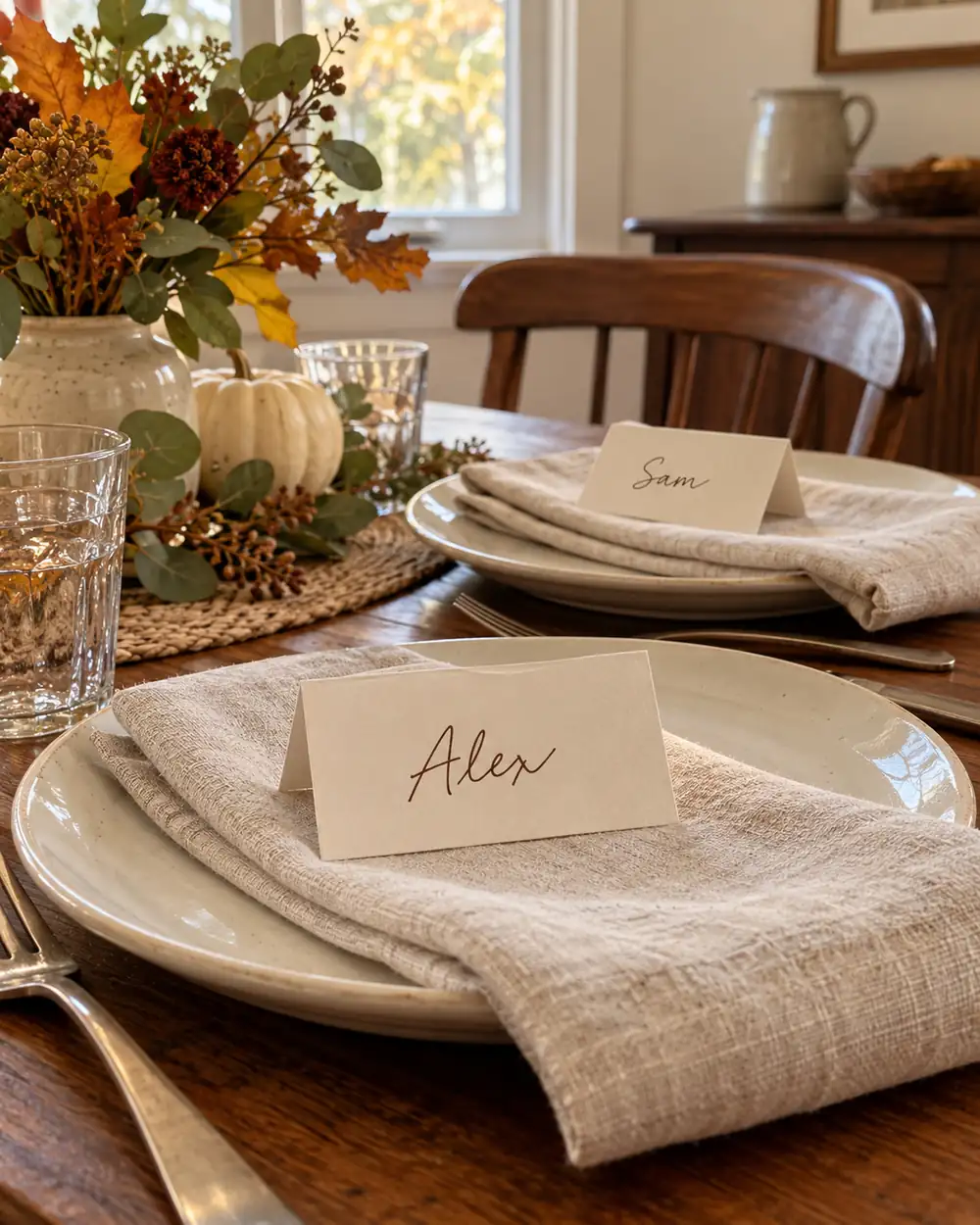
Fold simple cards so they stand by themselves and write each guest’s name clearly. Keep the size modest enough to sit beside a glass without interfering with it.
Use one ink color across the table and repeat the card shape for consistency. This is also an easy place to add a short welcoming word without adding more objects. If guests will choose their own seats, leave the cards blank for messages or use them to label shared dishes instead.
11. Everyday Glassware With One Linen Detail
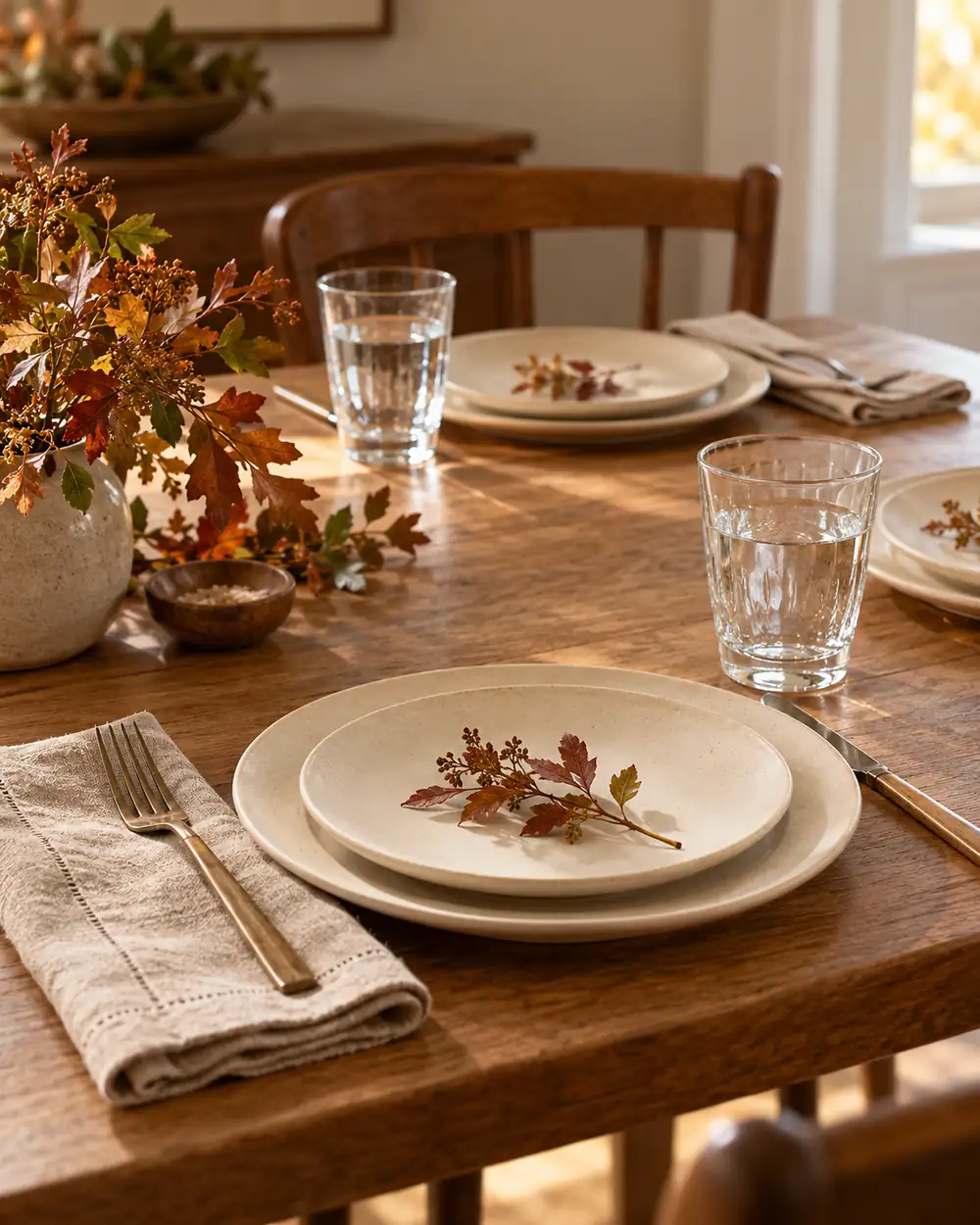
When cupboard space is limited, special holiday glasses are not essential. Clean everyday tumblers and wine glasses can look intentional beside a consistent napkin fold or tablecloth.
Set out only the glassware people are likely to need. A separate glass for every possible drink uses considerable space on a small table. Keep spare glasses elsewhere and bring them in if requested. This gives the linen room to be the decorative detail without making each setting feel crowded.
12. A Tray That Can Move Before Serving
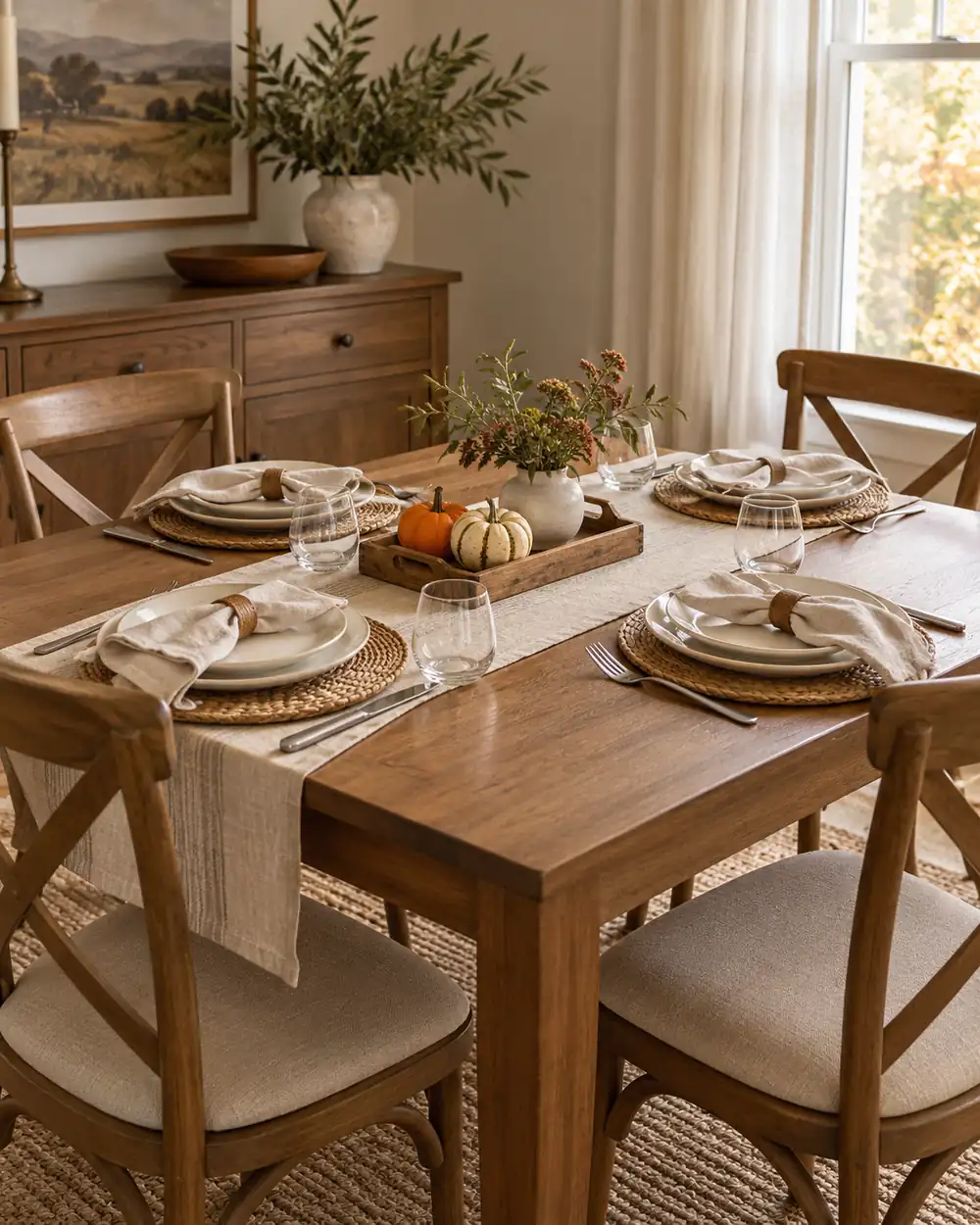
Build your centerpiece on a manageable tray, with stable objects that do not overhang the edges. Before guests arrive, the tray can hold a compact arrangement, a few small pumpkins, or a pair of decorative lights.
Choose the destination for the tray in advance. It should fit comfortably on a nearby surface rather than block a walkway or become another item to juggle. Lift the arrangement during your table rehearsal to confirm it is genuinely easy to move.
13. Mixed Plates Unified by Napkin Color
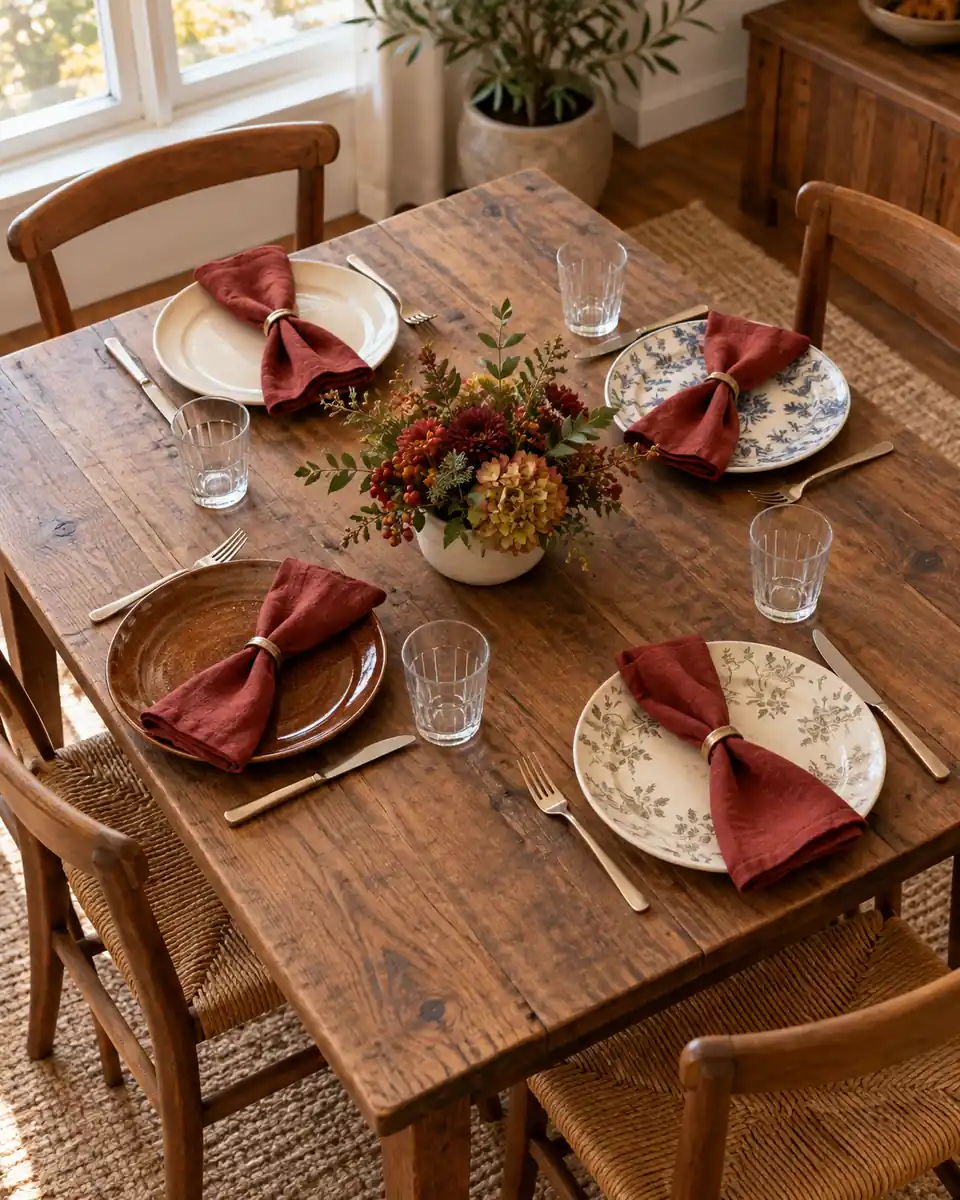
If your plates come from different sets, repeat the same napkin color at every seat. You can also alternate the plates deliberately instead of grouping all the matching ones at one end.
Look for one shared characteristic, such as a cream background or a simple border. The goal is a welcoming table, not a disguise for the fact that the dishes differ. Keep other details quieter so the mixture feels collected rather than visually competitive.
14. Flowers That Preserve Conversation Sightlines
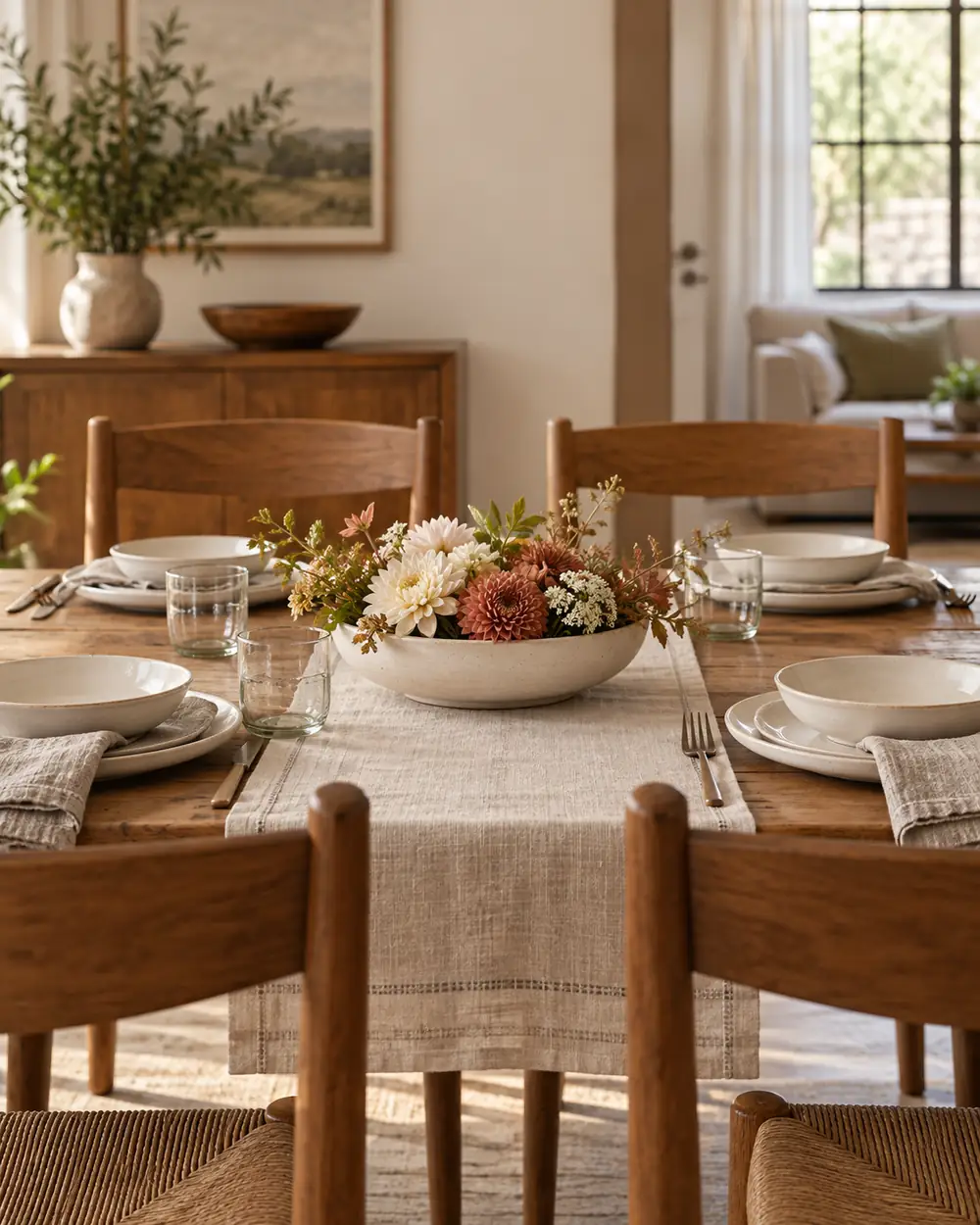
Choose an arrangement you can see over when seated. Broad leaves and sideways branches count toward its visual size just as much as the flower heads do.
Sit in more than one chair before deciding where it belongs. An arrangement that looks unobtrusive from the end may obscure someone halfway down the table. If a tall arrangement is particularly meaningful, put it elsewhere in the room and use a smaller related flower detail at the table.
15. Warm Metallic Accents Used Sparingly
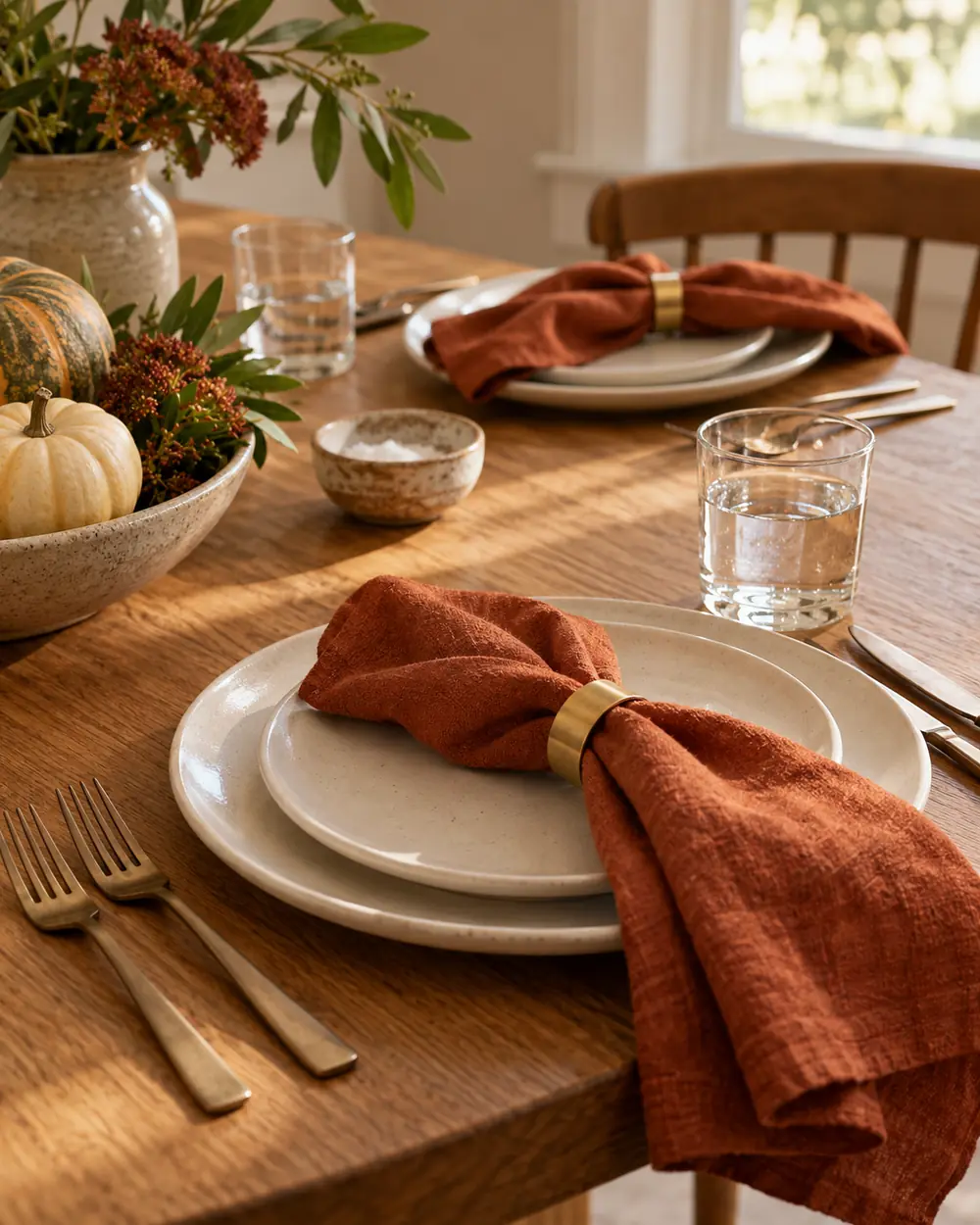
A brass-colored napkin ring, small decorative vessel, or simple metallic place-card detail can add warmth. Pick one role for the finish rather than repeating it on every available object.
Mixed metals can work, but repetition makes the combination easier to read. If your everyday cutlery is silver-colored, it does not need replacing. Let that practical set remain and add the warmer finish through a separate decorative element that can be packed away afterward.
16. Decor at the Ends for Family-Style Serving
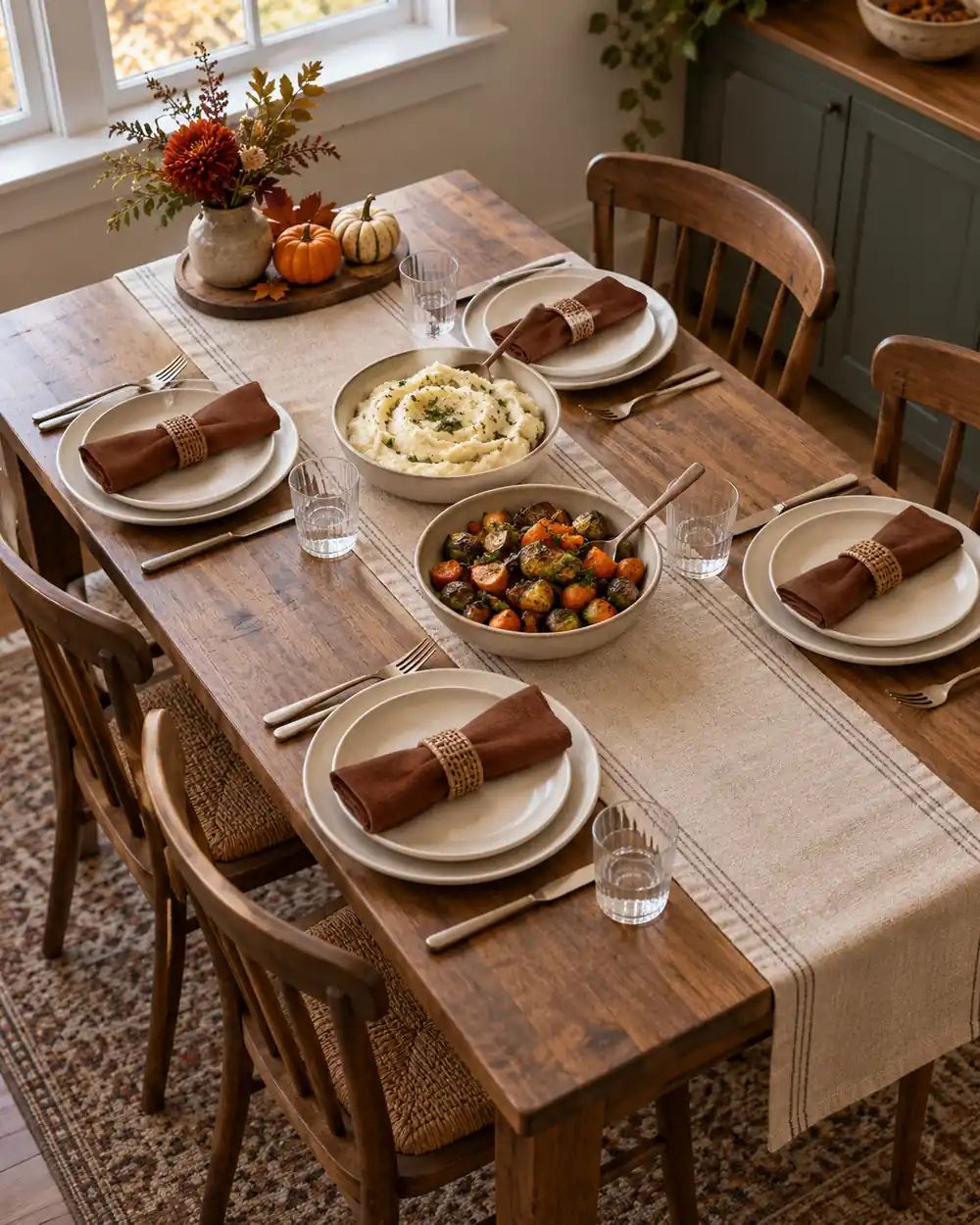
For a rectangular table with dishes passed through the center, keep the middle mostly clear. A small arrangement at each end can frame the meal, provided neither end is needed for a seat or serving access.
Test this with chairs in place and someone walking around the table. An attractive display should not force a guest to lean over it while passing food. When every seat is occupied, a wall shelf or sideboard may be the more practical decorative location.
17. A Reset Plan for Dessert and Coffee
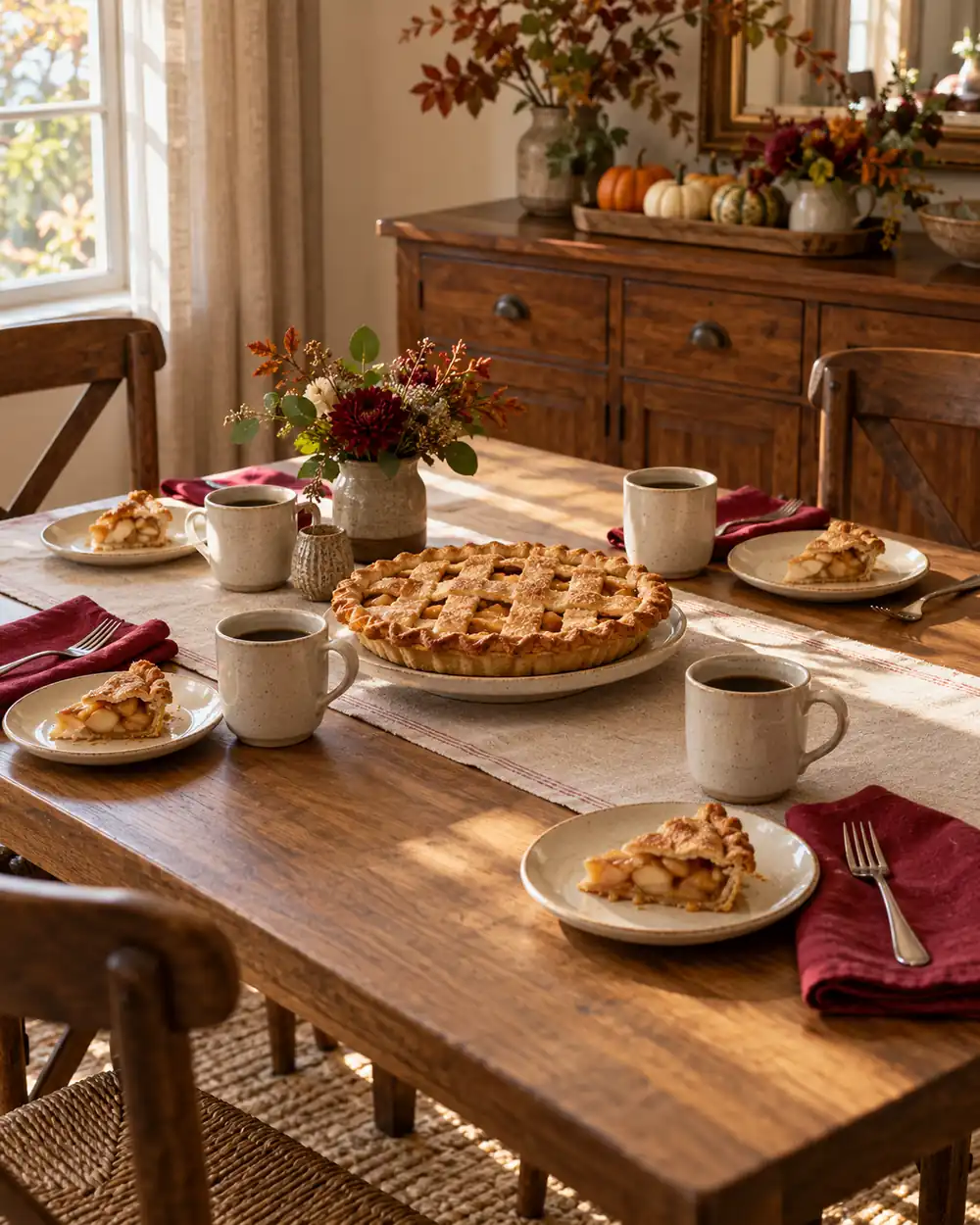
Treat the transition after dinner as part of the design. Know which decorations will stay, which dishes will leave, and where dessert plates will go before the table becomes busy.
A compact arrangement may return once large serving dishes are cleared. Fresh napkins or a small stack of dessert plates can refresh the setting without creating a completely new tablescape. This is especially useful when the same small table carries the entire gathering from arrival to the last cup of coffee.
Choose a Palette From What You Already Own
Start with the largest fixed elements: the table, chairs, plates, and any tablecloth you plan to use. Choose one additional color that works with them. A blue-and-white plate can sit beside russet linen; dark wood can become part of a brown-and-cream setting.
Before buying decor, check your cupboards for low bowls, small glasses that can hold flowers, baskets, and plain napkins. A useful new piece should suit ordinary meals too. The most reusable purchase may be a washable runner rather than another seasonal ornament.
Avoid putting unidentified berries, loose glitter, or decorative materials directly against food. Keep serving surfaces and utensils appropriate for food use. When in doubt, use a separate decorative vessel rather than presenting a craft object as serving ware.
Frequently Asked Questions
What is the easiest centerpiece for a small Thanksgiving table?
One low arrangement in a stable vessel is a straightforward starting point. Choose its size after setting out the plates and serving dishes. If nothing fits comfortably, decorate a nearby surface instead.
Can I decorate without buying Thanksgiving-themed dishes?
Yes. Everyday plates, a repeated napkin color, and a simple flower or pumpkin detail can establish a seasonal setting. Consistency usually matters more than using a themed object at every seat.
Should the centerpiece stay during dinner?
Only if it leaves enough space for the meal. A movable display can welcome guests before being relocated. Plan the destination in advance so moving it does not create a new problem.
How do I decorate a table used for both work and meals?
Keep the decorative components in one tray or small storage box. Use washable textiles that are easy to remove, and avoid elaborate arrangements requiring a permanent setup. A short reset should be part of the plan.
For more room-by-room inspiration, browse IconBiography’s Home Decor category. Start with one place setting and your largest serving dish; the layout will tell you which decorative idea belongs on your table.